
Bleisure event networking: design for the day after the agenda
62% of business travellers add a personal leg to at least one trip a quarter, and 67% of bleisure trips begin with a conference on the itinerary.
Co-founder and GTM Lead, All Along
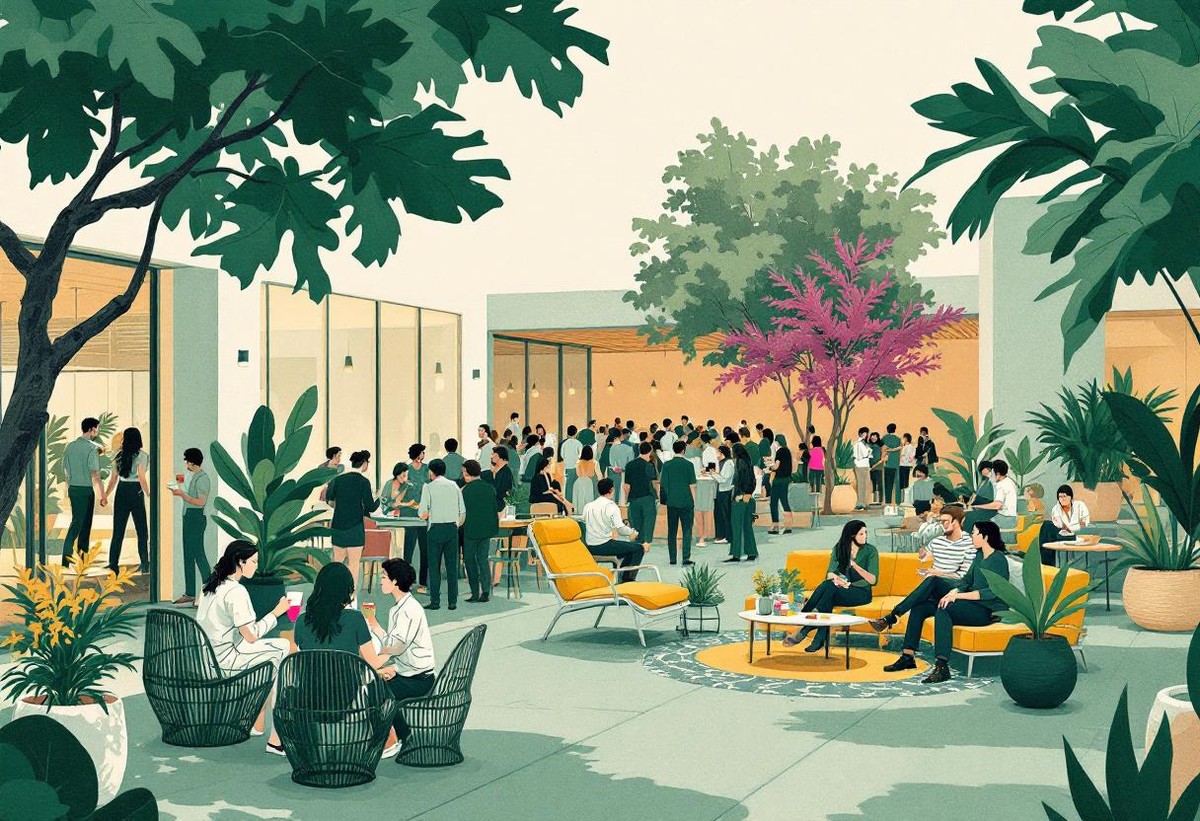
Design the bleisure layer with five moves: signal optional time on the agenda, publish a short 'what's around here' brief, host one small off-agenda format, programme something for partners and plus-ones, then ask about extended-stay intent at registration. With 62% of business travellers now adding a personal leg to a trip each quarter (GBTA, 2025), that layer already exists. Here is how to run it on purpose.
I asked a 600-person conference organiser last year who'd had the most useful conversation at her event. Without thinking, she named two attendees who had been introduced to each other in the foyer. Then she paused and said: 'they met on the Saturday'. Her conference had closed on Friday afternoon.
She wasn't unusual. Most of the events I've helped organisers run are designed as if the venue doors are the perimeter of the experience. They aren't. For a growing share of senior delegates, the trip is longer than the agenda - and the relationships that actually drive renewal often form in the hours organisers don't see.
That's the layer this post is about. It's the bleisure layer - the early arrival, the weekend extension, the partner-included dinner, the optional walking tour - and most events leave it on the table. My take: that's the single biggest unforced error in modern event design.
The trip is longer than the agenda
Bleisure used to be a fringe behaviour we associated with start-up founders and freelancers. The data has moved on.
62% of global business travellers add a personal component to at least one trip per quarter, and 46% of corporate travel buyers say employees at their company are taking more bleisure trips than a year ago (GBTA, 2025). 67% of all bleisure trips begin with a conference on the itinerary (Skift Meetings, 2024). And the people most likely to extend are not the junior delegates - the trend skews senior, mid-career and partner-bringing.
Translated for organisers: most of your senior attendees are not flying home the night the agenda closes. They are arriving early, staying late, or bringing someone with them. The trip - their trip - is longer than your event.
The hybrid-working data sharpens the point. 28% of working adults in Great Britain were hybrid in early 2025, rising to 49% in information and communication (UK Office for National Statistics, 2025). The cohort least likely to bump into colleagues at the office is the cohort most likely to attend a conference - and to want the trip to be worth the time away.

The unmeasured event
Most organisers think the event is the agenda. It isn't. The event is everything that happens between the moment an attendee gets on a plane and the moment they get back on one. The agenda is a small slice of that.
If you don't design for the off-agenda layer, three things happen.
First, the most senior attendees - the ones with the discretion to extend a trip - have the deepest conversations privately. You set the table; somebody else hosts the dinner. Second, your sponsors are paying for the formal hours. They have no presence in the layer where renewal and partnership conversations actually start. Third, the value attendees report when they tell colleagues about the event tends to belong to the off-agenda day, not to the keynote. You measured the wrong thing.
This is also the part of the event most likely to be measured badly or not at all, because nothing in the event tech stack runs on Saturday.
Five moves for the off-agenda layer
None of this needs new software or a bigger team. It needs a different read of where the event ends.
1. Signal optional time on the agenda itself
Treat the Saturday as part of the event. Not 'free time' - a printed line: 'Optional Saturday: small-group networking and city walks, sign up at registration.' This single change tells extended-stay attendees they're permitted to stay engaged, and tells the people leaving that they had a choice. Permission is most of the work.
2. Publish a 'what's around here' brief
Three pages, sent two weeks before the event. Not a tourist guide - a delegate-curated short-list: best independent restaurants, decent coffee, one museum, two walks. Include three or four named delegates who've offered to host an informal hour. The brief turns the destination into a connection mechanism rather than a backdrop. It pairs naturally with the same pre-event networking sequence you already use for the formal sessions.
3. Host one curated bleisure-friendly format
Pick something that isn't a sit-down dinner. A 90-minute walking tour with eight delegates and a host. A breakfast at a cafe. A market visit. A ticketed group bike ride. The structure should be small, local and obviously low-pressure. The point is not to programme the leisure - it is to remove the friction of 'who do I do this with'. One hosted activity, with a sign-up cap of 8-12, beats three open-invite mixers.
4. Give partners and plus-ones a reason to engage
This is the move most organisers miss. If a delegate brings a partner, the partner spends 36 hours alone in a hotel. A single hosted activity for partners - a gallery hour, a walking tour, a cooking class - turns an absent companion into a returning advocate. Two hours of programming buys you a year of word-of-mouth and gives a hospitality sponsor a way to show up that doesn't compete with the formal sponsorship inventory. PCMA's 2025 Convene Trends Report flagged the partner programme as one of the cheapest under-used levers in the industry (PCMA Convene, 2025).
5. Ask about extended-stay intent in registration
Read on - this is the registration question most organisers don't think to add, and it changes the rest of the planning.
The registration question that changes everything
Add one short field to your registration form: 'Are you extending your stay before or after the event? If yes, what would make the time worthwhile?'
It's a question, not a commitment. Two-thirds of senior delegates will tick yes. A quarter will write something specific - 'looking to meet other product leaders in fintech', 'bringing my partner, would love a small-group restaurant on the Saturday', 'happy to host a coffee for first-time attendees'.
That data is gold. Pre-event, you can match four delegates from the same sector for a Saturday breakfast and email a personal introduction. You can hand partner-included activities to a hospitality sponsor that wouldn't otherwise have a way to show up. You can schedule a Sunday session for the genuinely interested - and avoid the empty-hall mistake organisers make when they programme content too late on a Friday.
A well-built event registration data approach already does most of this work. The bleisure question slots into the same place as the dietary requirements field and produces information you cannot get any other way. Attendee interest survey questions covers the broader point on registration design.
Measuring the layer you cannot see
Most measurement frameworks miss bleisure. The event tech captures session attendance, app interactions and the formal feedback survey - none of which run on Saturday.
Three measures actually work, and none of them require extra instrumentation.
Renewal. Track the proportion of attendees who return the following year, broken out by extended-stay status. Bleisure-extending attendees should renew at a noticeably higher rate. If they don't, your design isn't working - and the gap will tell you which of the five moves is missing.
Bring-a-colleague. Ask the question in next year's registration: 'were you brought by someone who attended last year?' Word-of-mouth runs through the weekend, not through the keynote.
Reported relationships. A short post-event question, two weeks out: 'have you spoken to anyone you met at the event since?' Compare answers from delegates who left after the close versus those who extended. The gap is the value of the off-agenda layer. This pairs naturally with the wider corporate event networking playbook for organisations running their own customer or partner summits.
The bigger picture
Most event design is still organised around an industrial model: book the venue, fill the hours, count the heads, send everyone home. It assumes the value of the event is contained inside the building.
That hasn't been true for senior attendees for years. Their trip is longer than your agenda. Their best relationships form in the spaces you didn't programme. Their renewal decision is shaped on Saturday afternoon, not Friday morning.
You don't have to programme the weekend. You have to make it possible for it to be a good one. Five quiet moves - a signalled invitation, a curated brief, one optional format, a partner programme and a registration question - cover most of it. None of them need a procurement cycle.
At All Along, we treat the bleisure layer as a first-class part of the networking design, not an afterthought. Registration captures extended-stay intent. The platform surfaces who you should meet on the Saturday, not just in the keynote. Sponsors get an off-agenda activation route they didn't have before.
Want the template I use when I plan networking into an event agenda?
I put a short operator's brief together - the three registration questions, the match format decision tree, the post-event follow-up template. Free, no email wall.
Frequently asked questions
What is bleisure event networking?
Bleisure event networking is the connection-making attendees do during the personal-time portion of a business trip - the early arrival, the weekend extension, the partner-included dinner, the optional Saturday tour. Most of this layer is outside the formal agenda, which means most organisers don't see or design for it. As bleisure becomes the default rather than the exception for senior business travellers, the networking that happens off-agenda is increasingly where renewal-grade relationships form.
Why does bleisure matter to event organisers?
Two reasons. First, scale: GBTA's 2025 outlook found that 62% of global business travellers now add a personal component to at least one trip per quarter, and 46% of corporate buyers say employees are doing it more than they were a year ago. Second, value: the conversations that drive renewal, partnership and word-of-mouth often happen during the extended stay, not during the formal sessions. If you only design for the agenda, you are running a smaller event than your delegates are actually attending.
How do I design networking into bleisure time without making it feel like work?
Keep it optional, small and local. A 90-minute walking tour with eight delegates and a host. A breakfast at a cafe rather than a hotel ballroom. A market visit. The structure should remove the friction of 'who do I do this with' without programming the leisure itself. Signal the activity on the official agenda so attendees know it's permitted, but don't make it compulsory. The point is to host a context for connection, not to extend the conference into the weekend.
What should we ask in registration to surface bleisure intent?
One extra question: 'Are you extending your stay before or after the event? If yes, what would make the time worthwhile?' Most senior delegates will tick yes, and a quarter will write something specific - looking to meet other product leaders, bringing a partner, would value a small-group restaurant on the Saturday. That data lets you pre-match a Saturday breakfast, hand a partner programme to a hospitality sponsor, or schedule a Sunday session only if there's real demand for one.
How do I measure bleisure event networking?
Three measures work without instrumentation. Renewal: track the proportion of attendees who return the following year, broken out by extended-stay status. Bring-a-colleague: ask in next year's registration whether the attendee was brought by someone who came last year. Reported relationships: a short post-event question two weeks after the event asking whether the attendee has spoken to anyone they met since. The gap between the leavers and the extenders is the value of the off-agenda layer.
Should partners and plus-ones be included in networking design?
Yes - this is the move most organisers miss. If a delegate brings a partner, the partner spends 36 hours alone in a hotel. A single hosted activity for partners - a gallery hour, a walking tour, a cooking class - turns an absent companion into a returning advocate. Two hours of programming buys you a year of word-of-mouth, and gives a hospitality sponsor a way to show up that doesn't compete with the formal sponsorship inventory.
About the author
Alex Shiell
Co-founder and GTM Lead, All Along
Alex is co-founder and GTM lead at All Along. She spends her days talking to event organisers, associations and sponsors about what they need from networking - and turning those conversations into product and commercial decisions. She writes about the operational side of events: registration data, sponsor ROI, adoption and the organiser craft.
Connect on LinkedInReady to make networking the reason people come back?
All Along gives every attendee three people they should actually meet, and gives you a complete picture of what your audience wants.
More from Field Notes
B2B event networking for sales teams: a three-touch framework
Sales teams arrive at B2B events with a budget, a quota and no plan. The teams who do this well treat the event as the middle of a conversation, not the start.
The case for transparent event matchmaking
If an attendee asks why they were paired with someone, an organiser who cannot answer has a product problem, not a communication problem.
Event networking by event type: one framework, six formats
One networking format does not fit six different kinds of event. Three questions that tell you the design any event type actually needs.