
Festival style corporate event ideas (without the chaos)
58% now say networking is their primary reason for going to an event, up from 39% in 2021 (Freeman) - exactly why events are borrowing the festival format.
Co-founder and Product Lead, All Along
Steal three things from festivals: a main square everyone passes through, with one 30-minute meet-your-match window in it each day; tracks built around the three groups you most want talking to each other, not just topics; and lounges run as stages with a host and a short programme. Below about 200 people, stay single track. Here is how to get the format without the sprawl.
I keep walking into corporate events that look more like a festival than a hotel ballroom. Three stages instead of one. A wellness studio next to the keynote hall. A podcast booth where the sponsor lounge used to be. A lanyard that someone has had the nerve to call a wristband.
The format is not new. It has been the default in music and arts events for two decades. What is new is how quickly B2B has caught on. In the last twelve months I have seen tech summits, membership AGMs and even regional infrastructure conferences quietly reshaping themselves into something closer to a curated mini-festival than a single-track conference.
My take: most of it is a good idea. Some of it is going to age badly. And almost all of it gets the same thing wrong - the networking.
Why corporate events are going festival
The shift is not a fashion. It is the audience catching up with how they actually want to spend a day. Hybrid-first workers do not sit through eight hours of single-track plenary; they graze. Skift's 2026 Meetings Megatrends report puts it bluntly - the keynote-heavy, talk-at-them format is being replaced by formats that are more designed and less scheduled (Skift Meetings, 2026).
The numbers underneath that shift are about networking, not content. 58% of attendees now say networking is their primary reason for going to an event, up from 39% in 2021 (Freeman, 2025). That is the single biggest reason the festival template is winning. It gives attendees the thing they actually came for - more chances to bump into the right people, on their own terms - and quietly downgrades the bit of the day that was already underperforming, the back-to-back keynote.
PCMA's 2025 piece on what we are getting wrong about education sessions lands in the same place from a different direction (PCMA, 2025). The single-track session is no longer the most efficient way to teach anyone anything; the best learning at events now happens in roundtables, peer circles and what they call "structured noise" - exactly the building blocks of a festival format.
What festival style actually means in a corporate setting
It is not just bigger. It is differently shaped. A festival-style corporate event tends to have five things in common:
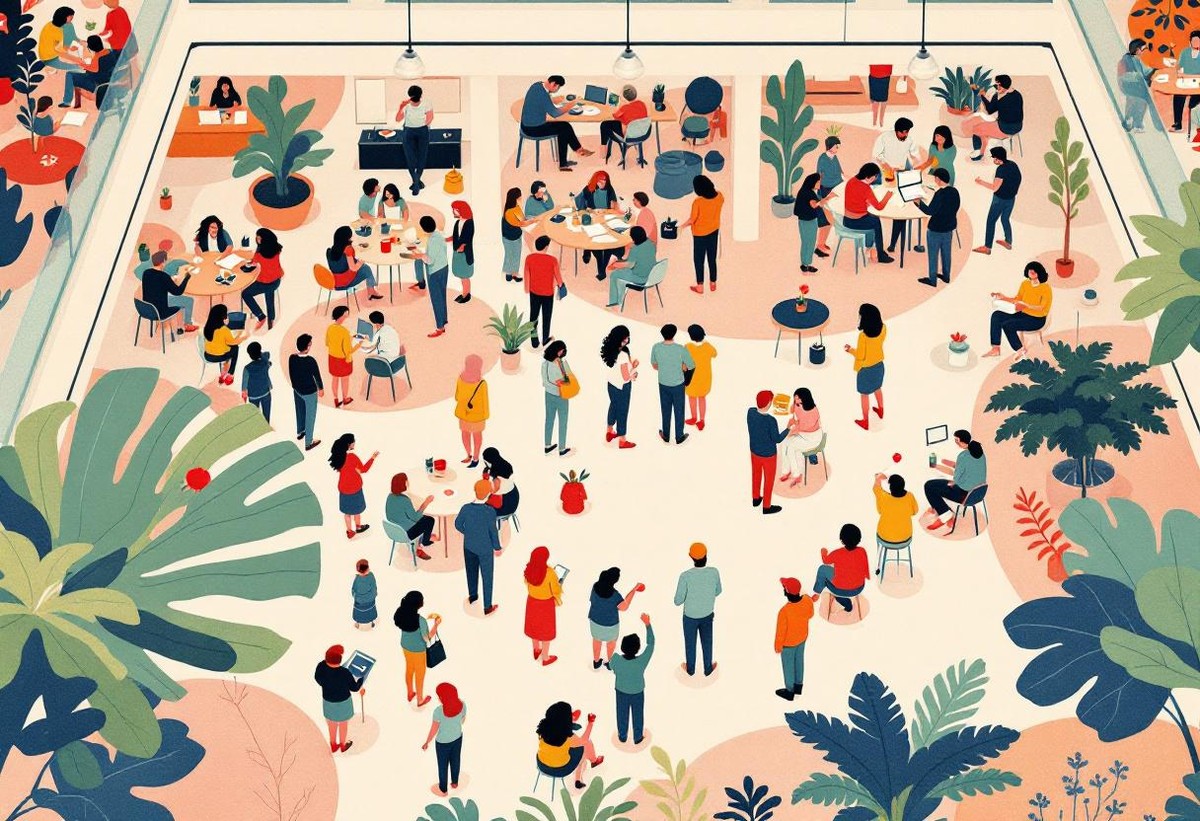
- A central hub. The "main square" that everyone passes through. Unprogrammed enough to feel relaxed, anchored enough that you can find people on purpose.
- Parallel tracks, by vibe as well as topic. Not just "data" and "ops" streams - deep-work corner, peer roundtables, social. Attendees pick the mode they want to be in, not just the subject.
- Lounges as stages. A lounge with a host and a programme - books, podcasts, fireside chats - not couches and a coffee urn.
- Programmed immersive zones. Wellness studio. Art installation. Founder fireside. Maker space. Each one a small reason to leave the keynote hall.
- A multi-day arc with phasing. Warm-up, core, wind-down. Not three identical plenary days in a row.
It is worth saying what festival style is not. It is not throwing budget at lights, drape and a DJ. It is not "let's call the lanyards wristbands and put a coffee cart on the roof". It is a design discipline - and most of the corporate events doing it well started by redrawing their floor plan before they touched the agenda.
Three festival moves worth stealing
If you are not ready to redesign the whole event, these are the three ideas I would lift first. Each one works on its own. Together they nudge a conference into festival shape without rebuilding it.
1. The main square
Pick the biggest single space in your venue that is not a session room and treat it as the centre of the event. Programme it lightly - a welcome breakfast, a 30-minute "meet your match" window mid-morning, an unscheduled wind-down at the end. The rest of the day, leave it alone. Attendees need somewhere to come back to. Festivals have always known this; conferences have usually forgotten.
2. Curated tracks designed around who, not what
Festival programmers do not start with topics. They start with who they want in the room and what mood they want it to be in. Borrow that. Before you build the agenda, write down the three groups of attendees you most want to see talk to each other - and design at least one track around each. The topics fill themselves in once the people are right. This is one of the cheapest ways to make event agenda networking design actually do something.
3. Lounges as stages
A lounge with no host is a lobby. A lounge with a host, a chair and a programme is a stage. Pick three lounge spaces, give each one a clear identity, assign a host, and run four short fireside chats and two peer roundtables across the day. It costs about the same as a normal coffee station and gives you six extra moments of content density in a place attendees were going to sit anyway.
Designing networking into a festival format
Here is where most festival-style corporate events fall over. Parallel tracks plus sprawl plus choice equals attendees missing each other in three different lounges. The same things that make a festival fun make networking harder, unless you design it in.
Skift's 2026 piece on overprogrammed events reads as an indictment of the format (Skift Meetings, 2026). I read it the other way: it is an indictment of festival-style events that copied the layout but skipped the design. Choice without curation is paralysis. The fix is to treat networking as a programmed track in its own right, not a coffee-break accident.
What that looks like in practice:
- Pre-event matching that gives every attendee three people to meet, mapped to which zone each match will be in. The festival app equivalent of the set planner.
- A daily "meet your match at the hub" window - 30 minutes, central, scheduled. The whole venue knows that 11:30 is for finding the people they were going to bump into anyway.
- A registration form that captures where attendees actually want to be in the event, not just their job title - and uses it to route both content recommendations and connections.
- Programmed serendipity. Festivals do this with surprise sets and roaming performers; corporate equivalents are unannounced serendipitous networking moments at the hub and in lounges.
Eventbrite's 2025 social study found that experience-driven attendees are the fastest-growing cohort across event categories (Eventbrite, 2025). They want to feel like they had a day, not sat through one. Designed networking is what turns a festival-shaped agenda into a day they remember.
When not to go festival
Festival format is not a default. There are four cases where I would not reach for it:
- Under 200 attendees. The format feels empty. You cannot fill multiple stages and the choice becomes paralysing. A curated single-track day beats a half-empty festival every time.
- Single-discipline audiences. If everyone in the room is a clinical radiologist or a senior tax partner, parallel tracks fragment the network you came to build. One room is the point.
- Junior audiences who need visibility. Festival format is great for confident grazers and harder for people who came to be seen. A single-track gives juniors the same room as the speakers they want to meet.
- Budgets under about £40k. Production cost is the bit that goes wrong first. A thin festival reads worse than a well-run single-track of the same size.
If I had one move to try first
Lounges as stages. Pick three, give each a host, run four fireside chats and two peer roundtables across the day, and tell the central hub it is now the busiest room in the venue. You will not have built a festival - but you will have changed how the event feels, how attendees describe it afterwards, and how easily they remember the names of the people they met. It is the cheapest, fastest way I know to start moving a conference toward the format the next few years of events are going to look like.
And whichever festival idea you try first, the rule underneath all of them is the same: design the networking with the same care as the content. Festivals work because people leave remembering the people they met, not the bands they saw. The corporate version should aim for the same thing - and All Along exists to make that bit the easiest part of the planning, not the hardest.
Want the template I use when I plan networking into an event agenda?
I put a short operator's brief together - the three registration questions, the match format decision tree, the post-event follow-up template. Free, no email wall.
Frequently asked questions
What is a festival style corporate event?
A festival style corporate event is a B2B conference, summit or company gathering that borrows the music or arts festival template - multiple parallel stages or tracks, lounges that double as content stages, programmed immersive zones (wellness studios, art installations, podcast booths), and a central hub or 'main square' that everyone passes through. Attendees choose their own path through the day rather than sitting in one room for eight hours. It is still a programmed event with a clear agenda - just a designed one rather than a scheduled one.
Why are corporate event organisers moving to festival formats?
Three reasons. First, the audience has shifted: hybrid-first workers do not sit through eight-hour single-track days any more, they graze. Second, attendees expect optionality and Skift's 2026 Meetings Megatrends report makes the same call - the death of the keynote-heavy single-track format (Skift Meetings, 2026). Third, sponsors get more surface area: instead of one expo wall they get multiple branded zones, each a content stage in its own right. Done well, the format earns higher engagement and stronger word of mouth than the old plenary template.
Does festival format help or hurt networking?
It can do either, depending on whether networking is designed in or left to chance. The default risk is that parallel tracks and sprawl make attendees miss each other - the very thing they came for. The fix is to treat networking as a programmed track, not a coffee-break accident: pre-event matching with a who-to-meet list mapped to which zones each match will be in, a 'meet your match at the hub' window during the day, and lounges that work as content stages rather than couches. Networking is the most-named reason people attend (58%, up from 39% in 2021, Freeman 2025), so it has to be designed at the same resolution as the content.
What size of corporate event suits festival format?
Roughly 300 to 5,000 people is the sweet spot. Under 200 attendees the format feels empty - you cannot fill multiple stages and the choice becomes paralysing. Over 5,000 the logistics start to dominate and you need a dedicated production partner. The other constraint is budget: production cost is the first thing that goes wrong, and below £40k or equivalent the festival format usually under-delivers compared with a strong curated single-track event of the same size.
What is the cheapest festival move a corporate organiser can copy first?
Lounges as stages. Pick three lounge spaces in your venue, give each a clear identity (deep-work corner, peer roundtable space, founder fireside), assign a host to each and run four short fireside chats and two peer roundtables across the day. It costs about the same as a normal coffee station but immediately changes how the event feels - attendees stop drifting and start having conversations that get cited in their post-event surveys. It is the festival idea most likely to land at a 500-person B2B conference without rebuilding the whole agenda.
Where should networking sit inside a festival format event?
In the central hub - the 'main square' that every track passes through. Festivals work because there is always somewhere to come back to. For a corporate event that means a hub that is unprogrammed enough to feel relaxed, but staffed and curated enough that you can run scheduled 'meet your match' windows there. The hub is where pre-event matching pays off: attendees know who they are looking for and where to find them. Without a hub, festival-format events feel like an airport - lots of movement, no anchor.
About the author
Cate Trotter
Co-founder and Product Lead, All Along
Cate is co-founder and product lead at All Along. She's spent 15+ years helping organisations turn emerging tech into commercial results, and founded and sold two retail-focused businesses before building All Along. She writes about how events can turn networking from a happy accident into a repeatable outcome.
Connect on LinkedInReady to make networking the reason people come back?
All Along gives every attendee three people they should actually meet, and gives you a complete picture of what your audience wants.
More from Field Notes
B2B event networking for sales teams: a three-touch framework
Sales teams arrive at B2B events with a budget, a quota and no plan. The teams who do this well treat the event as the middle of a conversation, not the start.
The case for transparent event matchmaking
If an attendee asks why they were paired with someone, an organiser who cannot answer has a product problem, not a communication problem.
Event networking by event type: one framework, six formats
One networking format does not fit six different kinds of event. Three questions that tell you the design any event type actually needs.