
How to design event networking icebreakers that actually work
Most icebreakers solve the organiser's fear of awkward silence, not the attendee's need. The ones that work give people a specific person to talk to.
Co-founder and Product Lead, All Along

An event icebreaker works when it gives someone a specific person to talk to and a professional reason to talk to them. Keep the groups to three to six people, time-box them to six or eight minutes and give one clear prompt. Games with no professional content produce activity and nothing to pick up later in the day. The most underused format is the pre-matched introduction: one name and one line on why you two should meet.
The 'two truths and a lie' icebreaker has survived decades of conference programming. Not because it works, but because it's familiar and requires almost no setup. Pull it out, watch people squirm mildly, move on.
Most event icebreakers are built around the organiser's comfort, not the attendee's intent. They create activity - people talking, moving, smiling - while generating very little that's useful for the professional relationship that might follow.
According to Freeman's 2025 Networking Trends Report, 58% of attendees say networking is their primary reason for attending in-person events. (Freeman, 2025) If the first structured interaction you give them produces nothing they can build on, you've wasted the moment they came for.
Here's a guide to the formats that hold up - and the ones worth quietly retiring. Icebreakers sit within the broader range of conference session formats - they work best when chosen to complement the session structure around them.
Why most icebreakers miss the point
The failure mode of a bad icebreaker is obvious in hindsight: it optimises for ease of facilitation, not for connection.
A 'find someone who has visited three countries' bingo card gives attendees a conversational excuse to approach strangers. That sounds right. But the resulting exchange is about the bingo card, not about either person's professional context. Once the card is filled, the conversation ends. There's nothing to return to later in the day.
Research on professional networking offers a useful frame here. A 2016 study published in the Harvard Business Review by Casciaro, Gino and Kouchaki found that professional networking is most effective when participants approach it with an 'information-seeking' mindset rather than a 'performance' mindset. (HBR, 2016) Icebreakers that are primarily performative - 'tell us your superpower', 'share a fun fact about yourself' - push people into performance mode at exactly the wrong moment.
The formats that work do the opposite. They give attendees a professional frame for the conversation - a shared problem, a shared sector, a specific question - and then get out of the way. The icebreaker becomes a conversation starter rather than a social game that happens to precede a conference.
My take: the single best litmus test for any icebreaker is this - could two people reference this conversation again later in the day? If the answer is no, the format is probably wrong.
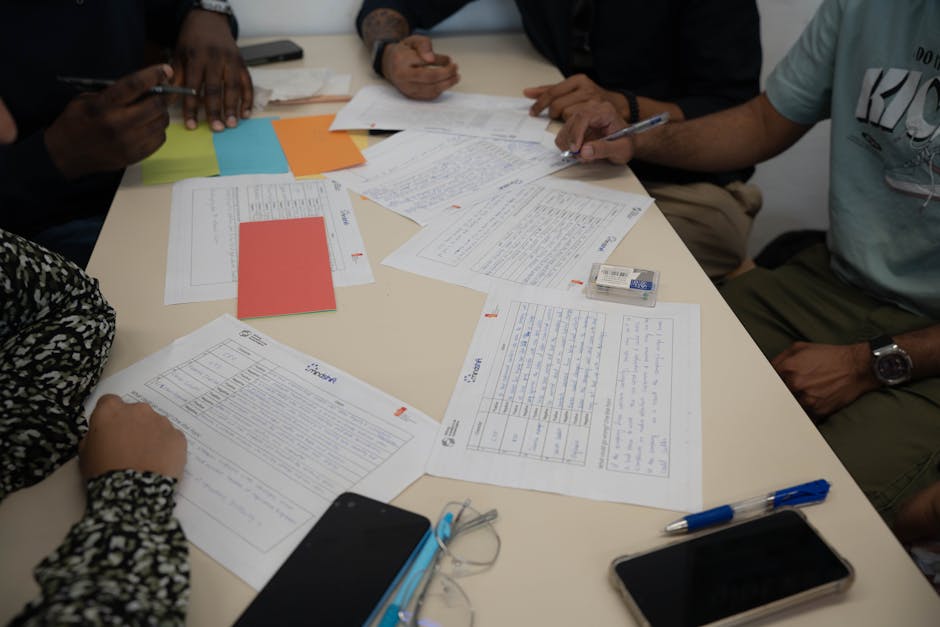
Five formats that respect attendee intent
These five icebreaker formats consistently produce something referenceable and professionally useful.
1. The pre-matched introduction
Give every attendee one specific person to meet at the start of the event, along with a one-line reason. 'You and Sarah are both working on B2B procurement at mid-market tech companies. Worth five minutes.'
This format works because the social permission is already established (the organiser has made the introduction), the context is specific enough to start a real conversation, and both parties arrive with a shared frame of reference that can extend throughout the day. Registration data makes this scalable without requiring manual curation for every attendee. See pre-event networking for more on how to structure the data collection that makes this possible.
2. The professional goal-share (in triads)
Groups of three. One question: 'What are you here to figure out or solve at this event?' Each person gets 60 seconds. The listener's job is to ask one follow-up question.
The triad format reduces the pressure of a direct 1:1 while keeping groups small enough that everyone speaks. Thirty seconds is rarely enough time to reach real professional content. Sixty seconds usually is. The follow-up question rule prevents it becoming three parallel monologues.
3. Topic tables (self-selected)
Set up six to eight round tables, each labelled with a specific professional challenge - not broad topic clusters. 'AI in procurement decision-making' rather than 'AI'. 'Building a member-to-member referral culture' rather than 'membership'. Attendees self-select which table to join.
This works because the selection act itself is a signal: 'I'm here about this specific thing.' Everyone at the table has already declared interest. Topic tables work particularly well when paired with a roundtable format where you want structured peer discussion rather than open socialising.
4. Speed networking with a specific prompt
Classic speed networking (timed rotations, three to five minutes per pair) fails when the prompt is too open. 'Tell me about yourself' produces corporate bios on autopilot. Give a prompt with professional content instead: 'What is one thing you're trying to get right in your role this year?' or 'What has changed most about your work in the last 12 months?' The quality of the conversation is almost entirely determined by the quality of the prompt.
5. The shared challenge card
Give each attendee a card pre-printed with one professional challenge, sourced from registration data and aggregated anonymously: 'Three people at this event are working out how to increase sponsor ROI without a dedicated partnerships role.' Their task is to find someone working on the same challenge.
This format is more complex to set up but rewards the effort: attendees walk in with a specific search task rather than the open social anxiety of 'who should I talk to?'. It's particularly effective in the first hour of a conference, when anxiety is typically highest and the social scaffolding matters most.
What all effective icebreakers share
Looking across these five formats, the common thread isn't the mechanism - it's what the mechanism produces.
Every format that works gives attendees three things:
- A specific person or group to engage with - not 'find anyone in the room'
- Professional content to discuss - not social performance
- A reason to re-engage later - something to reference beyond the moment of the activity itself
That third element - call it 'callback potential' - is the most underrated. Icebreakers are not just about the first five minutes of a conference. They're about setting up the conversations that happen at the coffee break, the lunch, the closing session. If the icebreaker produces nothing worth returning to, it's done 20% of the work at best.
The formats above all produce something that can travel through the day: a shared challenge, a matched pair, a declared interest, a specific question that remains open.

Running icebreakers at larger events
Scale introduces a specific problem: you can't run a personal introduction icebreaker with 600 people simultaneously without it becoming noise.
The answer is not to abandon structure - it's to pre-segment. At larger events, the most effective approach is to run the icebreaker at session or breakout level rather than across the full room. A pre-matched introduction at a morning breakout session (15 to 20 people) is entirely practical. A goal-share triad works in any session format. Topic tables can absorb large groups if you have enough tables and enough specificity in the labels.
What you want to avoid is the whole-room icebreaker, where 500 people receive an unstructured instruction to 'find two new people and tell them why you're here'. The resulting noise and social anxiety serves nobody. Smaller groups, specific prompts, and pre-sorted seating are the levers at scale. MPI research on meeting design reinforces this: the format of connection matters as much as the intention behind it. (MPI, 2024)
If you're thinking about how to structure the networking design across your full event agenda, the icebreaker is just the entry point. The formats above give you something to build the rest of the programme around.
If you want a quick diagnostic of how your event's current networking design stacks up, the networking gap calculator walks through the numbers in about two minutes.
Want the template I use when I plan networking into an event agenda?
I put a short operator's brief together - the three registration questions, the match format decision tree, the post-event follow-up template. Free, no email wall.
Frequently asked questions
What is an event networking icebreaker?
An event networking icebreaker is a structured activity at the start of a networking session or conference designed to help attendees begin conversations with people they haven't met. The best icebreakers reduce social friction, give attendees a specific person or group to engage with, and provide enough professional context to start a conversation worth having. The worst optimise for ease of facilitation over connection quality and produce activity without professional content.
Why do most event icebreakers fail to create real connections?
Most event icebreakers are designed to reduce the organiser's anxiety about awkward silences, not to start genuinely useful conversations for attendees. Formats like 'two truths and a lie', bingo cards, and 'share a fun fact' push attendees into performative mode rather than professional mode. Research on networking psychology shows that professional conversations need professional content - a shared challenge, a specific goal, or a genuine question - not just social lubrication. An icebreaker that produces nothing worth referencing later in the day has done very little for the attendees who came specifically to make meaningful connections.
What are the best icebreaker formats for professional events?
The five formats that consistently produce useful professional connections are: pre-matched introductions (one specific person, one specific reason); goal-share triads (three attendees, 60 seconds each, one follow-up question); topic tables (self-selected around a specific professional challenge); structured speed networking with a focused prompt; and shared challenge cards based on aggregated registration data. All five share a common trait: they give attendees professional content to anchor the conversation, not just a social game to break the ice.
How do you run a networking icebreaker at a large event?
At large events, the key is to run icebreakers at the session or breakout level rather than across the full room. A pre-matched introduction works for 500 attendees if it happens simultaneously in small breakout groups of 3-6. A goal-share triad works in any session format. Topic tables can absorb large numbers if you have enough tables and enough specificity in the labels. What you want to avoid is the whole-room unstructured icebreaker where hundreds of people receive a vague instruction to 'find two new people'. The resulting noise and anxiety serves nobody. Smaller groups, specific prompts, and pre-sorted seating are the levers at scale.
How do you know if an event icebreaker has worked?
The simplest measure is the callback rate: how many of the icebreaker conversations are referenced or extended later in the event? You can ask this directly in a mid-event or post-event pulse survey. A secondary measure is session attendance - attendees who made a genuine connection at the opening icebreaker tend to track each other to subsequent sessions. If you're using matched introductions, you can compare session attendance patterns between matched and unmatched attendees. For a quick baseline diagnostic before your next event, the networking gap calculator at all-along.com walks through the numbers.
About the author
Cate Trotter
Co-founder and Product Lead, All Along
Cate is co-founder and product lead at All Along. She's spent 15+ years helping organisations turn emerging tech into commercial results, and founded and sold two retail-focused businesses before building All Along. She writes about how events can turn networking from a happy accident into a repeatable outcome.
Connect on LinkedInReady to make networking the reason people come back?
All Along gives every attendee three people they should actually meet, and gives you a complete picture of what your audience wants.
More from Field Notes
How to increase member engagement without adding more content
The five steps I'd take to increase member engagement, in order, with the metrics worth tracking and the ones worth dropping.
A community manager job description that hires connectors
Most community manager job descriptions hire a content producer and wonder why retention doesn't move. Here's the one I'd write for a connector instead.
How to build the business case for event networking
Networking gets cut first because organisers pitch it as a vibe, not a business. Here's the case I write when a CFO is sharpening the red pen.