
How to create serendipitous networking at events
The events with a reputation for 'magical' networking are not lucky. They run on tight design choices - reduced choice, a shared prompt, a short timebox.
Co-founder and Product Lead, All Along
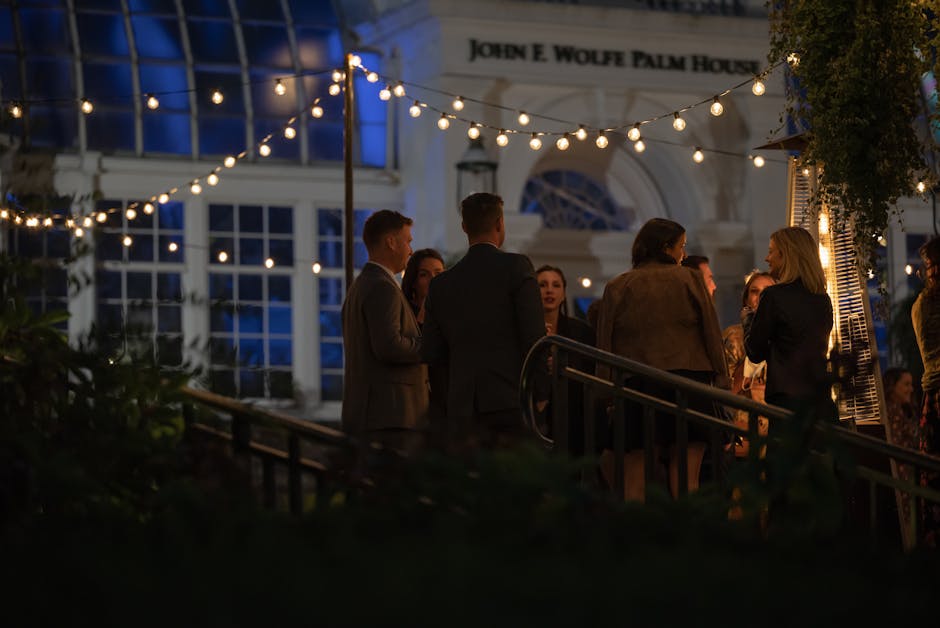
Serendipity at events is engineered, not lucky. Three levers do the work: cut the choice down to groups of five to seven rather than a whole hall, give the group a shared prompt or task and timebox it short enough to force depth. Then design the crossings - one coffee point, one bottleneck. Here is how to build that without the seams showing.
Every organiser I work with has a story about a magical event. Two people who met by accident in a queue and ended up co-founding a company. A junior attendee who picked the right table at the gala dinner and walked out with a job offer. The story always gets told the same way. It just happened.
The honest version is different. The events that produce these moments at scale are not lucky. They are engineered to feel lucky. The "random" coffee queue was the only coffee point in the building. The gala-dinner seating was set by an algorithm that knew the junior attendee was hunting for a role and the table host was hiring.
My take: serendipity at events is one of the most over-romanticised and under-designed parts of our craft. The organisers I most admire treat it as a design problem, not a vibe.
The design paradox
The paradox is this: the more visible the design, the less serendipitous the moment feels. So organisers default to the opposite. They pull back, leave gaps, hope for chemistry. They put 800 people in a hall, hand them name badges, and call it networking.
That is not serendipity. That is a wish dressed up as a strategy.
Freeman's 2025 Networking Trends Report puts a hard number on it: only 14% of organisers say it is their job to attract subject-matter experts for networking, only 10% say it is their job to set the topics around which networking happens, and 60% of event teams do not actively manage networking at all (Freeman, 2025). The thing 51% of attendees say brings them back is the thing the majority of organisers leave to chance.
Why open floor networking is not serendipity

The thing organisers usually mean by "we wanted it to feel serendipitous" is some version of an open floor: drinks, a name badge, no agenda. The room sorts itself out. People meet who need to meet.
Except they don't. Watch any open-floor networking session for ten minutes. The same patterns play out every time. Confident extroverts work the room. Existing colleagues huddle in clumps of three or four. Newcomers stand near the food. Introverts head for the door. The 40% of professionals who report feeling uncomfortable at networking events make a polite exit by the second drink.
This isn't a serendipity engine. It's a sorting mechanism that rewards the people who least need help and excludes everyone else. Open mingling fails most attendees who don't already know how to network, and the data shows it most starkly: in a hybrid-work world where 49% of UK information and communication workers now work hybrid (UK Office for National Statistics, 2025), the conference is one of the few places senior knowledge workers meet anyone outside their immediate team. Wasting that on a hopeful mingle is more costly than it used to be.
Random seating is the same problem in a different costume. Putting strangers at a table without context produces small talk, not connection. The conversation defaults to job titles and weather. Nobody leaves with a relationship.
Real serendipity needs the opposite of randomness. It needs constraint.
The three levers of designed serendipity
After watching dozens of events that get this right, the same three levers show up every time.
Reduced choice. A small group is more serendipitous than a large one because attendees can actually look at each other. Five people around a table will have a conversation. Five hundred in a hall will have a hundred separate conversations and ninety percent will be with people they already knew. The unit of designed serendipity is 5 to 8 people, not the whole event.
Intentional context. A shared prompt is the difference between strangers and a conversation. "What's one decision you're stuck on right now?" produces relationships. "Tell us about yourself" produces résumés. The coffee-break problem is mostly a missing-prompt problem: you have the proximity, you don't have the reason to talk.
Short timeboxes. Six to nine minutes per encounter is the working zone. Long enough to find an opening, short enough to force depth and end on a peak. End every interaction on the bell, not on the energy. The two best things you can engineer at an event are people wanting more conversation and people having no idea you engineered it.
These three levers are why a structured matchmaker session at a 5,000-person trade show can feel more spontaneous than a free-flow drinks reception at a 50-person dinner. The trade show has design where the dinner has hope.
Where serendipity actually happens
Most "lucky" introductions at events happen in three places, and good organisers design all three deliberately.
The first is the bottleneck. The narrow doorway after the keynote. The single coffee station between two session blocks. The one staircase up to the breakout floor. People who don't normally cross paths cross paths at bottlenecks because there is no choice. Multiply your serendipity by reducing the number of doors and queues - one of the most counterintuitive design moves in events.
The second is the shared task. Two people moving the same chairs, refilling the same water station, looking for the same workshop room. Light shared tasks are the most underused icebreaker we have, and they cost nothing to design in.
The third is the threshold. Arrival. The five minutes before a session starts. The first hour of day two. People are most open to a stranger when they have just walked into a new space. The first hour is the highest-leverage networking window of the entire conference, and most organisers waste it on a registration queue. Replace that with an explicit matched-pair moment and the rhythm of the event changes.
How to design serendipity into your event
Six moves, in the order I would do them. None of them require new software. All of them require a willingness to plan a networking event with more intention than you think a "spontaneous" event needs.
1. Cut the room down to its smallest interaction unit. Decide what the unit is - a pair, a triad, a table of eight - and design every networking moment around that unit, not the whole hall. The hall is the container; the unit is where the conversation happens.
2. Give every grouping a shared prompt. One question, on the table card or the slide, that gives attendees a reason to talk to each other. Pick prompts that surface what people are working on, stuck on, or curious about. Never "tell us about yourself".
3. Time-box every encounter. Six minutes for first conversations, nine for matched introductions, fifteen for hosted dinners. End on the bell. The friction is the feature.
4. Engineer the venue layout for crossings. Decide on day one where the bottlenecks will be and design them in. Single coffee station, single stairwell, single route between two popular rooms. Keep one shared path; lose the parallel ones.
5. Run a matched pre-event introduction layer. Three to five named, contextual introductions per attendee, sent the week before. The in-room "lucky" moment is the second meeting, not the first. Pre-event matching multiplies the serendipity rate inside the venue because attendees walk in already primed to recognise each other.
6. Audit using the lucky signal. Post-event, ask attendees to describe the single best conversation they had at the event. If most answers describe the conversation as "lucky", "by chance" or "I just happened to meet them", the design is working. If most answers describe it as "the matchmaker session" or "during the structured networking", you have over-engineered the visibility of the structure.
How to know if it is working
The metric that matters is not how many connections were made. It is whether attendees describe the connections as theirs. The more people who tell you "I met someone amazing, totally by chance" about a conversation you set up, the better the design is working.
A useful thing to track over time:
Ask one open-text question in your post-event survey. Something like "Describe the single best conversation you had at the event." Code the answers for two things: did the attendee remember a specific person, and did they describe the encounter as accidental? Watch the ratio over a year of events. The "specific person + felt accidental" segment is your designed-serendipity score.
If you are running matched introductions, you can also track the cross-over: how many of the connections attendees describe as "lucky" were actually pre-event matches you sent them? Most organisers I work with are surprised at how high this number is once they look. Attendees genuinely don't remember that the introduction was set up. The relationship is theirs. The design fades into the background.
That fade is the whole point. Designing networking into the agenda is the other half of this craft - serendipity is what happens between the sessions you've planned, not despite them. The events that get talked about for years are the ones where the design is invisible and the human moments are remembered as their own. As one of the venues I respect most says privately about their hosted dinners: we plan the chaos.
Want the template I use when I plan networking into an event agenda?
I put a short operator's brief together - the three registration questions, the match format decision tree, the post-event follow-up template. Free, no email wall.
Frequently asked questions
What does serendipitous networking at events actually mean?
Serendipitous networking is the moment two people meet who would not have met any other way, and that meeting turns out to matter to one or both of them. Most organisers treat this as luck. The best ones treat it as a design problem - they create the conditions where unplanned meetings are likely, then step out of the way.
Can you really design serendipity? Doesn't that defeat the point?
You cannot guarantee that two specific people will hit it off. But you can shape a venue, an agenda and a registration form so that the people most likely to find each other useful end up in the same room at the same time, with a reason to talk. Serendipity at scale is engineered. The 'random' feeling is the design.
What is wrong with open-floor networking and random seating?
They sound like serendipity but they actually suppress it. Open-floor mingling rewards extroverts and excludes everyone else. Random seating breaks up existing context without creating new context. Both trade certainty for noise. The design that produces real chance encounters keeps groups small, gives them a reason to talk, and lets attendees opt in.
How big can a designed serendipity event be?
There is no upper limit. The largest tech and trade events run engineered serendipity at five-figure attendee counts by breaking the room into small interaction units - matched pairs, table-of-eight discussions, hallway interest huddles. The design unit is the table or the pair, not the whole conference.
How do I know if it is working?
Two signals. First, attendees describe their best conversations as accidental even though you set them up. Second, they cannot tell you which design choices made the difference - they think the magic happened on its own. If they remember the matchmaker session as a session, you have done too much. If they remember meeting a specific person, you have done it right.
About the author
Cate Trotter
Co-founder and Product Lead, All Along
Cate is co-founder and product lead at All Along. She's spent 15+ years helping organisations turn emerging tech into commercial results, and founded and sold two retail-focused businesses before building All Along. She writes about how events can turn networking from a happy accident into a repeatable outcome.
Connect on LinkedInReady to make networking the reason people come back?
All Along gives every attendee three people they should actually meet, and gives you a complete picture of what your audience wants.
More from Field Notes
How to increase member engagement without adding more content
The five steps I'd take to increase member engagement, in order, with the metrics worth tracking and the ones worth dropping.
A community manager job description that hires connectors
Most community manager job descriptions hire a content producer and wonder why retention doesn't move. Here's the one I'd write for a connector instead.
How to build the business case for event networking
Networking gets cut first because organisers pitch it as a vibe, not a business. Here's the case I write when a CFO is sharpening the red pen.