
How to use audience insights for events: a practical guide
Audience insight belongs at the start of the event cycle, not a debrief slide at the end. Demographics are the starting point, never the answer.
Co-founder and Product Lead, All Along

Audience insight works when you gather it before you promote the event, not after it. Cover motivations, expectations, behaviours and the channels people actually use - not just age and job title - then reduce all of it to three to five segments that each change a real decision. Here is how to build those segments, and how to keep your marketing and your agenda pointing at the same people.
Most event teams already have more audience data than they use. The registration form, the email list, past attendee lists, survey results - it is all sitting there. The gap is not data. It is knowing which pieces of that data actually change a decision. That is the job of audience insights for events.
My take after 15 years working with events, associations and communities: the teams that get this right treat audience insight as the first thing they do, not the last. It shapes who you target, what you say to them and how the room feels on the day. Everything below is a practical version of that.
Why audience insights matter before an event begins
Audience insight earns its keep early because it decides who the event is for before promotion starts. Les Roches puts it well: the work of filling an event starts long before the doors open, and it starts with the audience. Eventbrite makes a similar point by linking audience analysis to attendee personas, messaging and expectations. In practice, that turns into better calls on which groups to target and how to speak to them.
Audiences are rarely homogenous. One event can appeal to people for very different reasons - some are there to meet useful contacts, some want to hear a specific speaker, some just need a break from the day job. That is a planning challenge, not a problem. Knowing the mix is what lets you design something that lands for each group rather than a vague average of all of them.
Good audience insight also makes later measurement more credible. The International Association of Event Hosts describes audience measurement as a building block for understanding an event's economic, social and environmental impact. Their point: audience figures have to be captured correctly and broken down by the characteristics that matter for the impact claim you want to make. Early audience work pays off twice - it helps you attract the right people, then gives you a stronger basis for telling the story afterwards.
What counts as audience insights for events
Audience insights for events are the details that help you understand who your audience is, what they want and how they engage. The aim is not a tidy description of the room. It is knowing enough to shape messaging, planning and the day itself around real attendee needs. That means going beyond the registration form.
A useful move is to go from broad audience groups to practical attendee personas. Eventbrite talks about different audience types with very different priorities - people looking for connection, people chasing memorable experiences, people who care more about ease and comfort. That kind of label is more actionable than a job title or an age bracket. It helps you decide how to position the event, what benefits to put forward and what the day needs to feel like.
Audience insight can also extend beyond the people in the room. Event audience measurement guidance notes that events may need to understand live attendees as well as people following through different media channels, depending on what the organiser is trying to measure. If your event has a livestream, a LinkedIn Live or a post-event content push, those audiences count too.
Not every data point is worth collecting. The most useful insights are tied to a clear decision. Acrotrend stresses outcome-based analytics: start small and do not go overboard. If a data point does not help you improve reach, relevance or engagement, it is probably noise. My take, not theirs: if you already have the answer in the registration form, use it before you ask for more. There is a longer read on that in what your registration form already knows about your audience.
How to turn audience data into useful attendee segments
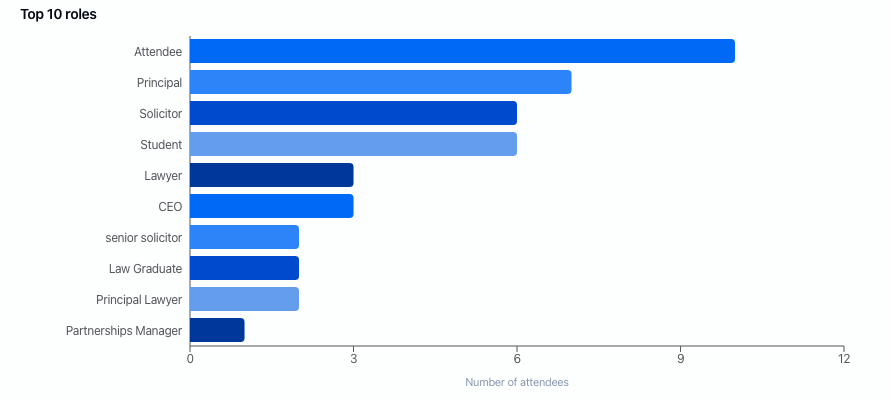
Segmentation goes wrong most often when it starts with the data. Start with the event outcome instead. Acrotrend suggests beginning with a clear question - how do we improve attendance, engagement or the on-the-day experience - then deciding what audience data matters. That keeps the work focused on differences that are likely to affect the result you actually care about.
Keep the model small. Acrotrend's line is think big, start small, do not go overboard. Build a short list of meaningful segments rather than a long, fragile set of micro-groups that your team cannot hold in their heads on a busy day. Eventbrite's attendee persona examples help here because they show audience differences are not only demographic - people can be grouped by what they want from the event, such as connection, comfort or experience.
This is why raw demographic data is a starting point, not the whole answer. Demographics describe broad patterns; they do not explain what people expect on the day. Eventbrite's persona labels like Connection-Seekers, Experience-Chasers and Comfort-Zoners sit closer to motivation, which is what actually shapes planning decisions - whether that is the networking format, the tone of the opening address or where the food goes.
Once you have a draft set of segments, test whether each one is actionable. If a segment does not change how you plan, communicate or measure the event, it is not really a segment. It is a data cut.
- Start with one event outcome, not every data point.
- Use a small number of segments your team can actually act on.
- Keep only segments that lead to different planning or messaging decisions.
Using insights to improve marketing and event design
Audience insight is most useful when it changes what you do. The first job is to get clear on who you want to attract, because broad promotion tends to fill the room with the wrong mix of people. The Les Roches guidance starts with the audience, and Eventbrite makes the same point from a persona angle: different attendee types respond to different messages. Your copy, creative and sense of urgency should reflect what matters to each segment. A networking-led audience responds to language about meeting the right people - and that is exactly where attendee matchmaking earns its place alongside audience insight work. An experience-led audience cares more about what the day will feel like.
The same insights should shape distribution. Eventbrite notes that once you know your audience, the next step is reaching them with the right messaging and channels. That is a call about where your effort goes - LinkedIn vs trade press vs alumni lists vs your own email file. It is also a call about budget split, which is usually where the conversation gets real. For a related read on understanding a different event audience, see what event sponsors actually want.
The same picture should carry into the room itself. Audience understanding informs agenda choices, session formats and the shape of the day. Les Roches also points to using live feedback and on-site signals during the event so organisers can adjust in real time. That closes the loop: insight shapes the promise before the event, and adjusts the delivery during it, so what people expected and what they experienced stay in the same neighbourhood.
A simple process for building better audience insights over time
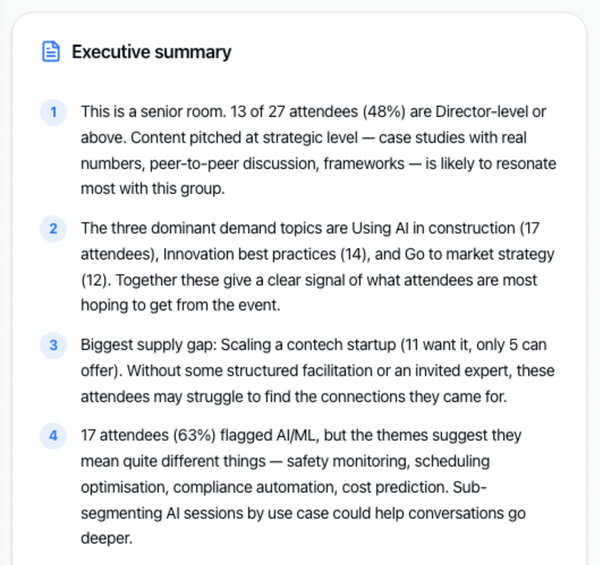
A good audience insight habit starts before the next event is planned in detail. Decide what you need to learn and what decision that learning is meant to improve. That keeps the work outcome-based rather than data-heavy. From there, collect only the audience data that answers the question and keep the framework simple enough to use again.
After the event, review in a practical way. Who engaged? How was the audience made up? Was the information you gathered actually useful for planning the next cycle? Then pick one or two adjustments for next time rather than redesigning the whole approach. Over a few events, you end up with a clear baseline and a lighter process, not a heavier one.
The tools matter less than the loop. At events running on All Along, the registration and pre-event data already quietly do half of this work - who is coming, what they are interested in, who they want to meet. Something to sit with: if that picture exists before the doors open, how much of your current event marketing and agenda would you still run the same way?
Frequently asked questions
What are audience insights for events?
They are the details that help organisers understand who their audience is, what attendees want and how they engage. That includes motivations, expectations, behaviours, the channels they use and attendance patterns - not just demographics.
How is audience insight different from basic attendee data?
Basic attendee data tells you who registered - age bracket, job title, company size. Audience insight goes further by showing why people attend, what they expect on the day and which messages or formats are likely to land with them.
How many audience segments should an event team use?
Keep it small and practical. A short list of three to five clear segments is usually easier to apply across marketing, planning and experience design than a fine-grained set of micro-groups that no one can act on.
How do audience insights improve event marketing?
They help you choose the right message, creative angle and channels for different attendee groups. The goal is not only more registrations - it is to attract people whose reasons for attending match what the event will actually deliver.
When should organisers collect audience insights?
Start before you promote the event, so your targeting and messaging are built on real attendee data rather than guesses. Keep collecting through the event cycle with live feedback and review what you learned afterwards, so the next event has a cleaner baseline.
About the author
Cate Trotter
Co-founder and Product Lead, All Along
Cate is co-founder and product lead at All Along. She's spent 15+ years helping organisations turn emerging tech into commercial results, and founded and sold two retail-focused businesses before building All Along. She writes about how events can turn networking from a happy accident into a repeatable outcome.
Connect on LinkedInReady to make networking the reason people come back?
All Along gives every attendee three people they should actually meet, and gives you a complete picture of what your audience wants.
More from Field Notes
How to increase member engagement without adding more content
The five steps I'd take to increase member engagement, in order, with the metrics worth tracking and the ones worth dropping.
A community manager job description that hires connectors
Most community manager job descriptions hire a content producer and wonder why retention doesn't move. Here's the one I'd write for a connector instead.
How to build the business case for event networking
Networking gets cut first because organisers pitch it as a vibe, not a business. Here's the case I write when a CFO is sharpening the red pen.