
What event sponsors actually want - and why most organisers can't give it to them
65% of sponsorship professionals say proving ROI is their top challenge (SponsorFlo, 2025). Most organisers still hand them a logo, not the room.
Co-founder and GTM Lead, All Along
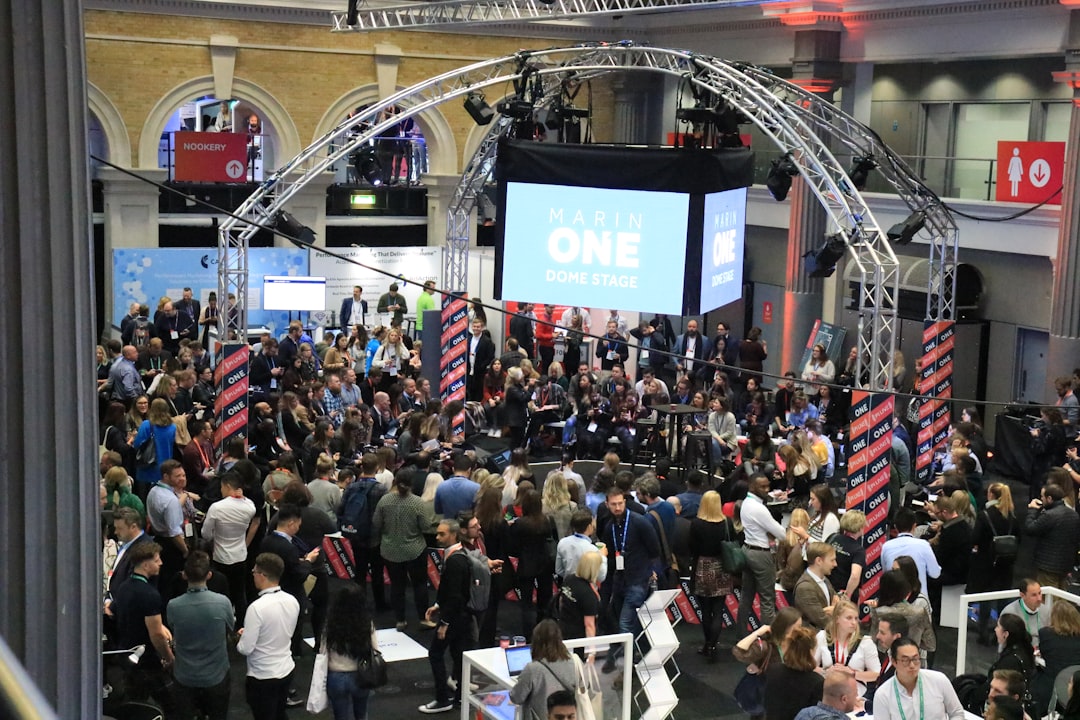
Sponsors want three things from you: who was in the room by role, seniority and industry, what those people came to solve, and an honest read on how much of that audience overlaps their target market. Logos and headcounts no longer clear the bar - 65% of sponsorship professionals say proving ROI is their hardest problem (SponsorFlo, 2025). Here are the questions they now ask, and how to be ready with answers.
"Who exactly is in the room?" "What are they trying to achieve?" "What does this audience have in common with our target market?"
These aren't unreasonable questions. They're the same questions any marketer asks before committing budget to a campaign. The problem is that most events simply are not set up to answer them - and until that changes, the sponsorship conversation is always going to feel like a leap of faith.
Why sponsors are asking harder questions now
The short answer: digital advertising has changed what "proof" looks like. Brands can now track exactly what happens when someone sees an ad - did they click, browse, buy? Events can't replicate that level of granularity, but sponsors are increasingly holding events to a similar standard.
According to SponsorFlo's 2025 analysis of sponsorship ROI measurement, 65% of sponsorship professionals say ROI measurement is their single greatest challenge. And the standard solutions - impressions, attendee counts, post - event surveys that reach 12% of the room - are no longer convincing. (SponsorFlo, 2025)
This is uncomfortable for many event organisers, because events were never really built to capture that kind of data. Registration forms ask for a name and an email. Attendees fill them in on their phones in thirty seconds. And that's often as much intelligence as the organiser has to offer a sponsor sitting across the table.
The gap between what sponsors want and what organisers can deliver isn't a negotiation problem. It's a data collection problem. And the fix starts at registration, not at the post - event debrief.

What do event sponsors actually want from your audience?
Sponsors want to know who they're reaching and whether that audience matches their customer.Attendee numbers are a starting point. Audience quality is the conversation.
When I talk to event organisers about their sponsorship conversations, the sticking point is almost always the same. The organiser leads with how many people are coming and how good the speaker lineup is. The sponsor wants to know the seniority breakdown, what industries are represented, what problems those attendees are actively trying to solve.
These are two different conversations. And most organisers can only have the first one.
What sponsors are increasingly looking for falls into three categories:
Audience profile data. Who came: role, industry, company size, seniority. This is table stakes, but most events only capture a name and an email address.
Audience intent data. What attendees were there to do - what problems they brought with them, what knowledge or connections they were actively seeking, what decisions they were working through. This is where most events fall short entirely.
Audience fit analysis. An honest assessment of how much overlap exists between your event audience and the sponsor's target market. Not a number - a narrative. "This event attracts finance directors and CFOs in professional services who are actively exploring operational efficiency investments." That kind of picture gives a sponsor real confidence, because it answers the question they're actually asking.
The third category is the most valuable, and it's the one that's almost impossible to put together without deliberately capturing intent data at registration.
What should your registration form actually collect?
The registration form is the single most underused source of intelligence in event management.Most forms ask who you are. The useful ones ask what you're there for.
To generate the kind of audience picture sponsors want, a registration form needs to capture at minimum:
- Role and seniority level
- Company and industry
- What the attendee wants to discuss or explore at the event - the topics, problems or questions they're hoping to dig into
- What they're able to contribute - the experience or expertise they bring to the room
That last two points are the ones most organisers overlook. And they're the ones that make the biggest difference - both for the audience intelligence picture sponsors want, and for the quality of the event itself.
With this data collected, you can produce a pre-event audience brief that tells sponsors what's coming through the door with real specificity. "Forty-three per cent of attendees listed talent strategy as a top conversation topic. The audience skews senior: 34% are director level or above. The highest-demand area is cross-industry collaboration, mentioned by 29% of attendees." That's a completely different conversation to "we're expecting 180 attendees."
How do you package audience data into something sponsors will value?
The audience brief is worth more than the impressions, and it should be presented that way.
A few years ago, the standard sponsorship deliverable was a post - event report with photos and attendee numbers. The organisers getting strong repeat sponsorship today are the ones sharing an audience intelligence brief before the event - giving sponsors a reason to say yes with confidence, and a clear benchmark to evaluate their experience against.
A pre-event audience insights brief typically includes:
- The attendee demographic breakdown (role, seniority, industry, company type)
- The top topics and problems the audience brought to the event
- Which segments of the audience are most likely to be relevant to the sponsor's offer
- What the audience said they don't need (this matters - it helps sponsors pitch to the right people and stops them wasting time on the wrong ones)
The challenge for most organisers is that pulling together this kind of brief is genuinely time - consuming if you're building it manually from spreadsheets. All Along, an event networking and audience intelligence platform, auto-generates exactly this kind of report from registration data. Before the event starts, organisers have a full picture of their audience - topic demand, supply gaps, role clusters, seniority breakdown, and qualitative patterns from what attendees wrote in free text. The reports are designed to be shared directly with sponsors or senior stakeholders without any manual compilation.
That shifts the sponsorship conversation from "trust us, it'll be worthwhile" to "here's exactly who you'll be in the room with - and why they're relevant to you." The audience brief is only as sharp as the questions you ask at registration, which is where most of this signal is captured in the first place.
Does this help with sponsor renewals, or just new pitches?
It helps more with renewals than with new sponsorships - which is ultimately where the revenue is.
Winning a first sponsor is one conversation. Retaining them is ongoing proof that the investment was worth it. Sponsors who receive a genuine audience intelligence report before and after an event have something concrete to assess. They know what the audience said they were looking for. They can compare that to what they actually experienced at the event. They can bring the report back to their internal team to justify the spend - especially when it sits alongside measured networking outcomes from the event itself.
Sponsors who only get a logo placement recap and a thank - you note have nothing to show but a pile of business cards and a branded lanyard.
The organisers who have the easiest renewal conversations are the ones who treated audience data as a deliverable from day one - not as something to be extracted from a post - event survey nobody fills in. They went into the relationship with a pre - event brief and closed it with a post - event audience summary. That's a different kind of partnership.
The starting point
Updating your registration form is not a project. It takes thirty minutes. The change is minimal: add a few questions about what attendees want to discuss and what they can contribute. Most attendees are happy to answer because the questions signal that the event has been designed with them in mind, rather than around a speaking programme.
The more considered shift is treating the data you collect as something worth sharing - with sponsors, with speakers, with the planning team before the next edition. Events generate more useful intelligence than almost any other format, because attendees arrive with a clear intent and they tell you what it is if you ask. Most events just never ask.
The data is already there. You just need to start collecting it.
Frequently asked questions
What do event sponsors actually want?
Event sponsors want audience intelligence they can act on - specifically, the seniority, industry, company type, and intent of attendees. They want to know whether your audience matches their target market, and they want data to justify the spend internally. Impressions and attendee counts are no longer sufficient.
What should an event registration form collect for sponsor reporting?
Beyond name, email, company and role, your registration form should capture what attendees want to discuss or explore at the event, and what expertise or experience they bring to the room. These intent - based questions are what allow you to build a useful audience intelligence brief for sponsors.
How do you prove ROI to event sponsors?
The most effective approach is sharing a pre-event audience intelligence brief - not just a post-event attendee count. A brief that shows who is attending, what they care about, and how they match the sponsor's target market gives sponsors a concrete basis for evaluating the partnership before and after the event.
What is an event audience intelligence report?
An event audience intelligence report is a structured summary of attendee data captured at registration. It typically includes a demographic breakdown (role, seniority, industry), the top topics and problems attendees brought to the event, and an analysis of which audience segments are most relevant to specific sponsors or stakeholders.
When should you share audience data with sponsors?
Ideally before the event, not just after it. A pre-event audience brief gives sponsors a clear picture of who will be in the room so they can prepare effectively. Following up with a post-event summary closes the loop and gives sponsors something concrete to use for internal reporting and renewal decisions.
About the author
Alex Shiell
Co-founder and GTM Lead, All Along
Alex is co-founder and GTM lead at All Along. She spends her days talking to event organisers, associations and sponsors about what they need from networking - and turning those conversations into product and commercial decisions. She writes about the operational side of events: registration data, sponsor ROI, adoption and the organiser craft.
Connect on LinkedInReady to make networking the reason people come back?
All Along gives every attendee three people they should actually meet, and gives you a complete picture of what your audience wants.
More from Field Notes
B2B event networking for sales teams: a three-touch framework
Sales teams arrive at B2B events with a budget, a quota and no plan. The teams who do this well treat the event as the middle of a conversation, not the start.
The case for transparent event matchmaking
If an attendee asks why they were paired with someone, an organiser who cannot answer has a product problem, not a communication problem.
Event networking by event type: one framework, six formats
One networking format does not fit six different kinds of event. Three questions that tell you the design any event type actually needs.