
Five B2B networking session formats that actually work
B2B buyers need smaller groups and longer conversations than a panel or mingle night. Matched one-to-ones need 25 minutes - 15 is speed dating.
Co-founder and Product Lead, All Along

Five B2B networking formats consistently produce real meetings: matched one-to-ones at 25 minutes, industry cluster sessions of about ten people, problem-led roundtables capped at seven seats, peer advisory circles and demo-free buyer roundtables. Each needs a longer window and a smaller group than a consumer event would give it. There is also one format I would quietly retire, and I will get to why.
Most B2B events I watch are running the wrong session formats. Not slightly wrong. Fundamentally the wrong shape for the conversation the audience is trying to have.
The symptom is familiar. Strong agenda on paper. Good speakers. Decent attendance. A networking section that, on the day, produces polite small talk, a handful of handed-over business cards, and a quiet suspicion among attendees that the real meetings happened elsewhere - at the bar, on the way to the airport, over dinner with the two people they already knew.
The problem is almost never the audience. It is that the programme is built out of consumer event formats - panels, mass mingle sessions, short speed rounds - and B2B buyers need something different from the room.
Here are the five formats I see working at the B2B events that genuinely produce follow-ups. None of them require software you do not already have. They do require an organiser willing to be specific about who is talking to whom and why.
Why B2B networking formats need to be different
Consumer event networking is optimised for volume of contacts. You want to meet a lot of people, briefly, because the point is social. B2B networking is optimised for quality of conversation. You want to meet fewer people, properly, because the point is commercial - or at least consequential.
Freeman's 2025 Networking Trends Report found that 58 per cent of attendees now say networking is the primary reason they attend events, up from 39 per cent in 2021. Attendees who use pre-event information to plan their connections are 3.2 times more likely to rate the event as highly valuable than those who do not. (Freeman, 2025) At a B2B event those numbers run higher, because the stakes of the conversation do too.
The knock-on effect is that B2B formats need to do three things consumer formats usually do not. They need to give each attendee a reason the person opposite is worth 30 minutes. They need to narrow the room to an industry, a role, or a problem so the conversation has shared footing. And they need to run long enough that the talk gets past introductions and into the thing that actually mattered to both people showing up.
My take: if a B2B format does not do all three of those, it will under-perform, regardless of how well it is produced.
Format one: matched one-to-one meetings
The classic B2B networking format, and still the highest-yield when done properly. Two attendees, one table, a scheduled slot.
Everything rides on two variables. Length of slot and quality of match. Fifteen minute meetings are speed dating. You will produce a lot of contacts and very few conversations worth a follow-up. Twenty-five to thirty minutes is the shortest window where a real B2B conversation can happen - introductions, context, the actual topic, a next step.
The other variable is whether the match carries a reason. A calendar invite that says "you both work in fintech" is not a match, it is a join. A calendar invite that says "you are trying to understand regulated data residency, and she runs platform compliance at a neobank that just solved it" is a match. For the underlying discipline I wrote a separate piece on what attendee matchmaking actually means, which spells out why reasoning matters more than the matching algorithm.
When this format works, conversion rates on meeting-to-follow-up run above 60 per cent. When it does not, attendees politely nod through their slots and then ignore each other afterwards. There is very little in between.
Format two: industry cluster sessions
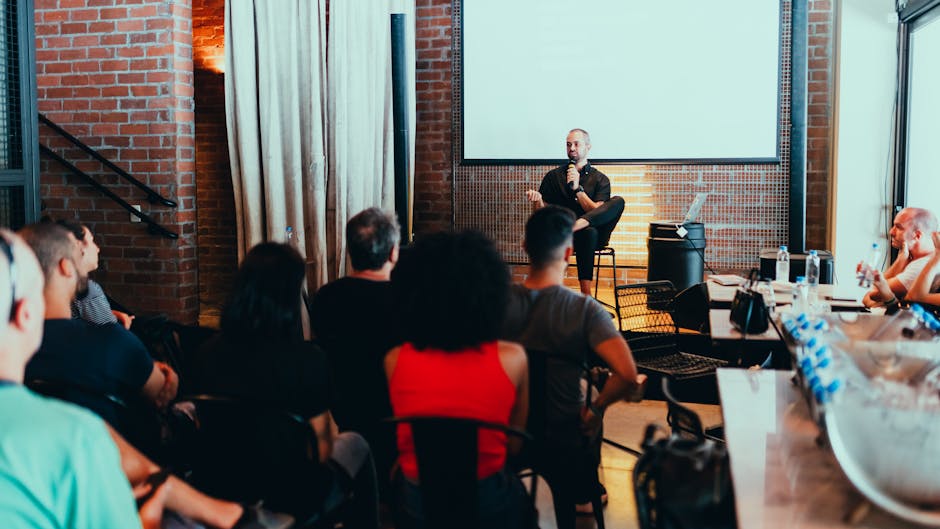
A mid-sized format - eight to twelve attendees grouped by the vertical they sell into, or the one they work in. 45 to 60 minutes of loosely facilitated conversation on a theme each attendee already has an opinion about.
The reason cluster sessions work in B2B is that business decisions are still mostly vertical. Ten people who sell into healthcare have more to say to each other in 45 minutes than a hundred people from mixed sectors have in a whole afternoon. The shared context means you can skip the "what does your company do" phase and go straight to the conversation that actually moves the dial - what is changing in procurement, what buyers are actually asking for, which tools are getting adopted.
McKinsey's 2024 B2B pulse research found that winners in B2B growth are those who invest in richer buyer journeys across more channels - including small, vertical-specific forums rather than generic events. (McKinsey, 2024) That is a data point, but it is also a design prompt. Industry clusters at events are a low-cost way for organisers to offer the kind of specific, peer-dense conversation the buyers in the room already know they want.
Operationally, cluster sessions are easier to run than they sound. Use your registration data to tag attendees by vertical. Seat them in pre-assigned clusters. Give each table a prompt question and a light-touch host. Do not over-programme it beyond that - the group will find their own conversation if you have seated them well.
Format three: problem-led seven-seat roundtables
Seven people, one table, one named problem, 45 to 60 minutes. Seven is the upper limit for a conversation where everyone can speak and be heard. Eight and you have a panel with an audience.
The defining feature of this format is the problem statement. Not a theme, not a topic - a question specific enough that everyone at the table can take a position on it. "How do we measure brand marketing in B2B" is a topic. "Should B2B marketing teams own revenue attribution, or is that finance's job" is a problem. The second one produces argument, which is what makes the format land.
I find this is the format most commonly confused with other session formats, particularly panels. A panel has three or four speakers performing for a room. A seven-seat roundtable has seven peers talking to each other. The distinction in energy is enormous and the design trade-off is worth making deliberately, not by default.
The Event Manager Blog has covered the gradual shift away from presentation formats towards participant-led ones across the last decade, and the B2B category has been slower to adopt than most. (Event Manager Blog, 2025) That is the gap this format sits in. The fullest expression of that participant-led shift is the unconference format, where the attendees set the agenda rather than the organiser.
Format four: peer advisory circles
Three to four people in the same functional role - four heads of marketing, four finance directors, four revops leads. 75 to 90 minutes, pre-briefed. Each person brings one current problem and gets 15 to 20 minutes of focused input from the other three.
This is the format that looks least like traditional networking and produces the most loyal repeat attendees. The reason is obvious once you watch one run. People in senior functional roles have fewer peers available to them inside their own companies than the org chart suggests. A 90-minute session with three credible peers, discussing real problems, is more useful than most of the paid coaching they would otherwise buy.
Peer advisory circles are operationally heavier than the others. They need curation to make sure the four people have comparable seniority and no direct commercial conflict, a host who can time-keep without talking too much, and a private space. But the loyalty compounds - attendees who have one good circle session will come back to an event purely for another.

Format five: demo-free buyer roundtables
A specific, slightly contrarian format: a vendor hosts a table of six to eight buyers from their target segment, and is contractually not allowed to pitch. The vendor sits at the table, listens, asks questions, and helps the buyers talk to each other.
The reason it works is trust. Buyers show up because the agenda explicitly rules out being pitched at. The vendor earns disproportionate credibility by being the most thoughtful person in a conversation that is not about their product. Nobody leaves the table thinking they have been sold to, and at least two or three of the buyers follow up voluntarily in the weeks afterward.
PCMA's Convene and Skift Meetings coverage (2025) have both written about the shift towards "trust-building" sponsorship formats in B2B events, of which this is a clean example. From a sponsor's point of view, the spend produces more usable pipeline than a 30-minute stage slot at the same event, because the conversations are already in the segment they care about.
The one condition is discipline. If the vendor breaks the no-pitch rule once, the format collapses and the organiser carries the reputational cost. Hosts have to be briefed, and ideally attend a training call before the event.
How to choose which format to run
Most B2B events do not need all five. They need two or three, run properly, at the right point in the agenda.
A simple decision frame: if your attendees mostly know their problem but do not know who has solved it, run matched one-to-ones and industry clusters. If your attendees mostly have a vague problem and want to sharpen it, run seven-seat roundtables. If your attendees are senior and time-poor, run peer advisory circles. If your sponsors are complaining about stage fatigue, run demo-free buyer roundtables.
The format I would quietly retire for most B2B audiences is the mass mingle session. It punishes introverts, rewards extroverts with nothing to say, and produces the smallest ratio of useful conversations to floor time of any format listed here. If you need a social anchor, keep the dinner - it does the same work without the fiction that real business conversations happen between two strangers holding drinks.
If you want a quick sanity check on whether your current programme is weighted towards formats that produce real conversation, the networking gap calculator will flag the biggest bottleneck in under two minutes.
None of this needs new technology. It needs a programme decision about which formats earn their slot and which ones are there because previous years ran them. B2B networking does not get better by adding another mingle session. It gets better by giving the conversations that matter a shape they can actually happen inside.
Want the template I use when I plan networking into an event agenda?
I put a short operator's brief together - the three registration questions, the match format decision tree, the post-event follow-up template. Free, no email wall.
Frequently asked questions
What is a B2B networking session format?
A B2B networking session format is the structure an organiser puts around attendee-to-attendee conversations at a business event - who meets whom, for how long, around what topic, and in what size of group. Formats range from matched one-to-one meetings to small roundtables to full-room mingle sessions. The format is what determines whether B2B buyers actually have the kind of peer or commercial conversation they came for, or whether they end up in polite chat with whoever is standing nearest.
How are B2B networking formats different from consumer event formats?
B2B attendees are at the event for work, not social reasons. They need longer conversation windows (20 to 45 minutes rather than 5), smaller groups (pairs or six to ten people rather than whole rooms), and a specific reason to talk to each person. Consumer event formats - big mingles, short speed rounds, high-energy icebreakers - tend to under-deliver at B2B events because they optimise for volume of contacts, when B2B buyers are optimising for quality of conversation and fit of the person opposite.
What is a seven-seat roundtable?
A seven-seat roundtable is a B2B networking format where one host frames a single shared problem and six invited attendees sit around a table to discuss it for 45 to 60 minutes. Seven is not a magic number but it is the upper limit for a conversation where everyone can speak and be heard. Eight or more and it turns into a panel with an audience. Six or fewer and it becomes a peer advisory circle, which is a different format with its own rules.
Do matched one-to-one meetings still work at B2B events?
Yes, when they are matched properly and given enough time. The common failure mode is treating them as speed networking - five or ten minute slots that produce surface-level exchanges. B2B one-to-ones need 20 to 30 minutes and a one-line reason each person is being introduced to the other. Events that get this right report meeting conversion rates above 60 per cent. Events that do not see polite coffee chats and few follow-ups.
Which B2B networking format works best for a first event?
For a first event of under 200 attendees, I would pick problem-led roundtables over almost anything else. They need the least operational machinery, do not rely on matching software, produce visible engagement, and create a story attendees will tell afterwards. Run three to four of them on a single afternoon with rotating seats. You get the conversation quality of matched one-to-ones with the social energy of a larger session, and the format scales up cleanly when you grow the event.
How long should a B2B networking session be?
Long enough for the conversation the format is designed to produce. Matched one-to-ones need 20 to 30 minutes. Industry cluster sessions and seven-seat roundtables need 45 to 60. Peer advisory circles need at least 75. If you are tempted to run a B2B networking session under 30 minutes, the honest answer is usually that you do not have room in the programme for it - not that 20 minutes is enough. Better to run fewer sessions well than more sessions at a duration that guarantees shallow conversation.
About the author
Cate Trotter
Co-founder and Product Lead, All Along
Cate is co-founder and product lead at All Along. She's spent 15+ years helping organisations turn emerging tech into commercial results, and founded and sold two retail-focused businesses before building All Along. She writes about how events can turn networking from a happy accident into a repeatable outcome.
Connect on LinkedInReady to make networking the reason people come back?
All Along gives every attendee three people they should actually meet, and gives you a complete picture of what your audience wants.
More from Field Notes
B2B event networking for sales teams: a three-touch framework
Sales teams arrive at B2B events with a budget, a quota and no plan. The teams who do this well treat the event as the middle of a conversation, not the start.
The case for transparent event matchmaking
If an attendee asks why they were paired with someone, an organiser who cannot answer has a product problem, not a communication problem.
Event networking by event type: one framework, six formats
One networking format does not fit six different kinds of event. Three questions that tell you the design any event type actually needs.