
Which event session formats actually generate real conversations
The traditional four-person panel is the worst session format for producing conversation, according to PCMA research. Small-group discussion beats it.
Co-founder and Product Lead, All Along
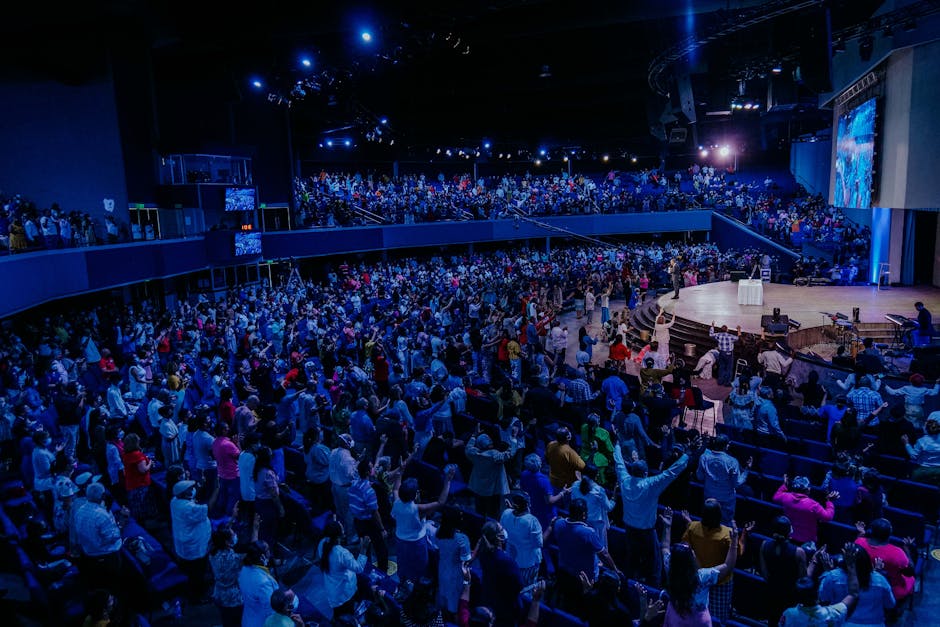
Small-group discussion generates the most real conversation: six to ten people, one prompt, one facilitator, 30 to 45 minutes. A Q&A heavy interview with 60% of the time given to the audience comes a close second. The traditional four-person panel comes last, every time. Here is why format matters more than topic, and how to test a new one without losing the room.
I spent a long time assuming session topic was the thing that mattered at a conference. Pick the right topic, the right speaker, the right title, and the session would land. Everything else was logistics.
I was wrong. After running through enough post-event surveys, the pattern is clear and a bit uncomfortable. Format eats topic. The session attendees remember is almost always the one with the format that let them participate - not the one with the most interesting title on the programme.
This is one of those findings I keep coming back to because it has such a big implication. You can raise the quality of an entire conference by redesigning the formats without changing the topics or the speakers.
Format eats topic
The evidence for this shows up in two places. First, when you ask attendees to name the session they remember most, they describe how it felt, not what it was about. 'The one where we broke into small groups.' 'The one where the interviewer pushed back on her.' 'The one where we wrote on the wall.' They remember the format because the format is what they did, not what they watched.
Second, when you correlate session scores in post-event surveys against session format, the ranking is almost always the same. Small-group and interactive formats at the top, traditional panels at the bottom, with single-speaker keynotes in the middle depending on the speaker.
Research from PCMA's 2025 Convening Leaders and Meeting Professionals International (MPI) Meetings Outlook both point at the same basic finding: interactive and participant-driven formats outperform passive ones on recall, perceived value and willingness to return. (PCMA, 2025) (MPI, 2025)

The panel problem
The four-person panel is the default for a reason. It is easy to organise, it lets you put four names on the marketing, and it fills a 45 minute slot with minimal risk. It is also the single worst format for networking value.
Here is what happens in a four-person panel, mechanically. The moderator reads a pre-agreed opening question. Each panellist takes two to three minutes to give a careful answer. That eats ten to twelve minutes. Moderator reads the next pre-agreed question, round and round. By the time the audience Q&A opens, there is 8 minutes left, someone asks a long rambling question that is really a speech, a panellist gives a generous answer, and the lights come up.
Nobody in the room has said anything out loud to anyone next to them. Nobody has a specific thing to carry into the next break. It is as if networking is deliberately being shut down by format.
This is not the panellists' fault. They are doing the job they were booked for. The format is the problem. Which is why picking the right kind of speaker - a catalyst rather than a marquee - only gets you so far if the format they are standing inside is built to absorb their impact. If a panel is unavoidable, the fix is to redesign it around panel discussion audience engagement rather than another round of pre-agreed questions.
The formats that work
Three formats consistently outperform. They are not the only ones that work, but if you only remember three, remember these.
Small-group discussion. 6 to 10 attendees, one prompt, one facilitator, 30 to 45 minutes. Works best when the prompt invites personal experience ('what is one thing you are trying to work out this month') rather than theory ('what is the future of X'). The facilitator's job is to keep the conversation moving, not to deliver content. Small-group discussion is the highest-networking-density format in the whole toolkit - and it's the backbone of most of the B2B networking session formats worth running.
Q&A heavy interview. One guest, one sharp interviewer who is willing to push back, and at least 60% of the time reserved for audience questions. The trick is to pre-select a small number of attendees to ask the first questions so the Q&A does not stall out in the first two minutes. The audience questions are where the conversation tail is generated because they surface disagreement and specific contexts that the panel format smothers.
Open space and unconference. Attendees set the agenda in the first 20 minutes of the session, self-select into small groups, and discuss. Sounds chaotic. Is actually one of the highest-quality networking formats in existence. Every session is populated by people who actively chose to be there to talk about that exact topic. The self-selection is doing the matching work for you. It is worth building a whole track around: a full unconference format puts attendee-led networking at the centre of the day rather than the edge.
Why these formats work
They share three properties. Every attendee speaks or is expected to speak. Every attendee listens to somebody specific, not to a stage. And every attendee leaves with a specific thing another attendee said, not a slide quote.
Those three properties are what generate the conversation tail - the conversations that continue in the break, at lunch, on the walk back to the hotel, in the email exchange two days later. That tail is the actual output of a good session, and it only happens when the format has done some of the work for the attendees.
The same logic is at the heart of why event networking works for introverts when it is designed properly. The format takes the weight off the individual and puts it on the container. Confidence stops being a requirement.

How to test without losing the audience
The usual objection when I push programme teams to redesign formats is that attendees are used to panels and will complain if you give them something different. In my experience this is almost never true. Attendees complain about boring panels. They are relieved when something else happens. The risk is overstated.
A safer way in: pick one session on your next event, redesign it as a small-group discussion or a structured interview, and keep the rest of the programme the same. Collect the post-event scores for that session. Compare them against the default formats. If the experimental session scores higher - and it almost always does - expand the experiment at the next event.
This also connects directly to the wider networking design of the event. You do not need to throw out the programme. You need to test format by format and collect the data.
The measurement that matters
Ask two questions in the post-event survey. 'Which session do you remember most?' and 'What was the format of that session?' Over two or three events, a pattern will emerge and it will be clearer than you expect.
If you want a deeper view of what to measure at an event and how, our guide on measuring event networking success covers the survey questions that actually tell you something useful.
And if you want to see what a format-aware programme looks like in practice, have a look at how All Along works for events, or run your current programme through our networking gap calculator to see where the format is doing the opposite of its job.
Frequently asked questions
What is the best session format for a networking event?
Small-group discussion is the single best format for networking value. 6 to 10 attendees around a table, one prompt that invites personal experience rather than theory, one facilitator keeping the conversation moving, and 30 to 45 minutes of time. It consistently produces more conversations and longer-tail connections than any other format because it forces every attendee to say something out loud and listen to the person next to them. The format does most of the work - you just need a good prompt.
Why are four-person panels bad for networking?
They are passive by design. Four panellists take turns speaking, the moderator asks pre-agreed questions, attendees sit in rows and listen. There is no moment when the attendees turn to each other, no shared question to argue about afterwards and no opening line for the conversation that is supposed to happen in the break. PCMA's 2025 research consistently shows panels scoring lowest on attendee recall and conversation tail, and most conference organisers I know can recognise this pattern in their own post-event data as soon as they look for it.
What is an unconference format?
An unconference or open space format is one where attendees set the agenda on the day, rather than the organiser picking topics in advance. Attendees propose sessions, self-select into the ones they care about, and discuss them in small groups. It sounds chaotic and is actually one of the highest-quality networking formats in existence - because every session is populated by people who actively chose to be there to talk about that specific topic. Open space is not right for every event but it is worth trying in at least one track of a larger conference.
How long should a conference session be?
Shorter than most programmes assume. A 60 minute panel is 45 minutes of passive listening and 15 minutes of Q&A that nobody remembers. A 30 minute interview with 30 minutes of audience questions and small-group reactions produces far more networking value in the same slot. The rule is: the more passive the format, the shorter it should be. The more interactive, the more time you can afford to give it.
How do I experiment with new session formats without losing the audience?
Start with one track or one slot. Pick a single session on your next event, redesign it as a small-group discussion or structured interview, and keep the rest of the programme the same. Compare the post-event scores for that session against the default formats. If it scores higher - and in my experience it almost always does - expand the experiment to more sessions at the next event. You are not rebuilding the agenda overnight, you are running a controlled test you can point at when the programme committee pushes back.
About the author
Cate Trotter
Co-founder and Product Lead, All Along
Cate is co-founder and product lead at All Along. She's spent 15+ years helping organisations turn emerging tech into commercial results, and founded and sold two retail-focused businesses before building All Along. She writes about how events can turn networking from a happy accident into a repeatable outcome.
Connect on LinkedInReady to make networking the reason people come back?
All Along gives every attendee three people they should actually meet, and gives you a complete picture of what your audience wants.
More from Field Notes
Professional networking after hybrid working: the new geography
The cohort that buys conference tickets is now the cohort least likely to be in the office. That changes what the conference is for, and most organisers are still pricing it like 2019.
Why event networking matters more now than it used to
Meetings per person are up. Meeting length is down. Conferences are now the longest block of peer attention most professionals get all year, and most organisers still treat the networking around them as a side dish.
The first hour of a conference matters more than the keynote
Most organisers pour their best thinking into the keynote. First-time attendees have usually made up their minds about your event long before the speaker walks on stage.