
The perception gap killing your event networking results
78% of organisers believe their events deliver memorable moments. Just 40% of attendees agree - a 38-point gap that shows up later as flat repeat bookings.
Co-founder and GTM Lead, All Along
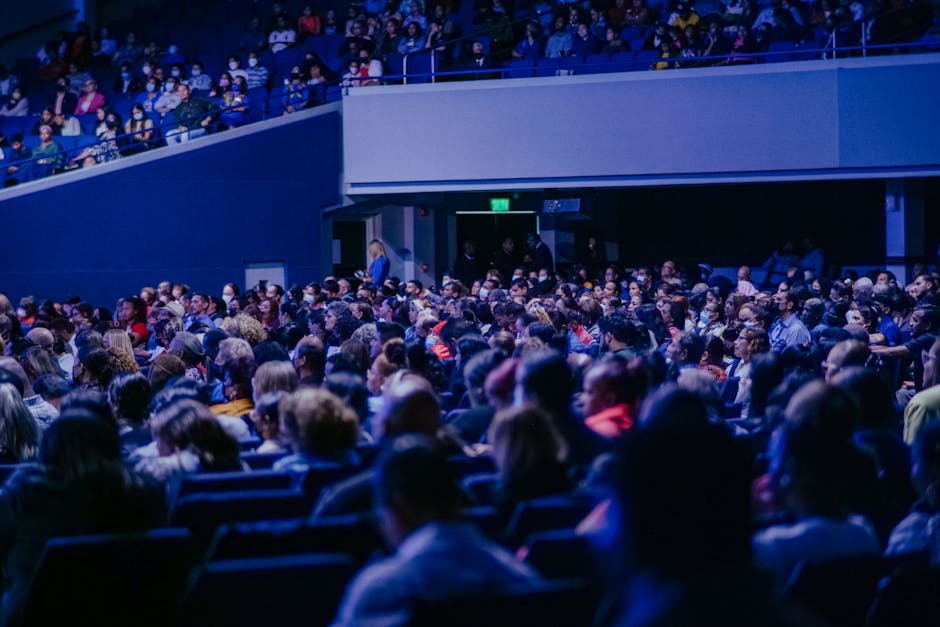
The perception gap is the distance between how good an event felt from the stage and how it felt from the fourth row. Organisers rate their own events roughly twice as highly as attendees do on memorable moments (Freeman, 2025), which is why so few people complain and so many quietly do not come back. Here is where the gap is widest, and what actually closes it.
78% of organisers believe their event delivers memorable moments. Only 40% of attendees agree.
That's a 38 - point perception gap, and it comes from Freeman's 2025 Experience Trends Report - one of the largest studies of organisers and attendees in the industry. (Freeman, 2025)
I've been sitting with this stat for a while now, and I think it explains something that a lot of organisers feel but can't quite name: the sense that your events are going well, that people seem engaged, that the feedback is generally positive - but the repeat bookings aren't there. The NPS is flat. Attendees say nice things and don't come back.
The gap between what we think we're delivering and what people actually experience is where money and trust quietly leak out.
Where the gap is widest
The Freeman data gets more interesting when you look at what each side thinks matters.
When organisers were asked what creates a memorable event, they pointed to keynotes, galas, surprise entertainment and multi - sensory environments. When attendees were asked the same question, they pointed to vendor relationships (41%), learning (20%) and networking (19%). (Freeman, 2025)
Organisers are investing in spectacle. Attendees want substance.
This misalignment runs deep. Attendees rank networking as their second - highest event priority. Organisers rank it fifth - behind keynotes, education sessions and special events. (Freeman, 2024)
So the thing attendees value most after the main programme is the thing organisers invest in least. The path to closing that gap starts with increasing event attendee engagement and being honest about what attendees actually want from networking - designing for the outcomes attendees actually prioritise.
The effectiveness problem
Even among the organisers who do invest in networking, more tools haven't translated into better outcomes.
59% of event professionals say more people attend networking events now than before the pandemic. Demand is up. Event app usage has grown 23% year on year. Yet the industry is still struggling with the basics: getting the right people into the right conversations.
My take: most networking features are bolt - ons. A matchmaking tab added to a platform that was built for registration and ticketing. The matching runs on job titles and company sizes, not on what they actually need from the event. It's the equivalent of seating people alphabetically and calling it curated. The same pattern shows up in the way most events still rely on coffee breaks as their primary networking format.
The technology exists. But it's rarely the core of the experience - and attendees can tell the difference.
What attendees actually want from networking
The data on what makes networking valuable is surprisingly specific.
52% of attendees say meeting professionals who face similar challenges is the most important factor in a good networking experience - ahead of topic - specific meetups (44%) and well ahead of speed networking (8%) or mentor sessions (13%). (Freeman, 2024)
People don't want more contacts. They want the right contacts. They want to walk into a room already knowing who to find and why that conversation matters.
And the stakes are high. 51% of attendees say successful networking is the single biggest reason they'd return to an event next year. When meaningful connections happen, networking becomes the number one driver of repeat attendance. (Freeman, 2025)
Yet over 95% of networking event attendees say their goal is to meet new people - and unstructured formats like cocktail hours do very little to help them actually do it. The gap between intent and outcome is enormous.
Zoom out for a second. Business events brought together 1.65 billion participants worldwide in 2025 (Events Industry Council / Oxford Economics, 2026). For most of them the single biggest reason to show up was to meet someone - and it remains the least-designed part of the day.
The confidence gap beneath the perception gap
There's a human layer to this problem that rarely gets discussed in event strategy.
34% of professionals say lack of confidence is the top reason they don't network more, and 27% say they've lost a job opportunity because of it.
This means that in any room of 200 people, roughly a third are actively uncomfortable. They know networking matters. They can't bring themselves to do it. And the standard event format - unstructured drinks, a room full of strangers, a vague instruction to "mingle" - makes it worse.
The perception gap starts here. The organiser sees a room full of people chatting and assumes it's working. The introvert nursing a coffee in the corner, the first - time attendee who can't break into a group, the senior leader who already knows everyone and doesn't need another business card - their experience is invisible from the stage.
When you ask those people after the event, they don't say it was terrible. They say it was fine. "Fine" doesn't drive repeat attendance. "Fine" doesn't generate referrals. "Fine" is the sound of a perception gap.
The inequality dimension
The perception gap isn't evenly distributed.
Research from the University of Minnesota found that at an IT conference, women met 42% fewer new contacts than men, spent 48% less time in conversations, and added 25% fewer LinkedIn connections. But when the same conference introduced curated contact suggestions and email introductions, women's new contacts jumped 57%, conversation time rose 90% and LinkedIn connections increased 29%. (Bapna & Funk, MIS Quarterly, 2021)
Structured networking didn't just improve things. It closed the gender gap.
Similarly, research from the Kellogg School of Management found that people with lower socioeconomic status shrink their networks when they face career threats, while higher - status people expand theirs. The people who need networking most are the ones least likely to do it in an unstructured format. (HBR / Kellogg, 2020)
If your event relies on attendees figuring out networking on their own, you're not running a neutral process. You're running one that systematically favours people who are already well - connected.
Closing the gap
The perception gap isn't inevitable. It's a design problem. And design problems have solutions.
Ask before the event, not at it. The organisers getting the best results are the ones who ask attendees what they're looking for days before the event - not in a generic "what topics interest you?" way, but with real specificity. "What are you trying to solve right now?" "Who would be most useful for you to meet?" Pre - event data turns a room of strangers into a room of known quantities.
Make introductions specific. "You should meet Sarah" is nice. "You should meet Sarah - she scaled a procurement team from 4 to 30 across three states, which is exactly the challenge you described in your registration" is a different thing entirely. Specificity builds trust and removes the awkwardness of a cold approach.
Champion the networking from the stage. The single biggest predictor of whether attendees engage with networking tools is whether the organiser stands up and endorses them. Three minutes of airtime - explaining what the tool is, why you chose it and what attendees should do - can double adoption rates.
Measure the right things. Most events measure satisfaction. Few measure whether attendees made meaningful connections. If you're not asking "did you meet someone useful?" you're not measuring what drives repeat attendance.
Use your registration data. Most organisers already collect detailed attendee information during registration. That data is sitting unused. The right registration questions can tell you what your audience cares about, where the gaps are between what people want to discuss and what expertise is in the room, and which attendees should meet each other.
The 38-point opportunity
The perception gap is uncomfortable, but it's also an opportunity. If 78% of organisers think things are going well and they're wrong, then the organiser who actually closes the gap has a significant competitive advantage.
Attendees who experience memorable moments are 85% more likely to return. (Freeman, 2025) That's not a soft benefit. That's the difference between a growing event and a declining one.
The question isn't whether your event networking needs improvement. Based on the data, it almost certainly does. The question is whether you're willing to find out what attendees actually think - and act on it.
Frequently asked questions
What is the perception gap in event networking?
The perception gap is the difference between how organisers think their events are going and what attendees actually experience. 78% of organisers believe their events deliver memorable moments; only 40% of attendees agree. This gap is driven by misaligned priorities: organisers invest in spectacle, attendees want substance.
Why do most event organisers think their events are working when attendees disagree?
Organisers see a room full of people chatting and assume it's working. They miss the introvert nursing a coffee in the corner, the first - time attendee who can't break into a group, the senior leader who already knows everyone and doesn't need another business card. Their experience is invisible from the stage. When you ask them after the event, they don't say it was terrible - they say it was fine.
What do attendees actually want from event networking?
52% of attendees say meeting professionals who face similar challenges is the most important factor in good networking - ahead of topic - specific meetups and mentor sessions. People don't want more contacts. They want the right contacts. They want to walk into a room already knowing who to find and why that conversation matters.
How big is the confidence gap in networking?
34% of professionals say lack of confidence is the top reason they don't network more. 27% say they've lost job opportunities because of it. This means that in any room of 200 people, roughly a third are actively uncomfortable, regardless of how extroverted they look from the stage.
Can structured networking close equity gaps?
Yes. Research from a University of Minnesota IT conference showed that when the event introduced curated contact suggestions and email introductions, women's new contacts jumped 57%, conversation time rose 90%, and LinkedIn connections increased 29% - closing a significant gender networking gap. Structured networking benefits everyone but disproportionately helps those who find unstructured formats hardest.
About the author
Alex Shiell
Co-founder and GTM Lead, All Along
Alex is co-founder and GTM lead at All Along. She spends her days talking to event organisers, associations and sponsors about what they need from networking - and turning those conversations into product and commercial decisions. She writes about the operational side of events: registration data, sponsor ROI, adoption and the organiser craft.
Connect on LinkedInReady to make networking the reason people come back?
All Along gives every attendee three people they should actually meet, and gives you a complete picture of what your audience wants.
More from Field Notes
Professional networking after hybrid working: the new geography
The cohort that buys conference tickets is now the cohort least likely to be in the office. That changes what the conference is for, and most organisers are still pricing it like 2019.
Why event networking matters more now than it used to
Meetings per person are up. Meeting length is down. Conferences are now the longest block of peer attention most professionals get all year, and most organisers still treat the networking around them as a side dish.
The first hour of a conference matters more than the keynote
Most organisers pour their best thinking into the keynote. First-time attendees have usually made up their minds about your event long before the speaker walks on stage.