
Structured networking for introverts: design that works
Around 40% of professionals feel uncomfortable at networking events - and social anxiety is now the top reason younger attendees skip them altogether.
Co-founder and Product Lead, All Along

Cap every group at six to eight people, give each one a named reason to be there, a written prompt sent in advance and a host briefed on how to close it. Group size is the biggest lever - a 2021 review in Frontiers in Education found smaller groups produce more depth and more turns per person. Do that across the programme and the confident third stops absorbing the room. Here is how.
Walk into most networking events and you'll see the same scene. A handful of confident people work the room. A larger group stands near the wall holding a glass of something they don't really want, looking for a friend to dock with. By the end of the hour, half the attendees have had two real conversations and half have had none.
The instinct, when an organiser notices this, is usually to add an "introvert lounge" or a quieter corner. That helps the attendees who already had the confidence to opt in, and misses the ones it was supposed to reach. The deeper fix is structural: redesign the networking programme so introverts don't have to identify themselves to get value from the room.
My take: structured networking is the most under-used design lever in events. It costs almost nothing to add, it lifts conversation quality for the whole room, and it's the single most reliable way to keep the 40% of attendees who currently leave events feeling they didn't get what they came for. It is also the foundation of inclusive networking ideas - the same structural moves that help introverts help everyone who finds open-floor formats hard.
Why open-floor networking fails most of your attendees
The open-floor format - drinks, name tags, a vague request to "go meet some people" - is designed for one specific kind of attendee: the one who is already comfortable approaching strangers without a stated reason. That description fits maybe a third of any professional room.
For everyone else, the format puts every cost up front. You have to scan the room, choose a target, walk over, interrupt a conversation, introduce yourself, find a topic, hold the topic, and exit gracefully. Each step is a small piece of social work. None of it has been done for you. By the time you've spent that energy on one person, you've already decided not to do it again.
And it isn't a fringe problem. Around 40% of professionals report feeling uncomfortable at networking events. New research from MCI Group, summarised by Skift Meetings, found that social anxiety is the number one reason younger attendees shy away from business events altogether. (Skift Meetings, 2026) That isn't a quirk of personality. It's a retention problem dressed up as one. I have argued before that networking anxiety is the norm at events, not the exception, which means the format and not the attendee is the thing to fix. If your format only works for the loudest third of the room, you are quietly training the other two-thirds not to come back.
Freeman's 2026 Learning Trends Report, published in PCMA Convene, makes the gap visible from the other direction. 83% of planners think education sessions will make attendees want to return; only 42% of attendees agree. (PCMA Convene, 2026) The thing that brings people back is not the keynote. It's the conversation they had at the side. The format we use for that conversation is doing less than half the work it should.

What introverts actually need from a networking session
It is worth saying clearly: introverts are not failed extroverts. They aren't waiting to be coaxed into being more outgoing. They are people who do their best thinking in smaller rooms, prefer one good conversation to five shallow ones and recover from social effort by spending a bit of time alone. They make up between a third and a half of any professional audience, and they are often the people whose work the room would most benefit from hearing.
What they need from a networking session is structure. Not a script. Not a babysitter. A format that has done some of the social work for them before they walk in.
Three things make the biggest difference. First, knowing who is there and why. Open-floor formats give them a name tag and a guess; a structured format gives them a list of names, roles and one-line descriptions. Second, knowing the question. A specific prompt - "what's one thing you've stopped doing this year and don't regret?" - is far easier to walk into than "go meet some people". Third, knowing the shape of the session. Six people, an hour, three rounds of fifteen minutes, a five-minute close. Predictability is not boring; it gives an introvert the cognitive headroom to focus on the conversation rather than the choreography.
The same three things lift the experience for confident attendees too. They just notice less, because the open-floor format was already working for them. This is why I think structured networking is the cleanest example of inclusive design in our space: the people who already had it good lose nothing, and the people who didn't get a session they can actually contribute to. For the attendee-side companion to this argument, see how to make event networking work for introverts - same problem, written from the chair rather than the agenda.
Five design choices that change the room
These are the levers I reach for first when I'm asked to redesign a networking programme that is producing under-30% adoption. Each one is cheap. Together they shift the whole feel of the room.
One: cap the group at six to eight. Group size is the single biggest design lever you have. A 2021 review in Frontiers in Education found that groups of three to five consistently produced more depth and more turns per participant than larger groups, and that above seven, social loafing took over. (Frontiers in Education, 2021) Most events default to ten or more around a table because it feels more efficient. It isn't. Ten people at a table is a panel without a stage. Six is a conversation.
Two: send a pre-read. Twenty-four to forty-eight hours before the session, email each attendee one A4 page: the question the group will work through, the names and one-line descriptions of the other people at their table, and two or three starter prompts. This is the same pre-event networking discipline that lifts every format - it is just disproportionately important when some of the room would otherwise spend the first thirty minutes building context they could have arrived with.
Three: use written prompts in the room. Print the question on the table. Print three or four follow-up prompts on a card. Introverts read first and speak second by default; written prompts let them prepare a contribution in the seconds before the round opens. Confident attendees use them to keep on topic. Hosted event networking icebreakers only work when they're written down where everyone can see them.
Four: give every person a turn in the first five minutes. Open with a round - name, role, one-line answer to the prompt. Once an introvert has spoken once, the cost of speaking again has dropped sharply. Once a dominant talker has had their first turn capped at thirty seconds, the room knows the rules. A good opening round is the cheapest behaviour change in the toolkit.
Five: design a structured close. Five minutes before the end, the host pauses the conversation and asks each person what they're taking away. Capture the answers. This is the bit that gets cut when the conversation is going well, which is exactly when you need it most - it's the moment where the value of the session crystallises into something the attendees can use the next day. It also gives introverts one more turn to speak in a structure that's already worked for them.
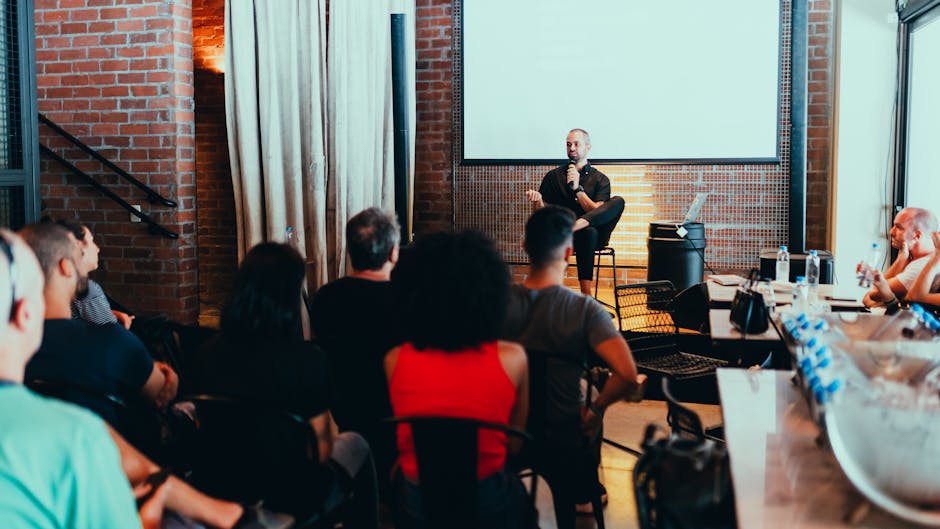
How to brief the host or facilitator
The host is the person who decides whether the format works or stalls. Most events brief the host on the topic and not much else, then are surprised when the session drifts.
Brief them on three things. First, the three opening questions you want them to ask, in order. Generic prompts produce generic conversations. If you leave the questions to the host's judgement on the day, you'll get whatever they've seen work elsewhere - which may or may not match what your audience showed up for.
Second, the rule about turn-taking. Tell the host that every person at the table speaks in the first five minutes; that no single voice holds the floor for more than ninety seconds in the opening round; and that quieter attendees should be invited in by name when the host can see they've been holding back. None of this is rude. It's the difference between a session that includes the room and one that lets the loudest people own it.
Third, the close. Five minutes before the end, the host pauses the conversation and captures one takeaway from each person. If you only brief on one thing, brief on the close. Hosts who run a strong close consistently produce a session attendees describe as useful; hosts who skip it produce a session attendees describe as nice. The format does the rest of the work, but only if the host runs it.
And it's worth saying: the host is not a panel chair, and shouldn't behave like one. Their job is to run the room, not fill it. The best hosts I've watched speak for maybe 10% of the hour. Their preparation is on what they'll ask, not what they'll say. The same discipline shows up in the conference roundtable format and in any structured small-group session you can name.
A simple introvert-friendly session template
If you take nothing else from this piece, take the template. It works at any event size. The only constraint is that you can resource a host per six to eight people - which at a 300-pax conference means about 40 hosts, drawn from your speakers, sponsors and most-engaged members of the audience.
Run a 60-minute session. Tables of six. Each table has a host, a written question and four printed follow-up prompts. The agenda is identical at every table:
0-10 minutes. Names, roles, one-line answer to the prompt. The host goes first to model the length. Every person speaks before the round closes.
10-25 minutes. Open discussion of the prompt, with the host using the printed follow-up cards to keep things moving and inviting in the people who haven't spoken in the last five minutes.
25-45 minutes. The build round. The host asks: "what would you do differently in your own organisation if you took this seriously?" Every person at the table writes their answer down before sharing.
45-55 minutes. Each person shares one specific takeaway and one open question they're still wrestling with. The host writes them down or photographs the table sheet.
55-60 minutes. The host thanks the table, suggests a follow-up channel (a LinkedIn thread, a shared doc, a follow-up call), and closes.
Send the captured takeaways and open questions to every participant within 24 hours. This is the bit event attendee retention studies keep finding organisers leave on the table - the same discipline as a well-run post-event follow-up email applied to the small-group format.
If you only have time to redesign one networking moment in your programme this year, make it this one. It does what every chamber of commerce mixer in your city was trying and failing to do: gives every attendee a small group, a named reason to be there, a real conversation and something to take home. (Harvard Business Review, 2016) And it stops asking the attendees who already find networking hardest to do all the work of fixing it themselves.
Make your next event the one attendees tell their colleagues about.
All Along gives every attendee three people they should actually meet, with a one-line reason and a conversation starter. Nobody walks in cold. Nobody leaves without a name.
Frequently asked questions
What is structured networking for introverts?
Structured networking for introverts is a programme-wide design choice, not a separate session. It means every networking moment in the event has a small group, a named purpose, a written prompt and a host who runs the conversation. The structure carries the social weight that an open-floor format leaves to the loudest people in the room. It works for introverts because the energy cost of starting a conversation has been paid before they walk in - and it works for everyone else for the same reason.
How do I design a networking session that works for introverts and extroverts?
Five design choices do most of the work. Cap the group at six to eight. Send a one-page pre-read with names, roles and the question. Use written prompts in the room rather than relying on a facilitator monologue. Give every person a turn in the first five minutes. And brief the host on the close, not just the opening. Extroverts lose nothing in this format - they still talk. Introverts gain a session they can actually contribute to. The format levels the room rather than penalising either temperament.
What's the ideal group size for introvert-friendly networking?
Six to eight people is the working ceiling. Educational psychology research has repeatedly found that conversations of three to five produce the most depth and the most turns per participant; above seven, someone is always locked out, social loafing takes over and the loudest voice owns the hour. If more attendees want in than a table can hold, run the same prompt across parallel tables rather than letting one table grow. A small group is the single biggest lever you have over conversation quality.
Should I run a separate session for introverts at my event?
Usually no. A separate 'introvert session' tends to attract the people who would have been comfortable anyway and miss the attendees you most wanted to reach. The better move is to design the whole networking programme so introverts don't have to opt in to a labelled room - hosted small groups, written prompts, pre-event context. If you do want a dedicated slot, frame it as a structured format rather than an introvert programme. People will self-select on format preference more honestly than on identity label.
What pre-event information helps introverts most at a networking event?
Three things change the most. The names and roles of the people at their table, so the introduction work is already half done. A one-line description of what each person is working on or looking for, so attendees can spot a useful conversation before the room gets noisy. And the actual question the group will discuss, so introverts arrive with a contribution thought through. Twenty minutes of email prep buys an hour of usable conversation. It is the cheapest, highest-impact change most organisers can make.
About the author
Cate Trotter
Co-founder and Product Lead, All Along
Cate is co-founder and product lead at All Along. She's spent 15+ years helping organisations turn emerging tech into commercial results, and founded and sold two retail-focused businesses before building All Along. She writes about how events can turn networking from a happy accident into a repeatable outcome.
Connect on LinkedInReady to make networking the reason people come back?
All Along gives every attendee three people they should actually meet, and gives you a complete picture of what your audience wants.
More from Field Notes
B2B event networking for sales teams: a three-touch framework
Sales teams arrive at B2B events with a budget, a quota and no plan. The teams who do this well treat the event as the middle of a conversation, not the start.
The case for transparent event matchmaking
If an attendee asks why they were paired with someone, an organiser who cannot answer has a product problem, not a communication problem.
Event networking by event type: one framework, six formats
One networking format does not fit six different kinds of event. Three questions that tell you the design any event type actually needs.