
Young professionals loneliness is the cohort events miss
Across 142 countries, 19 to 29 year olds are the loneliest age group at 27%, against 17% for the over-65s (Meta-Gallup, 2024).
Co-founder and Product Lead, All Along
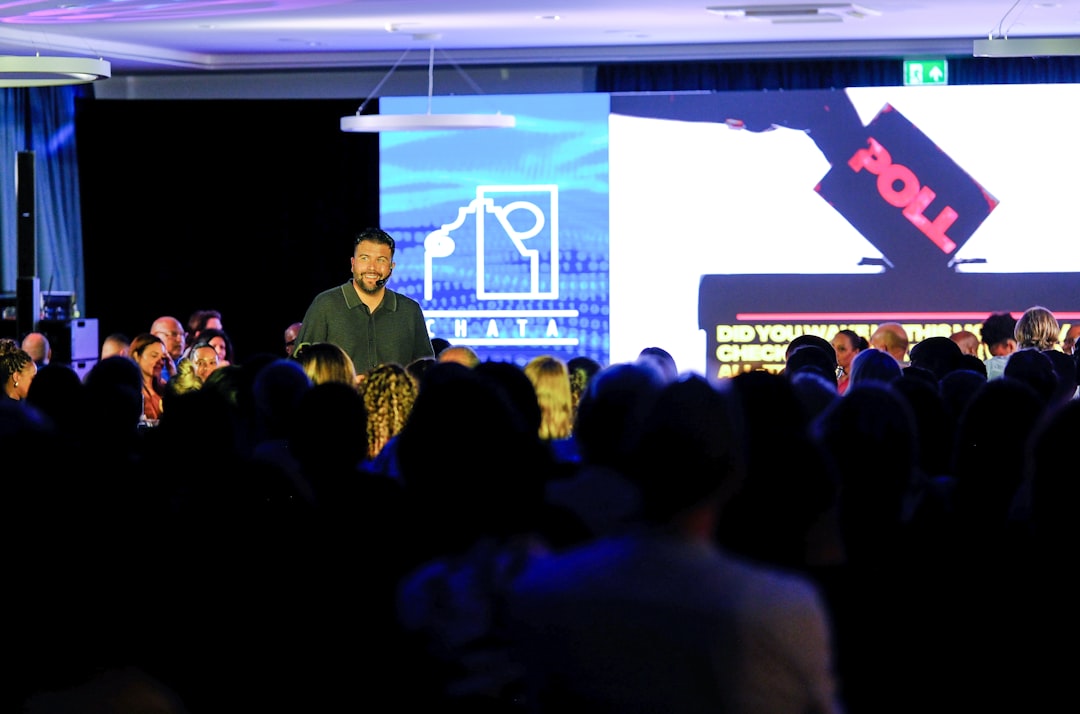
The loneliest people at your event are the youngest ones, and three moves help them more than any keynote on resilience: named introductions sent before the day so nobody arrives cold, small structured formats running alongside the open reception so people can pick their intensity and one peer cohort group that cuts across the programme. Here is why the early-career cohort needs it, and what the open reception gets wrong.
Across 142 countries, 24% of people feel very or fairly lonely - more than a billion people. The loneliest age band is 19 to 29 at 27%. The least lonely is 65 and over at 17% (Meta-Gallup, 2024). That is the inversion of the cultural picture. The image of loneliness is an isolated older person. The data says the loneliest age in the world is the early-career one - by ten points.
I keep coming back to that ten-point gap because of who it puts at the centre of every professional event. The 19 to 29s are most of the early-career audience walking into your conference, your association event, your sector summit. They are not the senior keynote booking. They are the cohort the room is supposed to grow into the senior booking. And by the global numbers, they are also the loneliest people in the building.
The loneliest people in the room are not who you think
The Meta-Gallup data has a few things worth holding onto before going anywhere near event design. Loneliness is roughly equal between men and women globally (24% each). It varies wildly by country, from 45% in Comoros to 6% in Vietnam. And the age pattern is consistent: the youngest band is the loneliest in most markets surveyed. The gap is widest in higher income countries - the same countries that fill most professional conference seats.
A 26 year old walking into your event is, on the global evidence, more lonely than the chair on stage. That is the line I would write on the run-sheet before deciding what to spend on hospitality.
The picture lines up with a wider connection deficit. The OECD's most recent cross-country read found that the average person now has fewer close ties and reports less daily connection than a generation ago, with the steepest fall in younger adults (OECD, 2025). The US Surgeon General put the same finding in plain English two years earlier (Surgeon General, 2023). The signal is now showing up in workplace data too: Gallup's State of the Global Workplace 2026 reports that 22% of employees felt lonely 'a lot of the previous day' and global engagement has fallen to 20% - the lowest since 2020 (Gallup, 2026).
The young attendee shows up at a thinner baseline

Two things matter for event design here, and they compound. The first is the macro picture: the early-career cohort is the loneliest in the world. The second is the local one: the early-career attendee has typically spent the first years of their career on video calls, in a hybrid pattern that delivers flexibility but strips out the incidental face-to-face contact older cohorts built their networks on. They arrive at the conference with fewer existing peers in the room and fewer recent reps at small talk with senior strangers.
It is the wrong moment to ask them to work an open reception cold. The mid-career attendee usually has at least one person in the room from a previous job. The senior attendee usually knows the chair. The 25 year old at her first sector conference often knows no-one. That is the same room everyone else is in, but the same room is a very different experience depending on who you arrive as.
This is the same shape as networking anxiety at events, and the OECD and Gallup data widen what it means: the people most likely to feel anxious about networking are also, on the global evidence, the loneliest. That reframes anxiety as a design problem the organiser can solve, not a trait the attendee has to fix on the day.
Why the open reception fails them hardest
The default networking format at most professional events has barely changed in fifteen years: an evening drinks reception in a large room, a few high tables, ambient music and the implicit expectation that everyone is good at meeting strangers. That model assumes a confident, well-practised attendee with at least a few existing contacts in the room. For a first-time early-career attendee, it is two hours of polite small talk and a long ride home.
Demand for connection has gone the opposite way. Networking is now the top reason 58% of attendees say they came, up from 39% in 2021 (Freeman, 2025). At the same time, the audience most reliant on the organiser to make those connections actually happen is the audience least practised at making them cold. The format has stood still while the audience has changed underneath it.
The same dynamic shows up at the other end of the seniority curve. Senior leaders are the other lonely cohort in the same room, and the open reception fails them too - for opposite reasons. The 26 year old cannot find anyone she does not need to impress. The CTO cannot find anyone she can be candid with. The single design lever that helps both is structured peer access on top of the open programme.
Three moves that work for the early-career cohort
Three things change the early-career experience without requiring a separate track or a bigger budget. They all sit upstream of the day itself - which is when most organiser attention is.
Move one - named introductions before the event. Send each first-time or early-career attendee three other names with a one-line reason for the match and one suggested opening topic. Not a list of speakers. Actual peers at a similar career stage and topic. A junior attendee arriving with three names is a junior attendee who shows up, stays, talks and comes back. The first useful conversation does not depend on them working the room cold. The first hour of a conference is the make-or-break hour for newcomers, and three pre-event matches turn that hour from a lottery into a plan.
Move two - small structured formats alongside the open reception. Run one or two short hosted formats - themed tables of six, matched fifteen-minute conversations, a hosted breakfast - in parallel with the cocktail. Attendees choose their intensity. The early-career attendee who finds the open reception overwhelming can opt into a structured format and still be there for the social one. This is the same move I argue for the introverted attendee and the senior attendee - the early-career cohort sits in the same gap, and the same intervention fixes it.
Move three - a single peer cohort group running through the day. Group ten to fifteen early-career attendees into a cohort that meets at the start of the day, between sessions and at the close. Not a separate stream. A standing peer set inside the main programme. The signal is that the organiser has done the work of finding them a peer group rather than leaving it to a slack channel and the airport. The cohort becomes the safety net the open reception never was.
My take: none of this is a youth track. The worst thing an organiser can do with this finding is hive the early-career attendees off into a corner labelled 'next generation'. That signals to the senior room that they are not part of the main conversation, and it signals to the early-career room that they are being managed rather than included. The moves above all sit inside the main programme and would, frankly, help most of the room.

The retention number nobody tracks
Most post-event reporting is a content satisfaction score, a Net Promoter Score and a sponsor logo recall figure. None of those will tell you whether the most at-risk cohort in the room left with a reason to come back. The question that does is concrete.
Three questions, sent 48 hours after the event, in this order. Did you meet at least one peer at a similar career stage on a topic you cared about - yes or no. Did you exchange details with that peer. Would you recommend coming to next year's edition to a colleague at your level. Segment the answers by seniority before you average anything. A 70% peer-meet rate that is 90% for managers and 35% for early-career attendees is not a 70% event - it is two events, one of which is producing the next generation of returners and one of which is producing the next generation of churn.
The early-career peer-meet rate is the leading indicator of decade-long event renewal, and almost nobody measures it. If you want a quick read of where the gap sits at your event today, the free networking gap calculator walks through six questions and tells you what to change first. The calculator is the same six questions organisers ask me on calls; the difference is it gives you a number and a recommendation in two minutes.
Something to sit with
Loneliness is a young-person problem. That sentence still feels strange to type. The global data is consistent and it has been for several years - young adults are the loneliest age group worldwide, by ten points over the cohort the cultural picture assumes.
For anyone designing professional events, that is the most actionable workforce finding of the last two years. The audience most likely to feel under-connected is also the audience most likely to be on their first or second event of the year, most likely to be the renewal pipeline for the next decade and most likely to be ignored by an open-reception format built for confident strangers who no longer exist in the same numbers.
The fix is not a youth track or a wellbeing keynote. It is named introductions, structured small formats and a single peer cohort that runs through the day. None of it requires a bigger budget. All of it requires the organiser to take a position on who is meant to talk to whom and why. If you want to know more about how All Along helps with this for your event, have a look at the product page - it is the same idea applied across every cohort in the room.
Build the room for the loneliest cohort, and you build it for everyone.
I write one of these every week. Want them in your feed?
Follow along on LinkedIn - short takes on what I am seeing in event networking, before the long-form version lands here.
Frequently asked questions
Are young professionals really lonelier than older adults?
Yes, and the gap is wider than most people expect. Gallup's 142-country Meta-Gallup poll found 27% of 19 to 29 year olds feel very or fairly lonely compared with 17% of the over-65s - a ten percentage point gap in the opposite direction to the cultural stereotype. The rate is the same for men and women (24% each globally), and the youngest cohort is the loneliest in almost every market measured. For event organisers, that means the most at-risk attendees in the room are usually the most junior.
Why are early-career attendees the loneliest cohort at events?
Two things stack on top of each other. First, the global picture: young adults are the loneliest age band in the world. Second, the event context: early-career professionals are also the least practised at meeting senior strangers in a crowded room, the most likely to have spent the first years of their career on video calls and the least likely to have an existing peer network at the event. The default open reception assumes confidence and prior contacts. The early-career cohort has neither, and the format fails them hardest.
What does this mean for event ROI and retention?
Early-career attendees are the cohort with the longest renewal runway and the lowest current satisfaction with networking formats. If a 26 year old leaves their first industry conference without meeting one person who matters to them, they do not come back. If they leave with three useful connections, they come back for a decade. The retention lever for any senior-heavy programme is whether it also works for the junior attendee - because today's junior attendee is next year's middle manager and the year after's session chair.
How do I design events for early-career attendees without it feeling patronising?
Treat it as a connection problem, not a development problem. Junior attendees do not want a separate 'young professionals' track that signals to the senior room they have been corralled. They want what everyone wants - a small number of named, relevant people they should meet, a low-pressure first conversation that does not require working a cocktail crowd cold, and a peer cohort they can compare notes with through the day. Build those into the main programme rather than spinning up a sidecar.
Should I track loneliness on my post-event survey?
Not directly, and not by name. Self-reported loneliness is a sensitive measure, easy to mis-frame and noisy in event-scale samples. The cleaner read is connection outcomes: did each early-career attendee meet at least one peer at a similar career stage on a topic they cared about, did they exchange details, and would they recommend coming back to a colleague at their level. Three concrete questions, sent 48 hours after the event, segmented by seniority. That gives you the same signal without the survey wading into mental health territory it is not designed for.
Does this overlap with the loneliness story for senior leaders?
Yes, and that is the bit organisers can use. Gallup's 2026 data has senior leaders 10 points lonelier than individual contributors, and the 2024 global data has the under-30s 10 points lonelier than the over-65s. The two cohorts most at risk in your room are the most junior and the most senior, which between them are most of the audience. A single design decision - structured peer access on top of the open programme - serves both ends of the curve.
About the author
Cate Trotter
Co-founder and Product Lead, All Along
Cate is co-founder and product lead at All Along. She's spent 15+ years helping organisations turn emerging tech into commercial results, and founded and sold two retail-focused businesses before building All Along. She writes about how events can turn networking from a happy accident into a repeatable outcome.
Connect on LinkedInReady to make networking the reason people come back?
All Along gives every attendee three people they should actually meet, and gives you a complete picture of what your audience wants.
More from Field Notes
What coworking already knows about curated introductions
The coworking industry decided years ago that introductions are the job. It just does them by hand. Here is what events and communities can borrow.
Leadership loneliness is the design brief events keep missing
The most senior people in the room are also the loneliest. That is a design brief, not a wellbeing post. Here is what I do with it.
The connection gap: events rank networking first, fund it last
Planners say peer connection is the number one thing that makes an event work. Then they give it almost none of the programme. That gap is the whole story.