
Why the coffee break is where event networking goes to die
58% say networking is their primary reason for attending (Freeman, 2025) - and the coffee break, the format relied on most for it, is designed least.
Co-founder and Product Lead, All Along

The coffee break fails as a networking format because it asks strangers to improvise conversation in a loud room, under time pressure, while holding a cup. Confident extroverts cope. Everyone else checks their phone. The fix is not a longer break, it is scaffolding: named meeting points, topic identifiers and one person on staff whose job is introductions. Here is why the default persists, and what to put around it.
I have sat through a lot of event debriefs where organisers talk proudly about the programme, the speakers and the sponsor activations. Then somebody asks about networking.
The answer is almost always the same sentence. 'We gave them plenty of break time.'
I keep coming back to this and I think I know why. The coffee break is the one part of every conference agenda I have never seen an organiser defend. It is the unexamined default. It is also the main way most events still try to make networking happen.
The unexamined default
Think about how much design attention goes into the rest of a conference. The keynote speaker is chosen carefully. The session stages are branded. The sponsor lounges are themed. The catering is tasted.
Now think about how much design attention goes into the break. Somebody picks the length. Somebody orders the coffee. Somebody decides where the tables go. That is usually the whole conversation.
And yet the break is where you are asking the most valuable thing your event can deliver - the connection between two people who should know each other - to spontaneously happen.
My take: this is the widest gap between promise and execution in the whole events industry. We promise networking on the marketing page and deliver a queue for flat whites.
What attendees actually came for
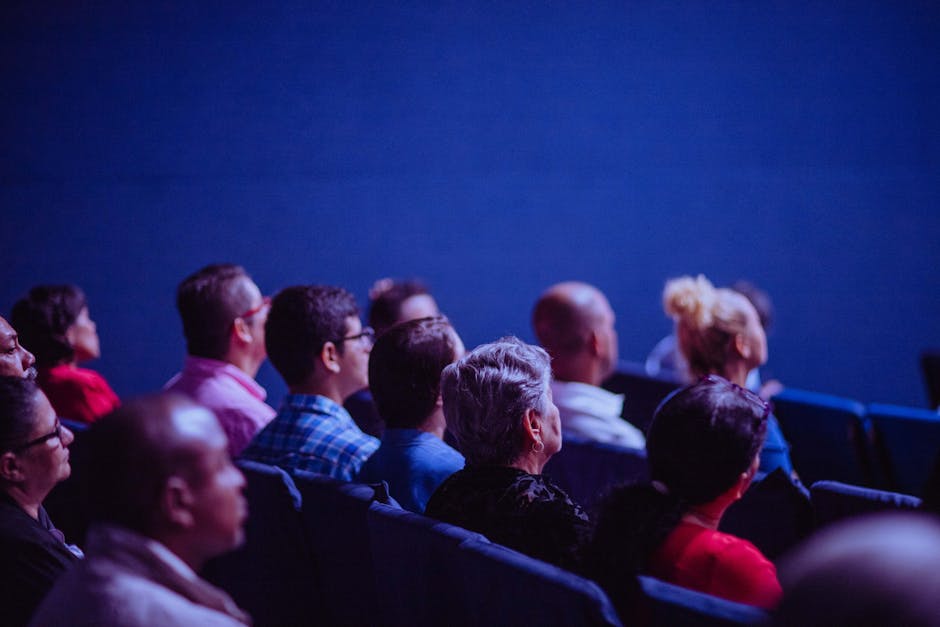
The research on this is unambiguous. According to Freeman's 2025 Networking Trends Report, 58% of attendees now say networking is their primary reason for attending an event, up from 39% in 2021. (Freeman, 2025)
Read that number again. Most of the people in your room are not there for the content. They are there to meet other humans. And the format you have given them to do that is a 20 minute window, a queue for coffee and a room full of strangers.
I wrote recently about the perception gap between what organisers think their networking delivers and what attendees actually experience. The coffee break is where the gap opens up. Organisers look at the break, see people talking, and count it as networking. Attendees see the same room and remember it as the moment they stood alone holding a pastry.
Why the format quietly fails
The coffee break asks strangers to do an unusually hard thing in unusually bad conditions. Consider the stack of constraints:
- Time pressure. 15 to 20 minutes for the whole thing, minus the queue. Real conversation takes longer than that to get going.
- Noise. Large rooms, hard floors, a lot of people talking at once. The acoustics alone rule out quieter voices.
- Physical awkwardness. Holding a coffee cup, a plate, a lanyard and sometimes a laptop bag. Shaking hands becomes a small logistics exercise.
- Social improvisation. Attendees have to invent an opening line on the spot, in public, with no context about the person in front of them.
- Confidence asymmetry. The format rewards a small minority of confident extroverts. Everyone else is at a disadvantage.
If you designed a networking format from scratch and included all five of those constraints, nobody would sign off on it. We only accept it because it is the default.
Scaffolding the break
I am not arguing for abolishing coffee breaks. Attendees need decompression between sessions and unstructured time has its place. I am arguing against using breaks as the main networking vehicle without any scaffolding. It is the same reason forced networking doesn't work - connection has to be designed for, not simply demanded of the room.
Here is what good scaffolding looks like. None of this is expensive. All of it changes the odds of a real conversation happening.
Topic meeting points. A4 signs on a few tall tables labelled with topics ('governance', 'AI rollout', 'first-time founder'). Attendees who care about that topic drift to that table. The topic does the work of making the opening line for them.
Pre-assigned meetups. If you have already matched attendees before the event, the coffee break is the natural moment to meet. Send an email the morning of the event: 'Your match Maria will be at meeting point 3 at 11:00.' That single email turns a blank break into a scheduled reason to show up. It is also the most direct way pre-event networking pays off on the day, and the clearest argument for building attendee matchmaking into the programme rather than leaving connections to chance.
Micro-prompts on tables. A single sentence on each table: 'What is one thing you are trying to work out this month?' It sounds twee. It works anyway. The prompt removes the improvisation step.
A dedicated connector on the floor. One person whose job is not logistics but introductions. They walk the room, spot people standing alone and bring two strangers together. At many of the best-designed conferences I have been to there is one person doing exactly this and it is almost always the single highest-leverage role in the whole programme.
A longer break. Give the format enough time to actually work. 25 to 30 minutes minimum. If you cannot spare it, be honest and label it as a transition, not networking. That alone resets expectations.
Measuring whether it worked
The measurement is simple. After the event, ask: 'How many conversations did you start in the coffee breaks with people you had not met before?' Then: 'How many are you still in contact with?'
If your answers cluster around zero, your format is not earning its place on the agenda. The right fix is not to add more break time - it is to move intentional networking into formats designed for it and let the breaks do their real job of recovery.
For a longer take on what to actually measure, we wrote a full piece on measuring event networking success that covers the survey questions that give you something actionable.
The bigger shift
The bigger shift here is to stop treating networking as the negative space in the agenda. It is not the bit between the sessions. It is the reason most of your audience showed up.
When you design it with the same intent you give the main stage, the quality of the conversations changes and so does the likelihood people come back next year. It also feeds straight into the rest of the networking design for the event.
If you want to see what scaffolded networking looks like in practice, we built All Along to handle the matching and the meeting points without adding workload to the organiser team. Take a look at how it works for events, or use our free networking gap calculator to see where your current format is leaking value.
Frequently asked questions
Why do coffee breaks fail as networking formats?
Because they ask strangers to improvise conversation in a loud, crowded room, under time pressure, while holding a coffee cup. It is the hardest possible set of conditions for starting a new conversation. A small number of confident extroverts will always do fine in that environment. Everyone else ends up checking their phone, talking to the one person they already know, or leaving the room altogether.
What should I replace coffee breaks with?
You do not need to replace them. You need to add structure around them. A few things help. Put up signs by topic so people can find others with shared interests. Pre-assign meeting points for people who have already been matched. Leave one small prompt on each table ('what is one thing you are trying to work out this week?'). Staff the room with at least one person whose job is to introduce people who look lost. None of this is expensive and all of it raises the odds of a real conversation.
How long should a conference coffee break be?
Long enough to have at least one real conversation. That is more than most organisers give. A 15 minute break is a queue for coffee and nothing else. 25 to 30 minutes is the minimum for a conversation to happen without forcing people to cut it short. If you cannot afford that much time in the agenda, it is more honest to remove the break and call it a transition rather than pretend it is a networking window.
Are coffee breaks still worth having at conferences?
Yes, but as transitions and decompression, not as the main networking format. Attendees need recovery time between sessions, and the break serves that purpose well. The mistake is letting unstructured breaks carry the entire weight of the networking promise you made when attendees bought their ticket. Use breaks for recovery and move intentional networking into formats designed for it.
How do I measure whether my breaks are working for networking?
Ask one specific question in your post-event survey: 'How many conversations did you start in the coffee breaks with people you had not met before?' Follow up with: 'How many of those have you stayed in contact with?' If the answers cluster around zero, your break format is not earning its place on the agenda and you should shift that work into structured sessions or pre-event matching.
About the author
Cate Trotter
Co-founder and Product Lead, All Along
Cate is co-founder and product lead at All Along. She's spent 15+ years helping organisations turn emerging tech into commercial results, and founded and sold two retail-focused businesses before building All Along. She writes about how events can turn networking from a happy accident into a repeatable outcome.
Connect on LinkedInReady to make networking the reason people come back?
All Along gives every attendee three people they should actually meet, and gives you a complete picture of what your audience wants.
More from Field Notes
B2B event networking for sales teams: a three-touch framework
Sales teams arrive at B2B events with a budget, a quota and no plan. The teams who do this well treat the event as the middle of a conversation, not the start.
The case for transparent event matchmaking
If an attendee asks why they were paired with someone, an organiser who cannot answer has a product problem, not a communication problem.
Event networking by event type: one framework, six formats
One networking format does not fit six different kinds of event. Three questions that tell you the design any event type actually needs.