
Optical trade show matchmaking: the buyer-first playbook
Optical and eyewear trade shows are buyer-supplier matchmaking events wearing a trade-show costume. Every unqualified meeting on the floor is expensive.
Co-founder and GTM Lead, All Along
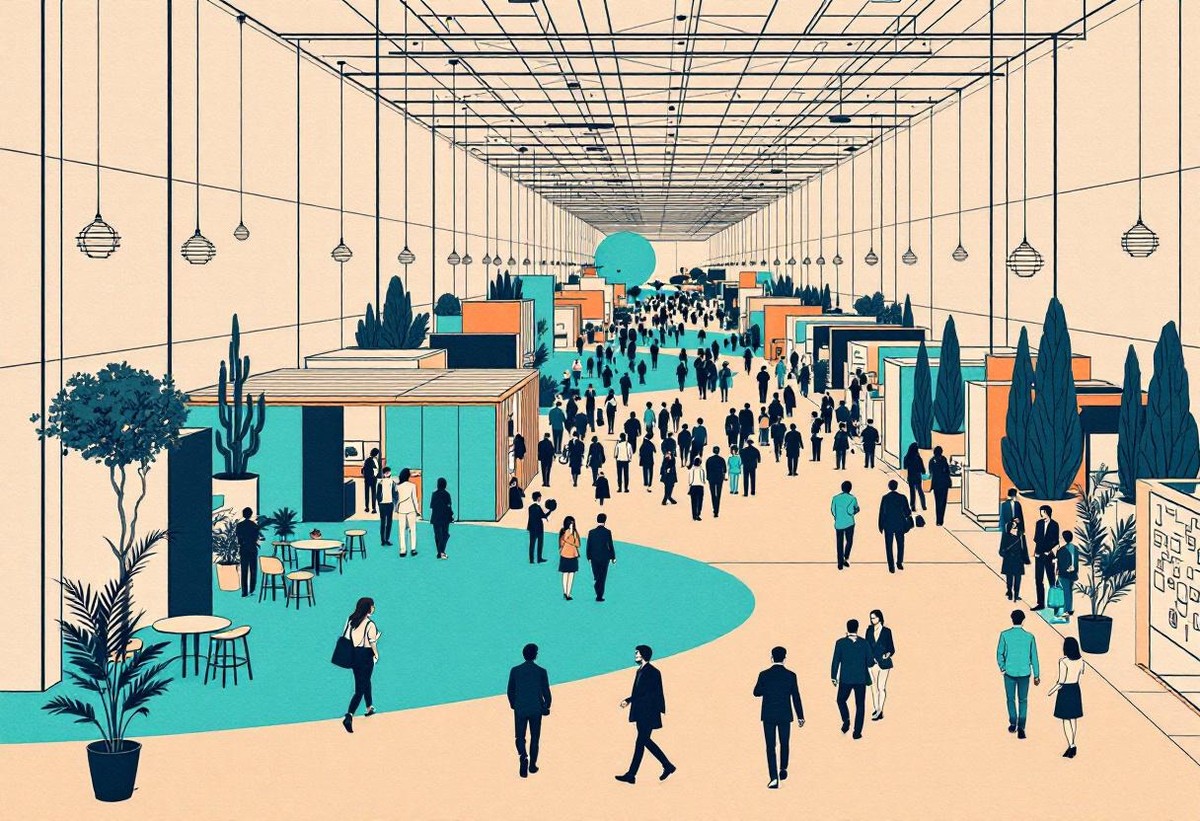
Optical trade show matchmaking runs on three moving parts: buyer intent captured at registration, a pairing logic that puts each buyer in front of named suppliers, and a meeting slot in both diaries 48 hours before the doors open. Done properly it should land 60 to 70 per cent of proposed meetings. This is the playbook, from the four registration questions to what to measure.
Every time I walk an optical or eyewear trade show I have the same thought about twenty minutes in. This is not really a trade show. It is a buyer-supplier matchmaking event wearing a trade show costume. And most of them are run the wrong way round - as if everyone is there to browse, when in reality both sides came to meet specific people and close specific deals.
The optical industry has a handful of flagship shows that the whole category orbits around, plus a long tail of regional ones. The formats differ, the geography differs, but the underlying job-to-be-done is the same. Independent brands need qualified buyers in front of them. Opticians and chain buyers need to see the collections relevant to their shelf plan. If a show does not engineer those introductions, it leaves the value on the booth carpet. Here is how I would design the matchmaking programme if I were writing the brief tomorrow - drawing on the same principles that apply to corporate event networking more broadly.
Why optical shows are a matchmaking format in disguise
Three things make optical shows structurally different to a general business expo, and they all point at matchmaking as the organising principle rather than the nice-to-have.
First, the category is fragmented and getting more so. The global eyewear market is on a steady upward curve, forecast to keep growing into the 2030s as premium frames, sports eyewear, speciality lens tech and direct-to-consumer labels all carve out their own lanes. (Grand View Research, 2025) What that means on a trade show floor is more exhibitors, more sub-categories and less chance a buyer can walk the whole hall before lunch on day two.
Second, buyers come with a shopping list, not a curiosity budget. A head buyer at a regional optical chain is not at the show to discover things in general - she is there to fill three gaps in next season's range and pressure-test two existing suppliers. That brief is narrow. It is also almost invisible unless the show asks her to write it down.
Third, booth staff time is the most expensive asset on the floor. An independent frame brand at an international show is typically running with three to five people for three days, often flown in from another country. Every unqualified meeting is real money. The whole game is raising exhibitor ROI by trading visitor volume for fit. UFI's industry research on international exhibitions makes a similar point in broader terms - the return on an exhibition stand is dominated by the quality of conversations held, not the number of visitors seen. (UFI, 2025)
Put those three together and you stop being a trade show organiser and start being a matchmaker. Which is a much better job to take seriously. I have written a parallel piece on trade show networking strategy that covers the broader exhibition dynamics - this one stays sector-specific.

What optical buyers actually want from the diary
When I have sat with optical buyers after a show, the consistent pattern is this. They do not rate the show by how many booths they visited. They rate it by how many of the meetings that ended up in their diary were with brands they had not already planned to see. A diary of twelve meetings where eight were brands they could have emailed from the office is a failure. A diary of eight meetings where three were brands they genuinely did not know existed - and at least one of those leads to an order - is a great show.
That puts a specific job on the matchmaking system. It has to surface the long tail, not the top of the exhibitor list. A buyer who has been in the industry fifteen years does not need a matching system to tell her about the top ten brands. She needs one that has read what she wrote in registration and says: these four brands you have not heard of are making something that fits the gap you described. Here is why.
The other thing buyers consistently want is meetings that respect the clock. Thirty minutes, running to time, at the exhibitor's stand so the buyer can actually see samples. Not a generic networking lounge, not a coffee bar, not a video call parallel stream. The meeting has to happen where the product is. That single constraint shapes how the whole programme runs.
This is where the discipline overlaps with the broader principles of attendee matchmaking at any B2B event - intent, pairing, explanation - but it has to respect the trade show's physical reality. Buyers walk to booths, booths do not walk to buyers.
The four questions that make matches land
Registration is where optical matchmaking is won or lost. Most optical show registration forms ask for badge categories - buyer, distributor, press, student - and stop there. That is enough to produce a badge, not enough to produce a match.
The four questions I would add, in order, are these.
1. What collections are you buying this year? Let them pick multiple. Optical frames, sunglasses, sports and technical, children's, readers, speciality lenses, merchandising and retail tech. This single answer cuts the exhibitor pool by 70 per cent before you do anything else.
2. What price point? Entry, mid-market, premium, luxury. Price point is the most underrated filter in optical matchmaking. A premium Italian frame brand does not need a meeting with an entry-point chain, and vice versa - but you will schedule that meeting every time if you only match on category.
3. What distribution footprint? Independent store, regional chain, national chain, online-only, hybrid. Distribution shapes what the exhibitor can actually sell to this buyer - minimum order quantity, pricing structure, exclusivity terms. A mismatch on distribution is one of the most common reasons a qualified-looking meeting ends in ten minutes.
4. What problem are you trying to solve that last year's range did not? This is the unlock question. A free-text box, one sentence, optional. Maybe a third of buyers fill it in. That third are the ones you can match on intent rather than profile. The registration question design here is directly borrowed from the approach in the four questions that unlock audience intelligence - the question format is simple, the value compounds.
Run these four on the buyer side and mirror them on the exhibitor side - what they sell, price point, distribution model, and what kind of buyer they most want to meet this year. Now you have a matching problem a reasonable system can solve.
Running the matchmaking programme on-site
A matchmaking programme that stops at "we surfaced the matches" is half a programme. The other half is the operational spine that gets people into the right seat at the right time.
Surface matches 48 hours before the show opens. Earlier and buyers have not made their travel plans; later and the diary is already full of ad hoc commitments. 48 hours is the pre-event window that shows up repeatedly in pre-event networking research as the sweet spot between planning and spontaneity.
Give each buyer a shortlist of six to ten ranked matches, each with a one-line reason. The reason is doing two jobs - telling the buyer why to accept, and giving them a specific thing to ask the exhibitor in the first minute. A match without a reason is a list; a match with a reason is a meeting.
Run confirmation through a single channel - email shortlist, short in-app accept, SMS day-of nudge - and do not outsource it to exhibitor-side tools that often fail to confirm. A confirmed meeting with a time, a booth number and a 30-minute reminder is the operational unit. Everything else is decoration.
On-site, invest in two things: a printed diary at registration (opticians are used to paper and phones drop signal in exhibition halls), and a matchmaking concierge desk where last-minute changes take two minutes rather than getting lost in an app. The concierge costs one staff member for three days and pays for itself in show-up rate alone.

Measuring what a good diary delivered
If you only measure badges scanned you will optimise for the wrong thing. The metrics that matter for optical matchmaking are three, and the good organisers I have worked with track all three.
Accepted-meeting rate. Of the matches you proposed, what percentage did both sides accept. A healthy programme sits at 60 to 70 per cent. If yours is at 30 per cent, the matching is too generic - go back to the four questions and tighten them.
Show-up rate. Of the meetings accepted, what percentage actually happened. This is where the concierge and the SMS reminders earn their keep. A well-run programme sits above 85 per cent. Below 70 per cent means the logistics are letting you down even though the matches themselves are good. CEIR's research on exhibition meeting economics reinforces this - the cost of a no-show is borne almost entirely by the exhibitor, which eventually translates into them walking away from the show. (CEIR, 2025)
Conversion signal. Of the meetings that happened, what percentage resulted in a follow-up conversation or an order within 90 days. You will not get this from badge scans. You get it from a short post-show survey to both sides, ideally at day 14 and day 90. This is the metric that tells you whether the matchmaking programme is actually earning its space in the budget, and whether the sector is renewing its stands next year.
Skift's ongoing work on B2B event performance makes the same point - the organisers who survive the next decade are the ones measuring outcomes rather than attendance. (Skift Meetings, 2025) Optical will not be an exception.
My take: optical shows are one of the clearest matchmaking formats in B2B events, and most of them are still run as if the hall is a department store. Lean into matchmaking - buyer intent at registration, smart pairing, confirmed diary, concierge, honest measurement - and you hold onto exhibitors and buyers when the budget conversations get hard. Start with the four registration questions; everything else follows. The networking gap calculator pressure-tests where your current show sits, and the guide to buying event networking software is where I land on buy versus build once the discipline is in place.
Curious what a modern matching system actually does for a trade show?
All Along is a matching platform built specifically for events - not a general tool with trade shows bolted on. Transparent rules, editable by the organiser, explainable to buyers and exhibitors.
Frequently asked questions
What is optical trade show matchmaking?
Optical trade show matchmaking is the deliberate practice of pairing buyers with suppliers at an optical or eyewear trade show - opticians, chain buyers, distributors, e-commerce buyers - based on what each buyer is trying to source this season and what each exhibitor is built to sell. It replaces the default walk-the-aisles model with a scheduled diary of qualified meetings, usually surfaced 24 to 48 hours before the show opens.
Why does optical trade show matchmaking matter more than it did ten years ago?
The eyewear category has fragmented. Independent frame brands, direct-to-consumer labels, speciality lens makers and e-commerce-first players have all multiplied, and buyers cannot walk an entire show any more. In a 500-exhibitor hall a buyer visits 20 to 30 booths at most. Matchmaking decides which 30 - otherwise the long tail of interesting suppliers never gets seen, and the buyer leaves feeling they have wasted a day.
How many meetings should a buyer have in their diary?
Five to eight per day is the working ceiling. Each meeting runs 25 to 30 minutes with time to walk between booths, take a call and eat something. Push past eight and buyers start cancelling the afternoon slots. A diary of six confirmed meetings per day, with two open slots for discovery, is where the format tends to land.
What data do you need to run optical matchmaking properly?
At a minimum: the buyer's role, their annual frame budget band, the categories they source (frames, sunglasses, sports eyewear, lens tech, merchandising), what price points they buy at and what specific gap they are trying to fill this year. On the exhibitor side: their category, price point, distribution model, the three things that make their brand different this season, and the two types of buyer they most want to meet. Get both sides answering in their own words and the matching gets sharper.
Do small exhibitors benefit from optical trade show matchmaking?
Yes - more than large ones, usually. A large brand can afford to lose the matchmaking lottery because buyers seek them out anyway. An independent eyewear brand showing for the second year has almost no organic discovery - their booth sits in the long tail of the hall. A matchmaking programme is the only mechanism that puts a real buyer in front of them. The format redistributes attention towards the brands that need it most.
About the author
Alex Shiell
Co-founder and GTM Lead, All Along
Alex is co-founder and GTM lead at All Along. She spends her days talking to event organisers, associations and sponsors about what they need from networking - and turning those conversations into product and commercial decisions. She writes about the operational side of events: registration data, sponsor ROI, adoption and the organiser craft.
Connect on LinkedInReady to make networking the reason people come back?
All Along gives every attendee three people they should actually meet, and gives you a complete picture of what your audience wants.
More from Field Notes
B2B event networking for sales teams: a three-touch framework
Sales teams arrive at B2B events with a budget, a quota and no plan. The teams who do this well treat the event as the middle of a conversation, not the start.
The case for transparent event matchmaking
If an attendee asks why they were paired with someone, an organiser who cannot answer has a product problem, not a communication problem.
Event networking by event type: one framework, six formats
One networking format does not fit six different kinds of event. Three questions that tell you the design any event type actually needs.