
Panel discussion audience engagement that actually works
Panel Q&A usually gets five to ten leftover minutes after a fifty-minute panel and rewards whoever grabs the mic first. Pre-submitted questions fix that.
Co-founder and GTM Lead, All Along
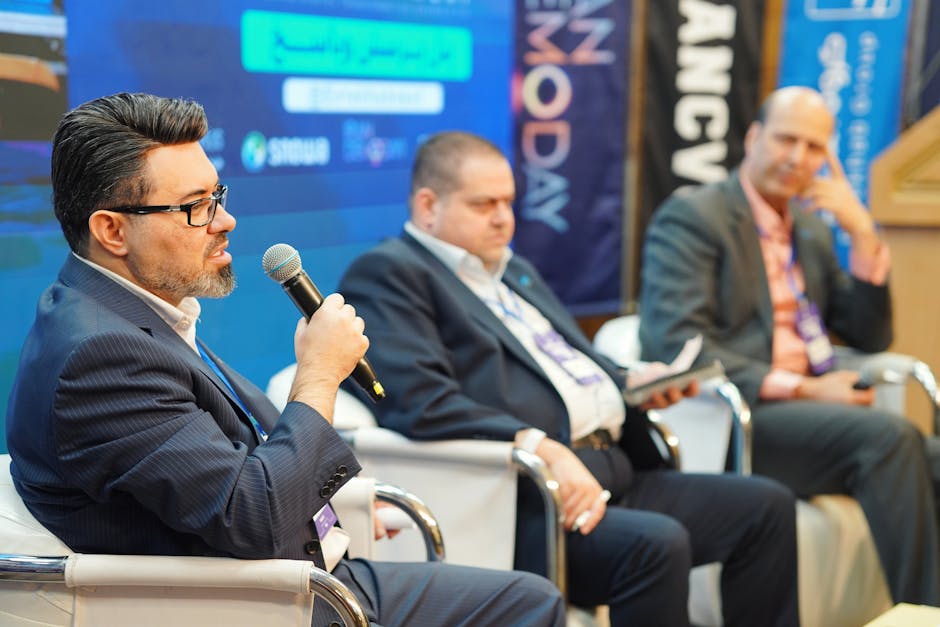
Collect audience questions before the panel starts, through the registration form or the event app, then open the audience segment in the first ten minutes rather than the last five. That moves the room from leftover minutes to the middle of the session. Here is how to run it, the three question types that derail a Q&A and what to do after the session ends.
I have sat through a lot of panels. So have you. The pattern is almost always the same: four people on stage, a moderator, fifty minutes of conversation that is good enough, and then five rushed minutes for audience questions.
Two hands go up. The first question is sharp. The second one is a comment. The third person is still being passed the microphone when the moderator says we are out of time.
Panel discussion audience engagement is the bit of a conference programme everyone knows is broken and almost nobody fixes. It does not need to be that way - and the fix is more operational than creative. For where the panel sits relative to other conference session formats such as roundtables and unconferences, the session formats guide has the comparison.
The bit that's broken
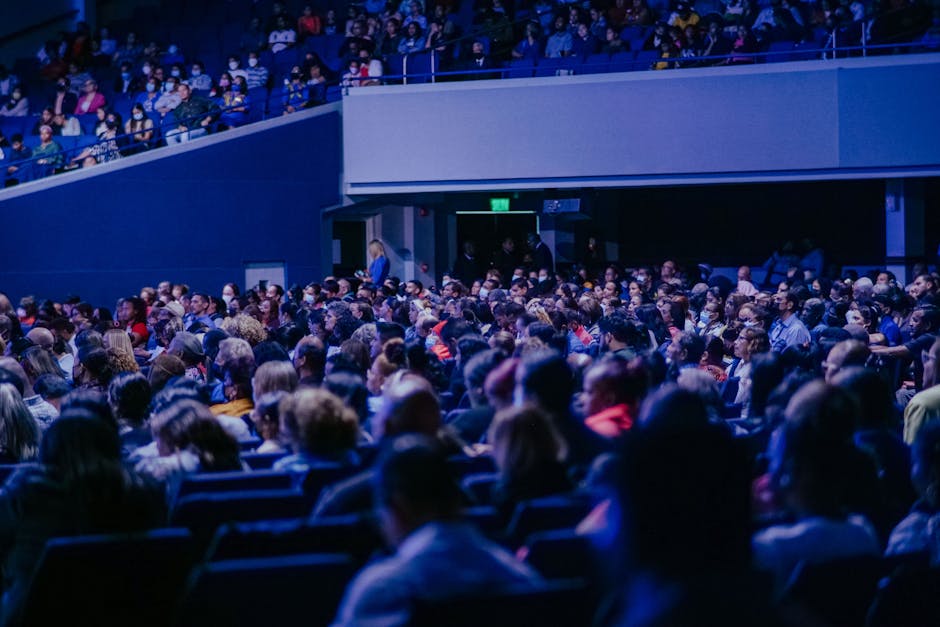
The structural problem is time. A fifty-minute panel with five minutes of Q&A leaves room for two questions and one speech. The audience knows this before the moderator opens the floor, so the people who put their hand up are not necessarily the people with the best question - they are the people closest to the microphone and most willing to speak in public.
Five to ten minutes for audience Q&A after a fifty-minute panel is not audience engagement - it is a microphone race with a hard stop. Format is doing the work, and the format is set up to fail.
The cost is bigger than a slightly flat session. Freeman's 2025 trends work found that 58% of attendees consider networking their primary reason for being at professional events (Freeman, 2025). Panels are the highest-density opportunity an organiser has to create relevance and spark conversation between people in the room. If the audience leaves a panel without having spoken or been heard, the room paid for a broadcast, not an exchange.
The three patterns that ruin Q&A
If you sit at the back of enough sessions, the same three patterns show up no matter what the topic is. Naming them is the first step to designing around them.
The comment-not-a-question. An attendee takes the microphone and offers ninety seconds of context, a personal anecdote and a closing statement. There is no question at the end. The moderator nods politely and asks the panel to respond - and the panel responds to a comment, which is mostly an exchange of pleasantries.
The audition. Someone uses the question slot to demonstrate that they belong in the room. The question is real but it is buried under a long preamble about their job, their company and a thing they once built. The room loses attention by the time the actual question lands.
The niche tangent. A question that matters intensely to one attendee and no one else - usually because it is specific to a single regulation, technology stack or market. The panel does its best. The room waits.
Three patterns account for most broken Q&A: the comment-not-a-question, the audition and the niche tangent. None of them are anyone's fault. They are an entirely predictable response to a format that asks people to compose a sharp question in real time, under social pressure, with a five-minute clock running.
Pre-submitted questions, surfaced by name
The simplest fix is to stop relying on live questions altogether. Move the question collection upstream: into the registration form, into the session view in the app, or into a short pre-session prompt sent the morning of the panel. Ask one thing. What is the one question you want this panel to answer?
Two things change immediately. The first is question quality. People write better questions than they ask on a microphone because they have time to edit. The second is coverage. Instead of two questions from two people, you get fifty questions from fifty people, which lets the moderator pick the six that actually represent the room. The same open-text approach that makes registration forms produce matchable data works for question collection.
Pre-submitted questions move the room from microphone roulette to a curated conversation the moderator can plan for. Hand the moderator a one-page sheet with six questions, attendee first names and the company they work for. The moderator reads each one out with credit. The audience members whose question landed feel seen. The rest of the room feels represented because the questions look like ones they would have asked.
This is also where the audience starts paying attention to the panel itself, not just the speakers. Crediting the question by name turns the audience from a silent block into a named cast. It also matters for increasing event attendee engagement more broadly: attendees report higher engagement when they see other attendees, not just speakers, named in the programme.
Matched follow-ups after the session
Pre-submitting questions changes the panel. Matched follow-ups change what happens after.
Because you collected questions ahead of time, you also know who asked what. You can use that to introduce attendees who flagged the same theme to each other - sometimes a three-person introduction with the panellist included, sometimes a small group of attendees who all asked about embedded finance or modular construction or sponsor attribution. The mechanic is the same as a registration-data introduction, just narrowed to a single session.
A matched follow-up after a panel turns a single audience question into a small set of ongoing conversations. The work is light: a short email or in-app message that names the shared question, says why these three people are getting introduced and offers a fifteen-minute virtual chat in the next two weeks. Attendees do the rest.
This is also where the panel becomes a networking moment rather than a content moment. The audience leaves the room with at least one named introduction tied to a question they actually cared about. That is rare. Most attendees leave a panel with a notebook page they will not look at again. A matched follow-up gives them something to act on. All Along is built to do this kind of question-led match automatically, but the principle works just as well with a spreadsheet and forty minutes of organiser attention.
What the moderator changes
Moderators carry more weight than the format usually acknowledges. Speaker selection is a networking decision, and moderator selection is the engagement decision underneath it. A good moderator is not someone who asks great questions - it is someone who runs the room.
Three changes do most of the work.
Move the first audience question to minute eight. The audience needs to know early that their question will get heard. Once the first one lands and is credited by name, the room sits differently for the rest of the panel.
Cycle, do not stack. One audience question every fifteen minutes is better than three at the end. It keeps the panel honest and stops the panellists from lecturing.
Run one live poll, not five. A single poll - on a question where the panel genuinely disagrees - is enough to shift the conversation. More than one and the polls start to feel like decoration. Start the audience-question segment in the first ten minutes, not the last five, and the rest of the panel reshapes around it.
Harvard Business Review's work on the underused power of questions makes a related point: the people who get the most value out of a conversation are usually the ones asking the most precise questions (HBR, 2018). A moderator's job is to lift the precision in the room, not just hold the microphone.

What to measure
Most organisers measure panels by attendance and post-event survey scores. Both are useful and neither tells you whether the audience engagement actually worked. Three numbers do.
Questions submitted per attendee. If you have a hundred attendees in the room and twelve pre-submitted questions, the format is still mostly broadcast. Healthy sessions sit closer to forty per cent submission rates once attendees realise the questions are being used.
Questions answered live versus submitted. The ratio between what attendees asked and what got heard. PCMA Convene's coverage of session design has argued for years that audience inclusion is the most under-measured dimension of panel programming (PCMA Convene, 2025). The submission-to-answered ratio is the easiest way to start measuring it.
Follow-up matches accepted. Of the introductions you sent after the session, how many turned into a fifteen-minute conversation? This is the post-event signal that the question actually mattered to someone. MPI's thought-leadership work has similar findings on post-event behaviour as a quality signal for in-session design (MPI, 2024).
Track three things post-event: questions submitted, questions answered live, and follow-up matches accepted - the ratio between them is the story. If you want to start small, the free networking gap calculator gives you a baseline read of how much of your programme is broadcast versus conversation.
Panels are not going anywhere - they are the cheapest format an organiser has and they suit the way speakers want to participate. The opportunity is to stop treating the audience as the bit you fit in at the end, and to design the panel around the room as deliberately as you design it around the people on stage. Move the questions upstream, credit the people who asked them, and follow up with the people who cared. That is what panel discussion audience engagement looks like when it works.
Want the template I use when I plan a panel into a networking-led agenda?
I put a short operator's brief together - the pre-submitted question form, the moderator one-pager and the post-panel matched follow-up email. Free, no email wall.
Frequently asked questions
What is panel discussion audience engagement?
Panel discussion audience engagement is anything that makes the audience an active part of a panel session rather than a passive set of listeners. It covers pre-submitted questions, live polling, moderator-led participation, structured Q&A and post-session follow-ups that connect attendees to each other based on the questions they cared about. The goal is to turn a one-way broadcast into a two-way exchange the audience leaves with something from.
Why is Q&A at the end of panels usually broken?
Two reasons. Time is the first - a fifty-minute panel with five minutes of Q&A leaves room for two questions and one speech. Format is the second - asking 'who has a question?' rewards confidence and proximity to the microphone, not relevance. The result is the same pattern in almost every room: one strong question, one or two comments-dressed-as-questions, and a moderator wrapping up while hands are still up.
How do you pre-submit panel questions?
Add an open-text field to the registration form or event-app session view that asks 'What is the one question you want this panel to answer?' Collect questions up to an hour before the session starts. Cluster them by theme and hand the moderator the top six. The moderator reads them out and credits the attendee by first name and company. Pre-submission gives you better questions and a queue you can plan around.
What is a matched follow-up after a panel?
A matched follow-up is an introduction made after the session between two or more attendees who flagged the same question, topic or panellist. Instead of the question dying with the moderator's wrap-up, the people who cared about it are connected to each other - sometimes with an intro to the panellist as well. It is the simplest way to extend a panel beyond its run-time and the easiest way to give attendees something tangible to leave with.
How long should a panel Q&A actually be?
Aim for at least a third of the total session, not the tail end. A sixty-minute panel works well with twenty minutes of moderated questions, not five at the end. Better still, weave audience questions through the session: start with one in the first ten minutes, then cycle through every fifteen. The format change is more important than the minute count - the audience needs to know early that their question will get heard.
About the author
Alex Shiell
Co-founder and GTM Lead, All Along
Alex is co-founder and GTM lead at All Along. She spends her days talking to event organisers, associations and sponsors about what they need from networking - and turning those conversations into product and commercial decisions. She writes about the operational side of events: registration data, sponsor ROI, adoption and the organiser craft.
Connect on LinkedInReady to make networking the reason people come back?
All Along gives every attendee three people they should actually meet, and gives you a complete picture of what your audience wants.
More from Field Notes
How to increase member engagement without adding more content
The five steps I'd take to increase member engagement, in order, with the metrics worth tracking and the ones worth dropping.
A community manager job description that hires connectors
Most community manager job descriptions hire a content producer and wonder why retention doesn't move. Here's the one I'd write for a connector instead.
How to build the business case for event networking
Networking gets cut first because organisers pitch it as a vibe, not a business. Here's the case I write when a CFO is sharpening the red pen.