
Forced networking doesn't work. Here's what does instead
'People want connection, but they don't want forced fun' (Cleo Battle, Louisville Tourism) - yet 83% keep investing in live experiences regardless.
Co-founder and Product Lead, All Along
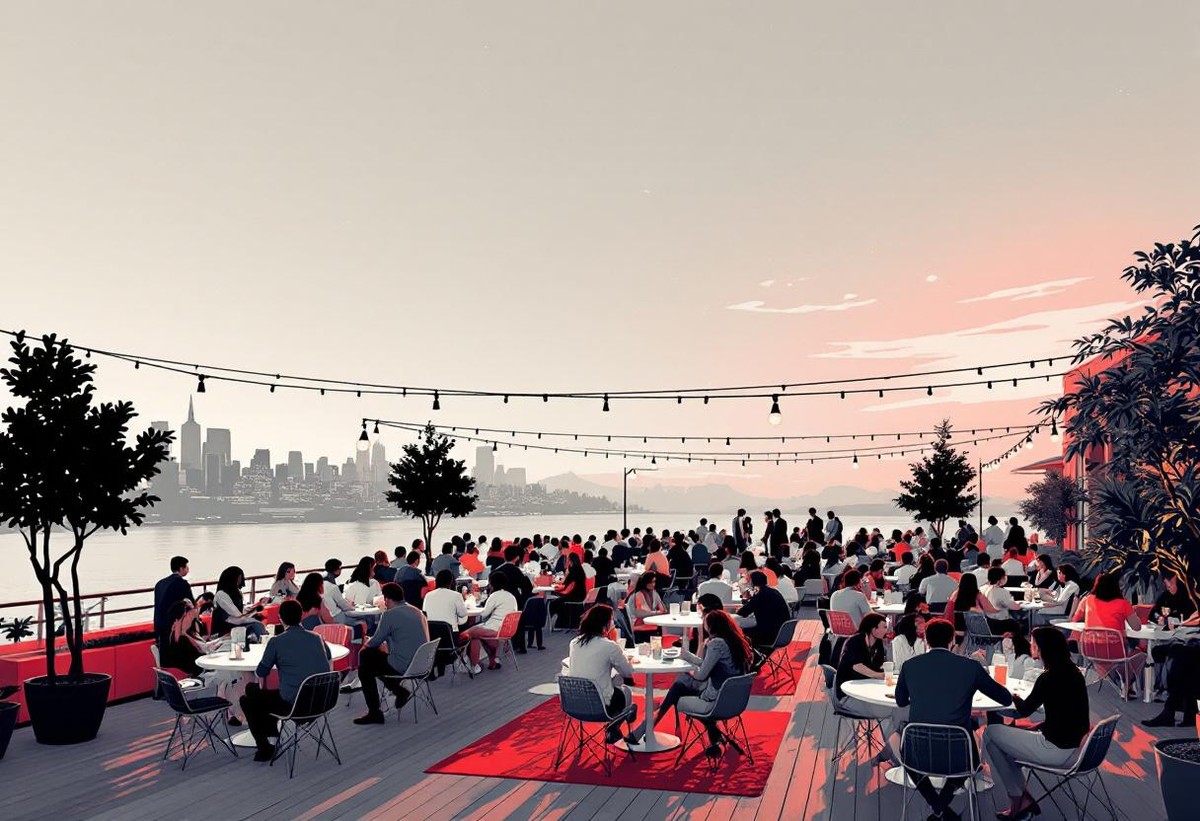
Forced networking fails because it hands people a room and a time slot and asks them to work out the rest for themselves. What works instead is three moves: send each attendee a named introduction with a reason before the day, run small hosted formats alongside the open reception and judge the result on how people felt rather than how many badges they scanned. Here is why the industry finally agrees.
'People want connection, but they don't want forced fun. Content plus cocktails isn't enough anymore.' That is Cleo Battle, the head of Louisville Tourism, in a trade-press piece that ran under the headline 'Meeting Planners Are Done With Forced Networking' (Skift Meetings, 2026). I read that and had a small cheer to myself. The industry has finally said out loud the thing I have been chewing on for years.
And here is the bit that makes it interesting rather than gloomy. People have not gone off gathering. Across Europe, 83% say they keep investing in live experiences even with money tight, and one in four would put those moments ahead of other spending, with 95% saying shared live experiences create connection across cultural backgrounds (Legends Global, 2026). That study is about live music and sport, not conferences, but the signal travels. The appetite for being in a room with other people is high. It is the badly designed room that people are done with.
The industry said the quiet part out loud
For a long time the polite line was that networking 'just needs a bit more time on the agenda' or 'a better app'. What changed this year is the tone. Senior people in the industry are now naming forced networking as a failed pattern, not a thing to optimise. The phrase that stuck with me was that planners are 'done with forced fun' (Skift Meetings, 2026).
My take: this is a really useful admission, because it moves the blame off the attendee. For years the unspoken story was that if the networking did not work, the attendee was a bit shy, or did not try hard enough, or 'isn't a natural networker'. Naming the format as the problem is the breakthrough. You can redesign a format. You cannot redesign a roomful of busy, stretched people into extroverts, and you shouldn't want to.
Forced networking is networking as an instruction rather than networking as a service. That is the line I would tape to the wall. The mandatory speed round, the icebreaker nobody asked for, the open reception where you are simply told to mingle - all of them hand the hard part to the person least equipped to solve it on the night.
We kept adding networking and it kept not landing
So why did so many events end up here? Largely, I think, because 'add more networking' felt like the safe answer, and a conference can't really exist without some version of a reception. The result is two failure modes that look like opposites but share a root.
The first is over-scripting. A speed-networking round on a timer with someone you have nothing in common with is structure for its own sake. It produces motion, not connection. The second is under-designing - the open bar where confident strangers are meant to find each other. That is the coffee-break networking trap: a lovely-sounding plan that quietly relies on luck. (Often while people are eating and replying to emails.) Both modes do the same thing - they put the work of finding the right person onto the attendee.
And attendees notice. The gap between what organisers think happened in the room and what people actually experienced is one of the most reliable findings in the whole industry, and forced formats widen it - the perception gap is largest exactly where the design is thinnest. What is a little heartbreaking is that the demand is right there: networking is now the top reason people give for attending, named by 58% of attendees, up from 39% in 2021 (Freeman, 2025). The thing people came for is the thing we leave most to chance.
The shift underneath - fewer, deeper, better
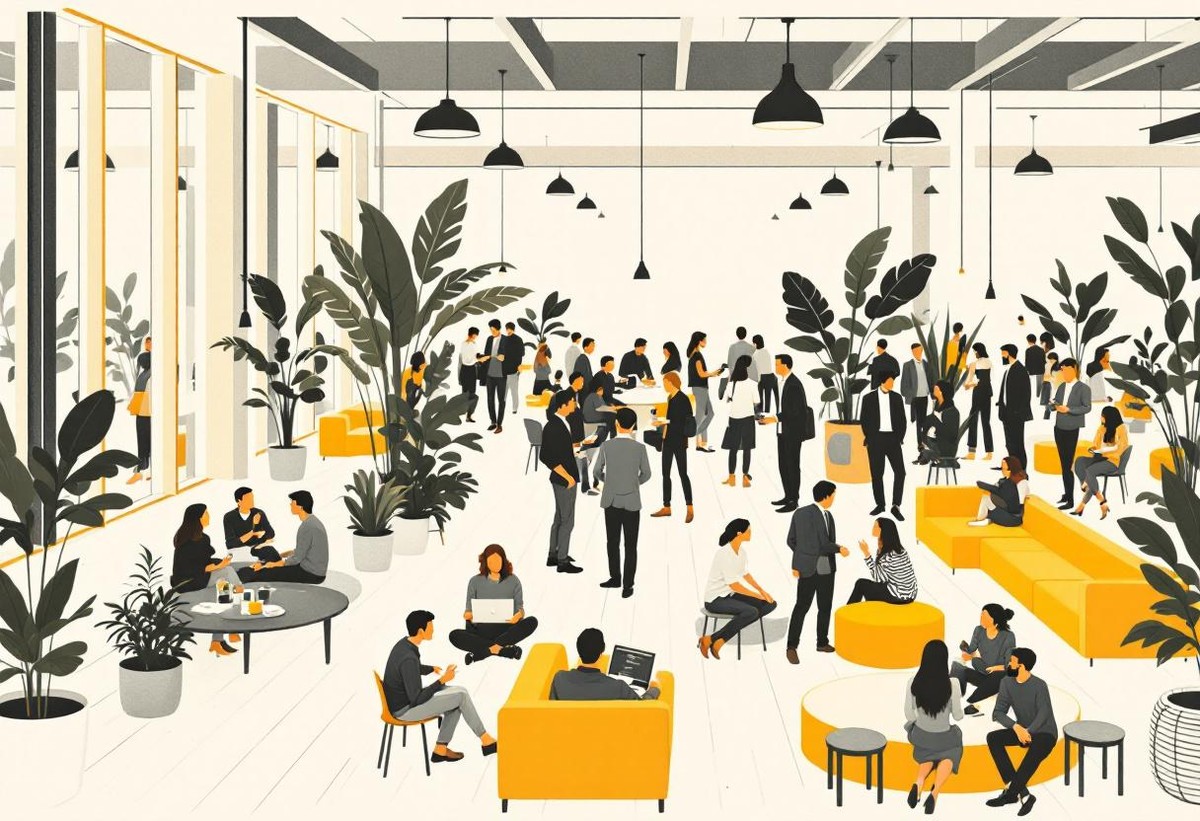
Here is what I find quietly cheering. The whole field is moving the same way at once, and it is moving towards quality. In the community world, 39% of builders are deliberately de-prioritising member growth to focus on depth, with a chunk planning to cap numbers so they can give people more hands-on support (Circle, 2026). That is builders choosing fewer, better members over a bigger logo on the dashboard.
The events side is saying the same thing in its own words. When meeting professionals are asked why they bring people together, 74.3% put employee engagement first - connection, culture, people - not headcount (FCM Meetings and Events, 2026). The reason for the room is the relationships in it. Of course it is. We all sort of knew that. It is just nice to see it stated as the headline rather than the afterthought.
Worth saying clearly though: this is not a decline story. Face-to-face spend is structurally durable. Trade shows still hold 41% of B2B marketing budgets, the same share as in 2017 (CEIR, 2026). Nine years, a pandemic and a great deal of doom-saying later, the spend has not moved. The channel is healthy. The format inside it is what people are walking away from.
What actually works - design the room
So what does the better version look like? The thread through everything that works is the same: the organiser takes a position on who is meant to meet whom and why, instead of leaving it to the night. Three moves do most of the lifting, and none of them needs more budget than a normal reception.
Move one - named introductions before the day. Send each attendee a few other names ahead of the event, each with a one-line reason for the match and a topic to open on. Someone who arrives already holding three good names walks in warm instead of cold. This is the heart of curated networking, and it is the single biggest thing most events are still not doing.
Move two - small hosted formats alongside the open reception. Keep the cocktail, by all means. Just run one or two short hosted formats in parallel - matched conversations, themed tables, a briefed breakfast - so people can pick their level of intensity rather than being herded into one. This is also the move that does the most for the people who quietly dread the open room.
Move three - give every format a host. A table with a briefed chair is a table where nobody is left stranded mid-sentence. The host carries the social risk so the attendees don't have to. Much of this, by the way, can be done with good old pen, paper and attentive hosting - the tech makes it scale, it does not replace the position-taking.
The opposite of all three is the open reception, which takes no position at all and asks the most stretched audience the industry has had in a generation to do the heavy lifting. People read that, fairly, as a sign you have not really thought about them.
Return on emotion - the measure worth stealing
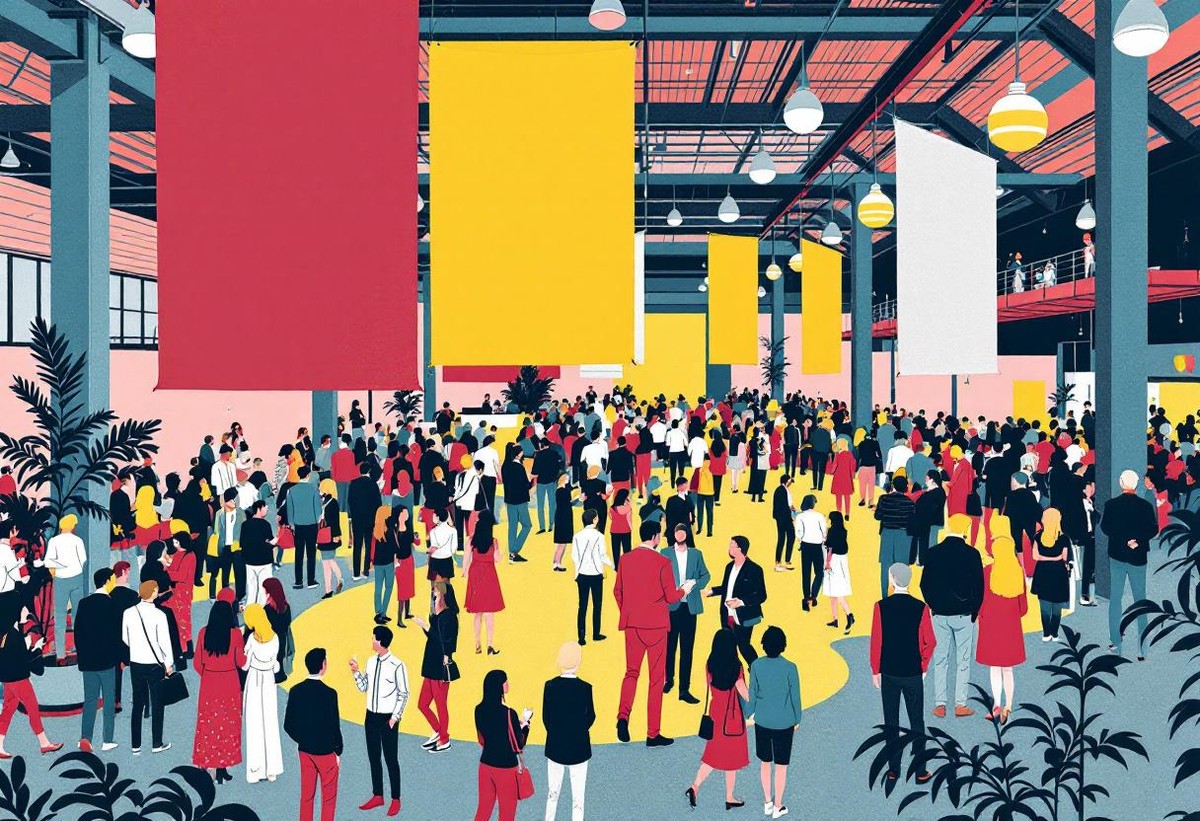
There is a phrase doing the rounds that I rate - 'return on emotion'. The idea is to measure whether an event actually built connection, rather than counting attendance and calling it a day (MeetingsNet, 2026). I like it because it points the measurement at the thing people came for, not the thing that is easy to count.
The trap with anything called 'emotion' is to over-measure feelings with a wall of mood sliders. I would not. The version that works is concrete. Ask three questions 48 hours after the event, in this order. Did you meet at least one person worth meeting - yes or no. Did you exchange details with them. Would you recommend coming back to a colleague. The first is your leading indicator, the second confirms the conversation went somewhere, the third is the one that predicts whether they return.
That is return on emotion made countable - feelings turned into three numbers an organiser can act on. It is also the cleanest argument against forced networking I know, because forced formats score badly on all three the moment you actually ask. If you want the longer version, I have written about how to measure whether your event networking worked, and there is a free networking gap calculator that walks through six questions and tells you where the biggest gap sits at your event today.
Something to sit with
The bit I keep coming back to is how neatly the evidence lines up this year. The industry has named forced networking as a failure. The demand for real connection is high and the spend on gathering is durable. And the whole field, events and communities alike, is choosing fewer and deeper over more and bigger.
Put those together and the conclusion is almost cheerful. The problem was never that people stopped wanting to meet each other. It was that we kept asking them to do it the hard way. Design the room, take a position on who should meet whom, and measure whether it landed. With or without much tech, that is a very solvable problem!
How does the networking at your next event feel when you look at it that way?
I write one of these every week. Want them in your feed?
Follow along on LinkedIn - short takes on what I am seeing in event networking, before the long-form version lands here.
Frequently asked questions
What is forced networking?
Forced networking is any networking an event makes attendees do without giving them a reason or a match - the mandatory speed-networking round, the icebreaker nobody asked for, the open reception where you are simply told to mingle. It is networking as an instruction rather than networking as a service. The 2026 trade press has started naming it as a failed pattern: 'people want connection, but they don't want forced fun' (Cleo Battle, Louisville Tourism, via Skift Meetings, 2026).
Why doesn't forced networking work?
Because it asks the attendee to do the hard part. Forced formats either over-script the room - a speed round on a timer with someone you have nothing in common with - or under-design it - an open bar where confident strangers are meant to find each other. Both put the work of finding the right person on the attendee. The demand for connection is real and high (Legends Global, 2026), but the format gives people no help in turning a room full of names into the two or three that matter to them.
Is in-person networking declining?
No. The demand and the spend are both durable. 83% of people say they keep investing in live experiences even under cost pressure (Legends Global, 2026), and trade shows still capture 41% of B2B marketing budgets, the same share as in 2017 (CEIR, 2026). What has changed is that attendees are pickier about which events earn the trip. The channel is healthy. The networking format inside it is what is failing.
What works better than forced networking?
Designed connection. Three moves do most of the work: send each attendee a few named introductions before the day, with a one-line reason for each match; run one or two small hosted formats alongside the open reception so people can choose their level of intensity; and brief a host for each so nobody is left to fend for themselves. The point is to take a position on who should meet whom and why, rather than leaving it to chance.
What is return on emotion at events?
Return on emotion (ROE) is a way of measuring whether an event actually built connection, rather than just counting attendance. It looks at the depth of relationships formed - did people meet someone who mattered, did they exchange details, would they come back - instead of headcount and session fill rates (MeetingsNet, 2026). It pairs well with the practical post-event questions that predict whether people renew.
How do I measure whether my event networking worked?
Ask three concrete questions 48 hours after the event. Did you meet at least one person worth meeting - yes or no. Did you exchange details with them. Would you recommend coming back to a colleague. The first is your leading indicator, the second confirms the conversation went somewhere, the third predicts renewal. If you run an app or badge scan you already have the second for free. These are the practical face of 'return on emotion' - feelings made countable.
About the author
Cate Trotter
Co-founder and Product Lead, All Along
Cate is co-founder and product lead at All Along. She's spent 15+ years helping organisations turn emerging tech into commercial results, and founded and sold two retail-focused businesses before building All Along. She writes about how events can turn networking from a happy accident into a repeatable outcome.
Connect on LinkedInReady to make networking the reason people come back?
All Along gives every attendee three people they should actually meet, and gives you a complete picture of what your audience wants.
More from Field Notes
Young professionals loneliness is the cohort events miss
The loneliest people in the room are not who you'd think. Across 142 countries the 19 to 29s come out worst. That changes who event design should serve first.
What coworking already knows about curated introductions
The coworking industry decided years ago that introductions are the job. It just does them by hand. Here is what events and communities can borrow.
Leadership loneliness is the design brief events keep missing
The most senior people in the room are also the loneliest. That is a design brief, not a wellbeing post. Here is what I do with it.