
Why event networking matters more now than it used to
Meetings per person rose 12.9% while average length fell 20.1% around the pandemic years (OECD, 2025) - meetings fractured while conferences stayed whole.
Co-founder and Product Lead, All Along
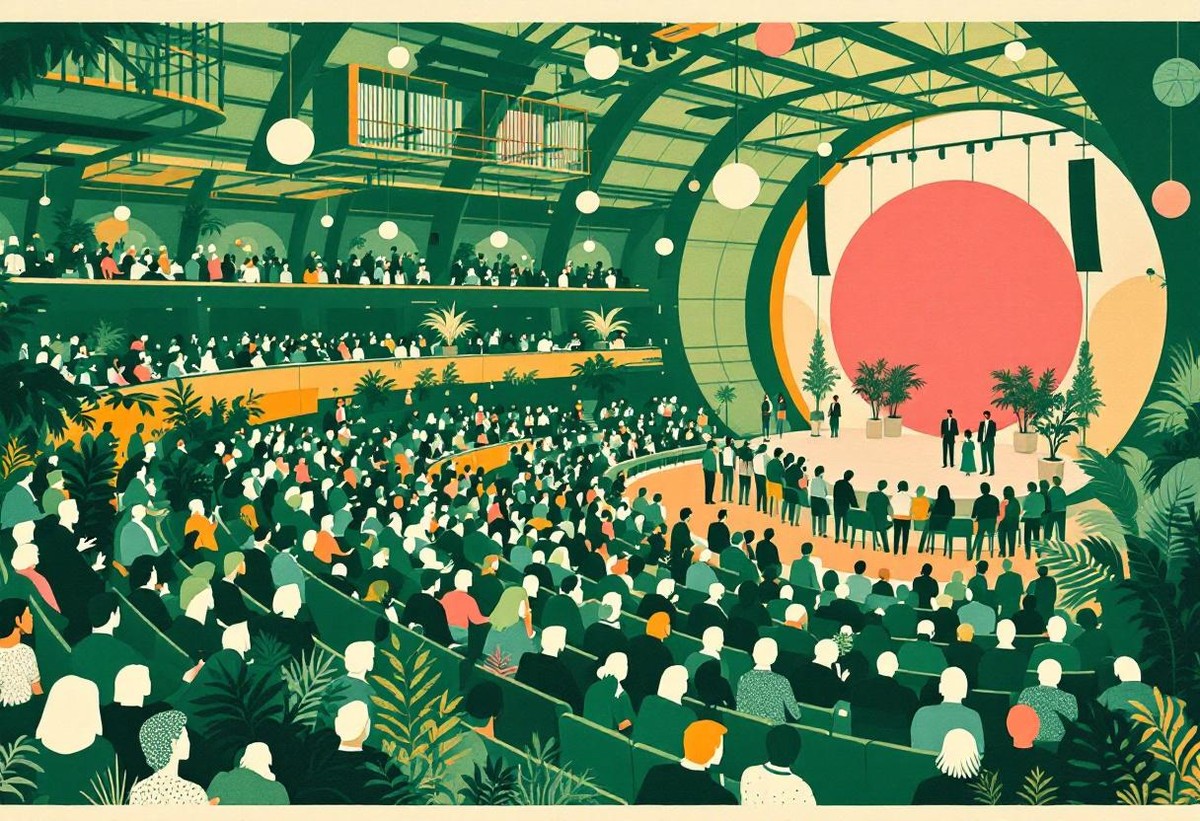
Event networking matters more now because a two-day conference has become the longest block of focused peer attention most professionals get all year - 8 to 10 consecutive hours with the same audience. The working week has fractured into shorter meetings, and face-to-face contact outside work has been falling for years. Here is what the numbers show, and what it means for how you design the room.
Meetings per person are up 12.9% since the pandemic transition. Average meeting length is down 20.1%. (OECD Compendium of Productivity Indicators, 2025) That is a structural change in how professionals spend their attention. More conversations, each shorter, with less room for context to accumulate before the next one starts.
In the same window, average weekly in-person social interaction has been falling across the rich world. Between 2005 and 2018, Canada, Italy and the United States each lost around 30 minutes a week of face-to-face contact. Belgium lost more than 40. (OECD Social Connections and Loneliness in OECD Countries, 2024)
Put those two things together and you get the answer to a question a lot of organisers are quietly wondering about. Why does event networking suddenly feel more valuable, more fragile, more important than it did ten years ago? Because it is. The practical response is to invest in increasing event attendee engagement - designing the moments of connection rather than leaving them to chance.
The fractured workplace day
The OECD's productivity team has been tracking how the working week actually gets spent. The 2025 compendium is blunt about the shift: more meetings per person, each shorter than they used to be, a pattern established during the pandemic transition and persisting since. The figure that tends to land in the room when I share it is the 20.1% drop in average meeting length. A meeting that used to run a fair 45 minutes now gets 36. A 30-minute meeting now gets 24. The room has the same agenda, fewer minutes, and almost always the next meeting waiting immediately after it.
The knock-on effects are not subtle. Context has nowhere to go. The quick "how are you" before the content starts gets trimmed. The five-minute corridor chat after the meeting ends, where half the useful information actually lived, never happens because the next call is already ringing. It is the same erosion that has reshaped professional networking after hybrid working, where the office collisions that once did this work quietly stopped happening.
My take: this is not a calendar problem. It is an attention-economics problem. If you zoom out from any single week, the professional workday is now a mosaic of short, overlapping, interrupted blocks. Deep peer attention - the kind where you get to the interesting bit because the small talk cleared space for it - has been quietly priced out of the average Tuesday.
The quiet collapse of in-person contact
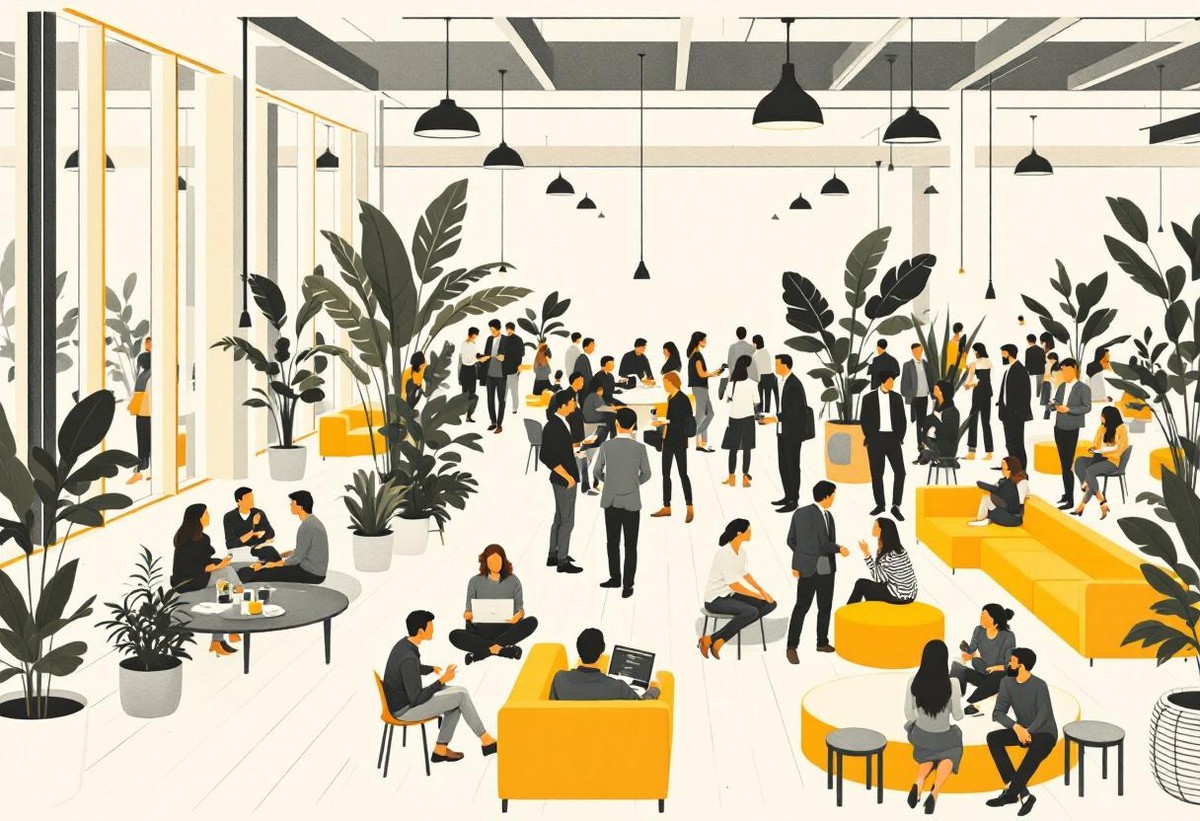
The OECD Social Connections and Loneliness study from 2024 tracks a longer arc. Using time-use data across member countries, it finds that weekly in-person social interaction has been trending down since around 2006. The falls between 2005 and 2018 are 30 minutes in Canada, Italy and the US and more than 40 minutes in Belgium, with the sharpest declines concentrated among men and adults under 30.
That is before you layer on hybrid working. The UK Office for National Statistics reported in June 2025 that 28% of working adults in Great Britain now work hybrid, up from around 10% in early 2021. In information and communication the figure is 49%; among those earning above £50,000, 45%. (ONS, 2025) The most likely conference attendee - senior, knowledge-economy, salary above the median - is now statistically the person least likely to be in an office five days a week.
I am not romanticising the old open-plan office. The point is narrower. The everyday infrastructure of professional connection - the commute conversation, the shared lift, the corridor hello, the three-person lunch that accidentally turned into a partnership - has been quietly dismantled without being replaced. The interactions that used to happen by default now have to be organised to happen at all.
The conference as concentrated attention
This is the part I want organisers to sit with.
A well-run two-day conference concentrates 8 to 10 consecutive hours of the same professional audience in one physical space. Same sector, often same seniority band, self-selected for the topic, phones down or at least down-ish, no children and no inbox. For most of the attendees in the room, that is longer than any uninterrupted block of peer attention they are going to get all year.
Compared with an average weekly allowance of in-person social contact that is measured in minutes and falling, two days at a conference is not a nice thing in the diary. It is an outlier. The attendee who flies in from Singapore has probably not had 10 hours of face-to-face time with relevant peers in the preceding six months combined.
It is no surprise, then, that 58% of attendees now say networking is their primary reason for attending in-person events, up from 39% in 2021, and 51% say effective networking alone is reason enough to return to an event. (Freeman Networking Trends Report, 2025) That is not a trend driven by enthusiasm for networking. It is a trend driven by the collapse of everything that used to do the job before the conference did.
Which leads to a more interesting framing. Well-designed pre-event networking and the deliberate first hour of the programme are no longer soft-skill add-ons to the agenda. They are the main product. The content is the reason people can justify the trip. The networking is the reason the trip actually generates value.
What organisers are still missing
Here is the gap. Most event teams have not adjusted their design or their economics to reflect any of this.
Freeman's 2024 Event Organizer Trends Report found that 60% of event teams distribute networking responsibilities across their staff or do not actively manage networking at all. (Freeman via PCMA, 2024) In practice that means nobody owns it. The venue owns the room. The programme team owns the sessions. Marketing owns the emails. Networking is everyone's problem, which reliably means it is nobody's.
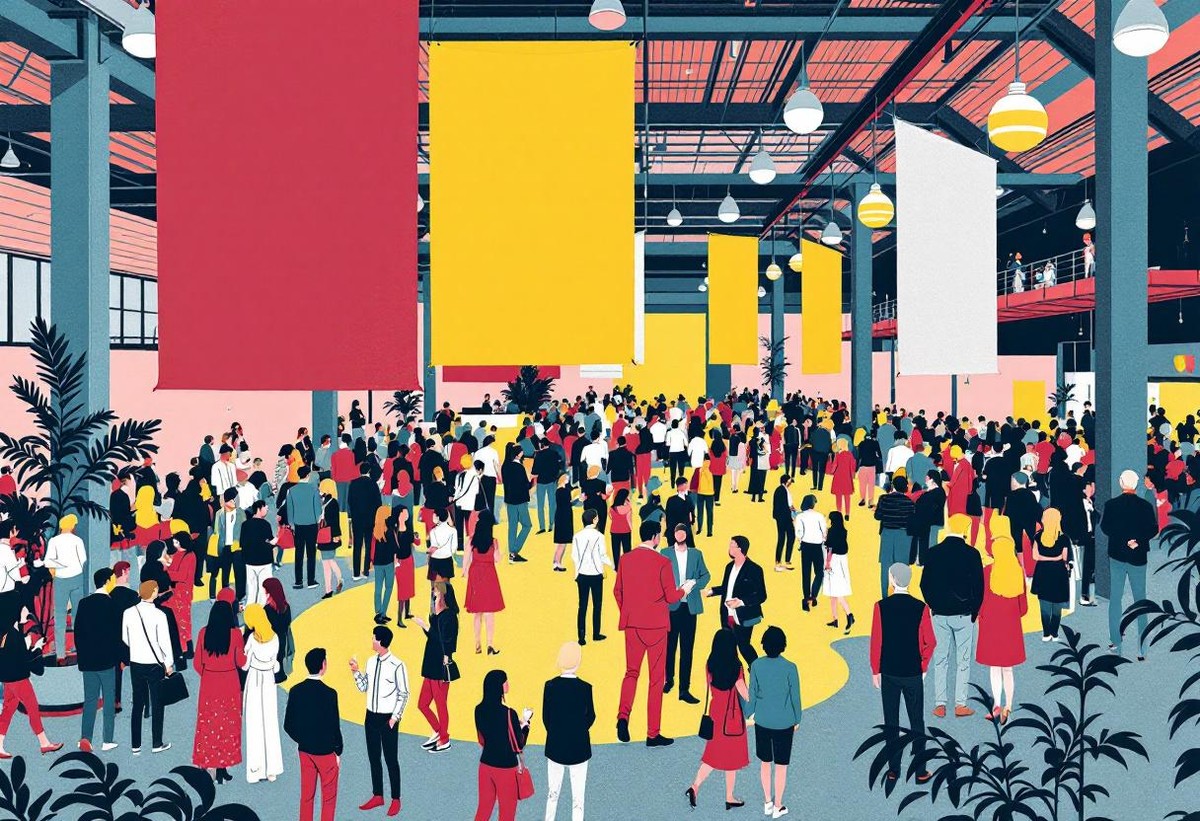
The result is easy to spot when you walk into an event. The speaker line-up is strong. The catering is serious. The exhibitors are briefed. And then the one-hour networking block is run like a school disco: 400 people, a carpeted room, background music, no prompts, no matching, no introductions. The scarce commodity - concentrated peer attention - is handed back to the attendees with a warm drink and a hope that they figure it out. The result is what the data on the event connection gap makes precise: 49% of planners rank peer connection as their top success driver; only 8% give structured connection more programme time.
What surprises me is not that this happens. It is that it continues to happen in a year when over half of attendees are telling organisers, in every survey that asks, that this is the bit they came for. The perception gap between organisers and attendees is one of the most consistent findings in the industry research - and it is not closing without a deliberate push.
What to actually do about it
I am not suggesting organisers need to rebuild their programme from scratch. Three adjustments carry most of the weight.
Treat networking as a designed product, not a break in the agenda. Ask the three registration questions that let you understand who is in the room - role, sector, and the specific thing they want to solve at this event. Surface that back to them before arrival. Make at least one introduction per attendee feel inevitable rather than accidental. This is where the organiser as the networking champion matters more than any feature list.
Measure what happens. Who met whom. Which matches led to follow-up. Which topics had unmet demand on the day. Most events collect attendance numbers and session ratings and almost nothing else about the networking layer, which makes it impossible to argue for it in next year's budget. A simple post-event network measurement routine gets you a real renewal conversation.
Reprice the sponsorship. The sponsor is not paying for brand reach. They are paying for proximity to a group of professionals currently experiencing the longest block of concentrated peer attention they will have all year. That is a different argument - and it is a procurement-grade argument in every sponsor sector that runs economic-impact thinking on its own investments. The sector-profile data you already collect is the raw material. Most organisers just have not started putting it in the sponsor brief.
The reason to do any of this is not defensive. It is that the economics have quietly swung in the direction of well-designed events, and the organisers who notice first get the best rebooks, the strongest delegate loyalty, and the sponsors who keep coming back because the return is obvious. The scarce commodity is already in the room. Most teams just have not started treating it like one.
If you want a quick read on where your event sits, the free networking gap calculator walks through it in six questions. It is the same diagnostic I use on the events I help redesign.
I write one of these every week. Want them in your feed?
Follow along on LinkedIn - short takes on what I am seeing in event networking, before the long-form version lands here.
Frequently asked questions
Why does event networking matter more now than it used to?
The short answer is that the workplace has changed around it. OECD data shows meetings per person rose 12.9% and average meeting length fell 20.1% in the years around and after the pandemic, while average weekly in-person social interaction has been falling for nearly two decades in most OECD countries. Professionals now get shorter, more fragmented contact with peers than in any measured decade. A two-day conference is one of the few settings left that concentrates sustained peer attention in one place, which makes networking structurally more valuable today than it was ten years ago, even though most organisers still price it the same way.
What is the OECD Compendium of Productivity Indicators?
The OECD Compendium of Productivity Indicators is an annual reference compiled by the Organisation for Economic Co-operation and Development. It tracks productivity, labour inputs, capital services and working patterns across OECD member countries. The 2025 edition, published in June 2025, includes analysis of how meeting volumes and durations have shifted during and after the pandemic transition. It is the source of the 12.9% increase in meetings per person and 20.1% drop in average meeting length cited in this post.
Is remote or hybrid working making networking harder or easier?
Both, depending on what you measure. Remote working makes solitary deep work easier and makes day-to-day in-person contact with peers harder. OECD research shows weekly in-person social interaction has been declining across member countries since 2005, with the sharpest falls among men and adults under 30. That is why event networking matters more, not less. The conference is now one of the few settings in which the contact that used to happen naturally at the office, on the commute and over lunch is still compressed into a two-day block.
How should organisers design for this concentrated attention?
Three shifts help. First, treat networking as a designed product, not a coffee break. Surface who is in the room, match people before arrival, and make at least one useful introduction per attendee feel inevitable. Second, measure it afterwards: who met whom, which matches led to follow-up, which topics had unmet demand. Third, build this into the sponsorship conversation. If a sponsor's delegates are getting 10 hours of concentrated peer attention they cannot buy anywhere else, that is a different value proposition from logo placement.
What does this mean for sponsorship?
It means the vocabulary can shift. The sponsor is not paying for brand reach at an event; they are paying for access to a segment of professionals who are currently experiencing the longest block of peer attention in their year. That is a procurement-grade argument. For organisers who can describe the delegate profile in sector terms and show which connections were made, the renewal conversation becomes a discussion about relationship ROI. That is a harder argument for sponsors to cut when budget pressure hits.
About the author
Cate Trotter
Co-founder and Product Lead, All Along
Cate is co-founder and product lead at All Along. She's spent 15+ years helping organisations turn emerging tech into commercial results, and founded and sold two retail-focused businesses before building All Along. She writes about how events can turn networking from a happy accident into a repeatable outcome.
Connect on LinkedInReady to make networking the reason people come back?
All Along gives every attendee three people they should actually meet, and gives you a complete picture of what your audience wants.
More from Field Notes
Professional networking after hybrid working: the new geography
The cohort that buys conference tickets is now the cohort least likely to be in the office. That changes what the conference is for, and most organisers are still pricing it like 2019.
The first hour of a conference matters more than the keynote
Most organisers pour their best thinking into the keynote. First-time attendees have usually made up their minds about your event long before the speaker walks on stage.
Which event session formats actually generate real conversations
Not all session formats are created equal. Some produce genuine conversation. Others quietly shut it down while everyone nods politely. The research is clearer than you might think.