
Professional networking after hybrid working: the new geography
28% of UK working adults were hybrid by early 2025, up from around 10% in 2021 - £50,000+ earners are far likelier, at 45% against 8% (ONS).
Co-founder and Product Lead, All Along
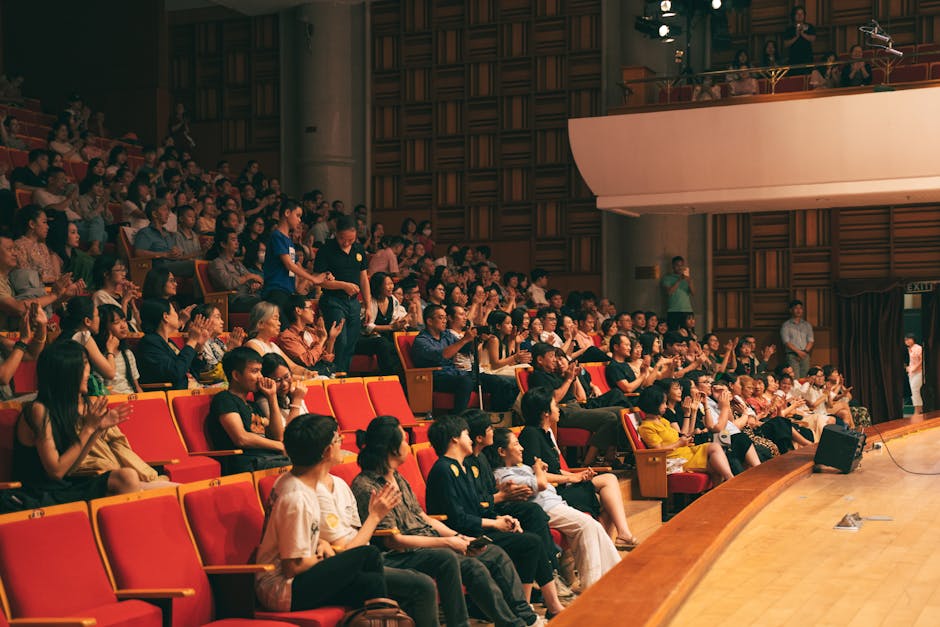
Hybrid working moved professional networking off the office floor and onto the event calendar. Most UK hybrid workers are in the office two days a week (ONS, 2025), which leaves three days without the unplanned peer contact that used to build a network for free. A two-day conference is now the longest block of designed peer contact a senior professional gets all year. Here is what that changes for organisers.
Here is a number I keep returning to. In Q1 2025, 28% of working adults in Great Britain were hybrid - up from about 10% in early 2021. In information and communication, the figure was 49%. Among workers earning £50,000 or more, it was 45%, against 8% for those earning under £20,000. (UK Office for National Statistics, 2025)
Read those numbers as a manager and they describe a productivity puzzle. Read them as an event organiser and they describe something else: the audience for almost every senior professional conference is now the cohort least likely to be in an office on a given day.
That changes what the conference is for. Most organisers have not noticed yet. The ones who have are investing in increasing event attendee engagement - recognising that the senior hybrid cohort needs active reasons to attend, not passive content.
The senior cohort has stopped showing up at the office
The ONS sector breakdown is the part that tends to land in the room when I share it. It is not that hybrid working is uniformly spread. It is heavily concentrated in the sectors and income bands that buy conference tickets.
Information and communication leads at 49%. Finance and professional services is higher still. Public administration, education and health sit in the middle. Manufacturing, retail, hospitality and frontline roles are mostly in-person. The cleavage is along knowledge-work lines.
The audience for the average senior business conference is the part of the workforce that has structurally less in-person peer contact than at any point this century. That is the sentence I think every event director should write at the top of their next agenda planning meeting.
It also helps explain something practitioners feel but do not always articulate. The delegates arriving at your event are not the same delegates who arrived in 2019. Same names on the badge, same job titles, same sponsor list - but they are starved of casual peer encounter in a way the 2019 cohort was not. The room is structurally hungrier.

Two days in five is the new normal
The ONS data has one more useful detail. Of all hybrid workers in Britain, 56% spend two days a week in the office. Three days is the next most common pattern, but two is the dominant one and has been rising.
Translate that into a working week. A hybrid worker on the modal pattern is in the office Tuesday and Wednesday. The senior peer they used to bump into in the lift on a Thursday morning is now at home. The cross-functional colleague who joined them for lunch on a Friday is on a different two-day rhythm. The conversations that used to happen because the same people were in the same place at the same time now happen by Slack or not at all.
For 60% of the working week, the senior knowledge worker has no unplanned peer contact at all.
That is a slow shift, not a dramatic one. It is also a permanent one. The Office for National Statistics data shows the share of hybrid roles still creeping up, not stabilising or falling. The two-day pattern is hardening into a new baseline, not a temporary compromise.
What hybrid work took from the working week
I think the most useful frame here is not productivity. It is contact.
The pre-pandemic working week gave senior professionals an enormous amount of low-grade, unplanned peer encounter. Commuting through the same station. Sharing a lift with someone from a different team. Eating at the same lunch spots. Standing in the kitchen waiting for the kettle. None of those individual encounters mattered. Collectively, they added up to hundreds of micro-conversations a year that kept professional networks warm with almost no effort.
Hybrid work has not replaced those encounters with anything equivalent. The two days in the office tend to be the days the team has agreed to overlap - so contact is concentrated with people you already know well, not the wider professional fringe. The three days at home are productive but solitary. The result, measured at a system level, is a quiet thinning of the casual contact layer that used to sit underneath every professional network.
This is not a hybrid-only story. The OECD has been tracking it for longer than the term has existed. Average weekly in-person social interaction has been falling across most member countries since 2005, with the sharpest drops among men and adults under 30. (OECD Social Connections and Loneliness in OECD Countries, 2024) Hybrid working is the visible accelerant on a longer-running trend, not the cause. I wrote more about the underlying OECD numbers in why event networking matters more now than it used to.
Why the conference is structurally more valuable
Put the two pieces together. The cohort that buys conference tickets has less in-person peer contact than the same cohort had a decade ago. The conference itself is unchanged: a two-day room with the same kind of agenda it has run for years.
That means a 2026 conference is doing more work, per attendee, than the same conference did in 2019. Same product, denser value. Same agenda, same sponsors, same coffee - but the alternative places those attendees would meet peers have thinned, so the marginal value of being in the room has gone up.
Most organisers have not adjusted to that. They still price networking as the bit between sessions. They still describe sponsorship as audience reach. They still treat the badge as the product and the conversations as the by-product. None of those assumptions has caught up with the world the delegates are actually living in.
I think this is the most under-priced commercial story in the events industry right now. The competitive set for a conference used to be other conferences. In 2026 it is also Slack, Teams, the empty Thursday office and the small social circle the hybrid cohort can sustain. The conference wins that comparison, by a long way, if organisers tell that story and design for it.

What organisers should change
Three changes feel non-negotiable to me when I am working with an event team on this.
First, design the networking as a product. Surface who is in the room before the event starts. Match people on goals and skills, not job title. Make at least one useful introduction per attendee feel inevitable rather than lucky. The hybrid-era delegate is not arriving with a buoyant professional network and looking for a quick top-up. They are arriving with a thinned network and looking for the connective tissue that used to come for free. I have written about how to think about this kind of work in curated networking.
Second, measure it afterwards. Who met whom. Which matches produced follow-up. Which topics had unmet demand. Which seniority bands ended up isolated. The event team that can put a number on connections made is the event team that can defend sponsorship pricing in a procurement conversation. Freeman's 2025 networking research found that 51% of attendees say effective networking alone is reason enough to return - (Freeman, 2025) but most organisers have no instrument to know whether they delivered it.
Third, retell the sponsorship story. A sponsor at a hybrid-era conference is buying access to a segment of professionals who get this depth of peer contact nowhere else in their year. That is procurement-grade language. It is a much harder argument for a finance director to cut than impressions or brand exposure. The pricing implication follows naturally - networking is a designed product, sponsorship is access to that product, the price tracks the quality of access delivered.
None of this requires new technology. It requires the team to internalise that the delegates in front of them in 2026 are not the delegates from 2019, and to redesign the product accordingly. If you want a numerical starting point for the gap on your own event, the free networking gap calculator walks through the maths in five minutes. And if you want to see what designed networking looks like operationally, take a look at how All Along works for organisers.
Hybrid working did not break event networking. It quietly made it the most concentrated contact hour in the senior knowledge worker's year. That is a better business to be in than the one most organisers think they are running.
I write one of these every week. Want them in your feed?
Follow along on LinkedIn - short takes on what I am seeing in event networking, before the long-form version lands here.
Frequently asked questions
What does the UK ONS data say about hybrid working?
The UK Office for National Statistics found that 28% of working adults in Great Britain were hybrid in the first quarter of 2025, up from around 10% in early 2021. In information and communication, 49% of employees worked hybrid - by far the highest sector. Workers earning £50,000 or more were nearly six times more likely to hybrid work than those earning under £20,000 (45% versus 8%). Two days in the office was the most common pattern, accounting for 56% of all hybrid roles. The report is the most recent comprehensive cross-sector data on hybrid working in the UK and was published in June 2025.
Why does hybrid work make event networking more important?
Because it removes a source of peer contact that organisers used to be able to assume was happening in the background. When a senior knowledge worker was in the office five days a week, they had hundreds of low-stakes encounters with colleagues, suppliers and peers each year - on the commute, at the coffee machine, in the lift, over lunch. Hybrid work has not replaced those encounters with anything equivalent. A two-day conference now concentrates more peer attention than the rest of the delegate's working month combined. The conference has become a substitute infrastructure, not a top-up.
Which industries are most affected by hybrid working?
Information and communication leads at 49% hybrid, followed by finance and professional services. These sectors are also where the conference economy is healthiest - tech summits, financial services events, professional association meetings - which is not a coincidence. The cohort most likely to attend a conference is the cohort most likely to be hybrid. Manufacturing, hospitality, retail and frontline sectors remain almost entirely in-person and are less affected by this shift. If your event audience skews senior, knowledge-worker, urban and £50,000-plus, you are running an event for the hybrid cohort.
How should organisers respond to the hybrid working shift?
Three shifts help. First, treat networking as a designed product, not a residual benefit. Surface who is in the room before the event, match people based on goals and skills, and make at least one useful introduction per attendee feel inevitable. Second, measure it afterwards - who met whom, which matches produced follow-up, what topics had unmet demand. Third, retell the sponsorship story. A sponsor at a hybrid-era conference is buying access to a segment of people who get this depth of peer contact nowhere else in their year. That is a different argument from logo placement.
Is hybrid working a UK-only trend?
No, although the direction varies by country. UK ONS data shows hybrid working still rising into 2025. Statistics Canada Labour Force data points the other way - 17.4% of employed Canadians mostly worked from home in May 2025, down from 18.7% a year earlier. The US picture is mixed, with senior knowledge workers retaining hybrid arrangements while lower-paid roles return to in-person. The cleaner global signal is the longer-running OECD social-connections decline: weekly in-person social interaction has been falling across member countries since 2005, and that trend predates hybrid working. The conference response is the same in either market.
About the author
Cate Trotter
Co-founder and Product Lead, All Along
Cate is co-founder and product lead at All Along. She's spent 15+ years helping organisations turn emerging tech into commercial results, and founded and sold two retail-focused businesses before building All Along. She writes about how events can turn networking from a happy accident into a repeatable outcome.
Connect on LinkedInReady to make networking the reason people come back?
All Along gives every attendee three people they should actually meet, and gives you a complete picture of what your audience wants.
More from Field Notes
Why event networking matters more now than it used to
Meetings per person are up. Meeting length is down. Conferences are now the longest block of peer attention most professionals get all year, and most organisers still treat the networking around them as a side dish.
The first hour of a conference matters more than the keynote
Most organisers pour their best thinking into the keynote. First-time attendees have usually made up their minds about your event long before the speaker walks on stage.
Which event session formats actually generate real conversations
Not all session formats are created equal. Some produce genuine conversation. Others quietly shut it down while everyone nods politely. The research is clearer than you might think.